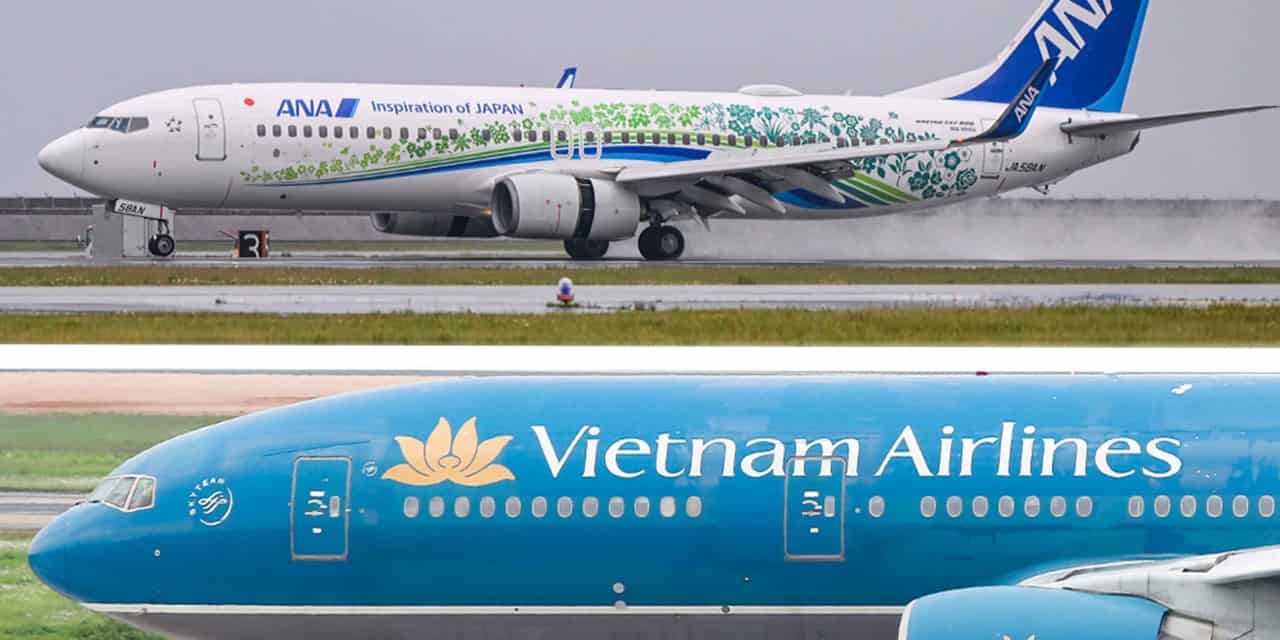
Key facts
- ANA Holdings and Vietnam Airlines signed a framework agreement toward a joint venture on Japan-Vietnam routes.
- The agreement was announced at a Tokyo ceremony marking 10 years since the carriers' 2016 business and capital tie-up.
- ANA President Koji Shibata said the venture would offer more services, a wider choice of flights and a seamless network.
- Vietnam Airlines President and CEO Le Hong Ha said travel between Japan and Vietnam rose 20% in the first 10 months of the year.
- The venture crosses alliance lines: ANA is in Star Alliance and Vietnam Airlines in SkyTeam.
- Antitrust immunity approval from authorities in both countries is required before the venture can start.
ANA Holdings, which operates All Nippon Airways, and Vietnam Airlines said on November 9, 2026 that they will strengthen their existing business tie-up and launch a revenue-sharing arrangement on routes between Japan and Vietnam. The two carriers announced the step at a ceremony in Tokyo marking 10 years since their 2016 business and capital tie-up.
The arrangement is a framework agreement toward a joint venture rather than a completed venture. ANA said the two sides will work out details including the start date, frequent-flyer program cooperation and airport lounge access. ANA President Koji Shibata said the venture would cover Japan-Vietnam routes and offer more services, a wider choice of flights and a seamless network.
ANA is a member of Star Alliance and Vietnam Airlines belongs to SkyTeam, so the venture crosses alliance lines. ANA said its previous joint ventures, with United Airlines on North American routes, Lufthansa Group on European routes and Singapore Airlines on Asian routes, were all with fellow Star Alliance members. Vietnam Airlines President and CEO Le Hong Ha said Japan is a priority market for the state-owned carrier and that travel between the two countries rose 20% in the first 10 months of the year.
Before the venture can start, the carriers must obtain antitrust immunity (ATI) approval from the relevant authorities in both countries. Once approved, the two would be able to coordinate schedules, set fares jointly and share revenue on the routes.