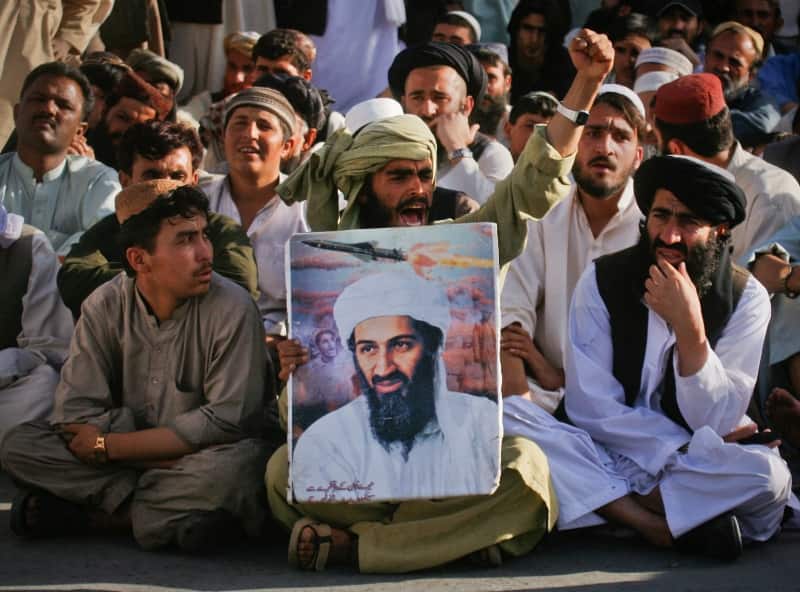
Key facts
- Al Qaeda, founded by Osama bin Laden in the late 1980s, has spawned affiliates and inspired attacks worldwide.
- The 9/11 attacks in 2001 killed nearly 3,000 people.
- Al Qaeda's former leader Osama bin Laden was killed by U.S. forces in 2011.
- Khalid Sheikh Mohammed, the mastermind of 9/11, faces trial in June 2028.
- Bin Laden's successor, Ayman al-Zawahri, was killed in a U.S. drone strike in 2022.
- Al Qaeda affiliates are active in Africa, including Al Shabaab in Somalia and JNIM in the Sahel region.
Twenty-five years after the September 11, 2001 attacks, al Qaeda, the militant group founded by Osama bin Laden, continues to operate and inspire militants globally, particularly in Africa, despite significant setbacks. The group emerged in the late 1980s, recruiting and funneling support to fighters during the Soviet invasion of Afghanistan.
Al Qaeda became a hub for militants aiming to establish hardline Islamist rule and harboring hostility towards the United States and its allies. Bin Laden, stripped of his Saudi citizenship in 1994 and expelled from Sudan in 1996, took sanctuary in Afghanistan. He organized attacks on U.S. interests, including a 1992 bombing in Yemen and truck bombings against U.S. embassies in Kenya and Tanzania in 1998, which killed 224 people.
The September 11 attacks were carried out by 19 hijackers, 15 of whom were from Saudi Arabia. The attacks resulted in the deaths of nearly 3,000 people.
Following the 9/11 attacks, the U.S. invaded Afghanistan in October 2001, toppling the Taliban and disrupting al Qaeda's operational base. Bin Laden evaded capture for a decade until he was killed by U.S. special forces in 2011. Khalid Sheikh Mohammed, the architect of the 9/11 attacks, was captured in 2003 and is currently held at Guantanamo Bay, with a military tribunal trial scheduled for June 2028. Bin Laden's successor, Ayman al-Zawahri, was killed in a U.S. drone strike in Kabul in 2022. Seif al-Adel is now considered al Qaeda's de facto leader.
Al Qaeda's influence spread through numerous attacks carried out by affiliated or inspired militants, including the 2002 Bali nightclub bombings (202 people killed), the 2004 Madrid train bombings (over 190 killed), and the 2005 London bombings (52 killed). Affiliates emerged in Iraq, North Africa, the Arabian Peninsula, and Syria. In Africa, key affiliates include Al Shabaab in Somalia and Jama'at Nusrat al-Islam wal-Muslimin (JNIM) in the Sahel region, as well as ties to Tehrik-e Taliban Pakistan (TTP).
Antonio Giustozzi, a senior research fellow at the RUSI think-tank, noted that al Qaeda's profile and expansion grew significantly after the invasion of Afghanistan, peaking around 2013 before its Iraqi branch formed the Islamic State. The rivalry between al Qaeda and the Islamic State continues, particularly in West Africa.
Today, al Qaeda-aligned groups are expanding their influence in Somalia and the Sahel region of West Africa. The TTP has intensified its insurgency in northwestern Pakistan, reportedly receiving ideological guidance and support from al Qaeda. Pakistan claims TTP leadership and fighters are based in Afghanistan, where the Taliban returned to power in 2021. UN reports indicate al Qaeda continues to receive patronage from the Taliban authorities in Afghanistan and maintains an appetite for external operations, though Kabul denies this.