Key facts
- Bill Swearingen's 'noRecognition' project creates AI-generated patterns designed to evade surveillance camera object detection.
- These patterns disrupt the camera's ability to identify objects, people, or faces, effectively making them harder to track.
- The patterns do not block the camera from recording but rather prevent detection alerts.
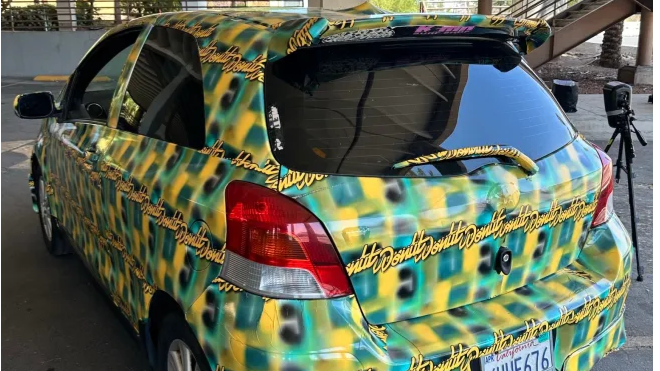
- A public demonstration at the Def Con cybersecurity conference successfully used a pattern-wrapped car to evade detection by a Flock camera.
- Swearingen utilizes a reinforcement learning model to continuously refine and generate new patterns.
- The project aims to enhance privacy by allowing individuals to opt out of automated tracking and surveillance.
Bill Swearingen has developed a project called 'noRecognition' that uses AI-generated patterns to evade detection by surveillance cameras. After approximately 31 million tests, Swearingen claims these patterns, when applied to objects like clothing or vehicles, can prevent common license plate readers and surveillance cameras from identifying them. The patterns do not block the cameras from recording but instead disrupt the object identification algorithms, making it difficult for the system to trigger alerts.
Swearingen, a cybersecurity professional and co-founder of SecKC, stated that privacy is a fundamental right and his patterns offer a way for individuals to opt out of being tracked. He was motivated to create the technology after feeling concerned about being tracked while attending a protest.
In a public demonstration at the Def Con cybersecurity conference in Las Vegas, Swearingen successfully tested the pattern on a 2009 Toyota Yaris, showing its effectiveness against a Flock camera. This project builds on earlier efforts to defeat facial recognition technology through art and apparel.
Swearingen's process involves using a reinforcement learning model that trains itself to identify effective patterns against specific camera algorithms. The model has successfully defeated 11 open-source detection algorithms, including those used by Flock, Axon, and Clearview AI. The project aims to make these patterns aesthetically fashionable and high-quality, with plans for merchandise like T-shirts and hoodies, while keeping the strongest patterns private to prevent camera manufacturers from developing countermeasures.