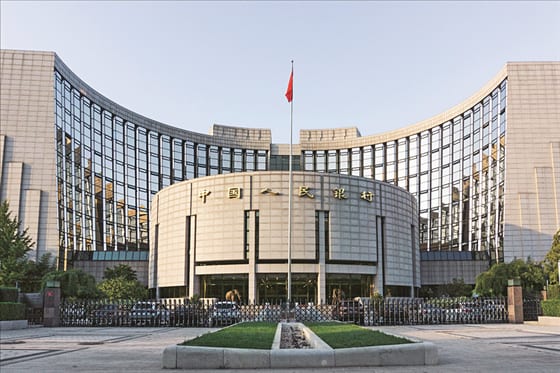
China's central bank, the People's Bank of China (PBOC), is developing a new contingent liquidity tool designed to provide emergency funding to nonbank financial institutions (NBFIs) during periods of severe market stress. This initiative aims to bolster the financial safety net and prevent systemic risks by directly injecting liquidity when normal funding channels become disrupted.
Currently, liquidity flows through a four-tier system, with NBFIs like securities firms, fund companies, and insurance companies at the end of the chain, relying on indirect support from commercial banks. This indirect mechanism can falter during market turmoil, leading to soaring funding costs or an inability for NBFIs to borrow, a predicament described as "begging for funds." Historical data shows significant widening of funding rates for NBFIs compared to those for primary dealers during stress periods.
The proposed PBOC mechanism will be triggered by specific crisis scenarios, require eligible collateral such as government bonds, and charge a punitive interest rate. Experts note that this direct support is necessary as liquidity risks at nonbank institutions could quickly spread to the banking system, impacting overall financial stability.
At the Lujiazui Forum, the PBOC also announced other policy measures, including refining short-term interest rate regulation to narrow the interest rate corridor and establishing an RMB Repo Facility for Foreign and International Monetary Authorities to manage RMB liquidity.