Key facts
- The International Rescue Committee warns the Ebola outbreak in the DRC is likely more extensive than official figures suggest.
- WHO Director-General Tedros Adhanom Ghebreyesus met with DRC President Felix Tshisekedi to discuss the Ebola outbreak.
- The WHO has significantly reduced its number of suspected Ebola cases in the DRC.
- Militants linked to Islamic State, the Allied Democratic Forces (ADF), killed at least 37 civilians in eastern Congo.
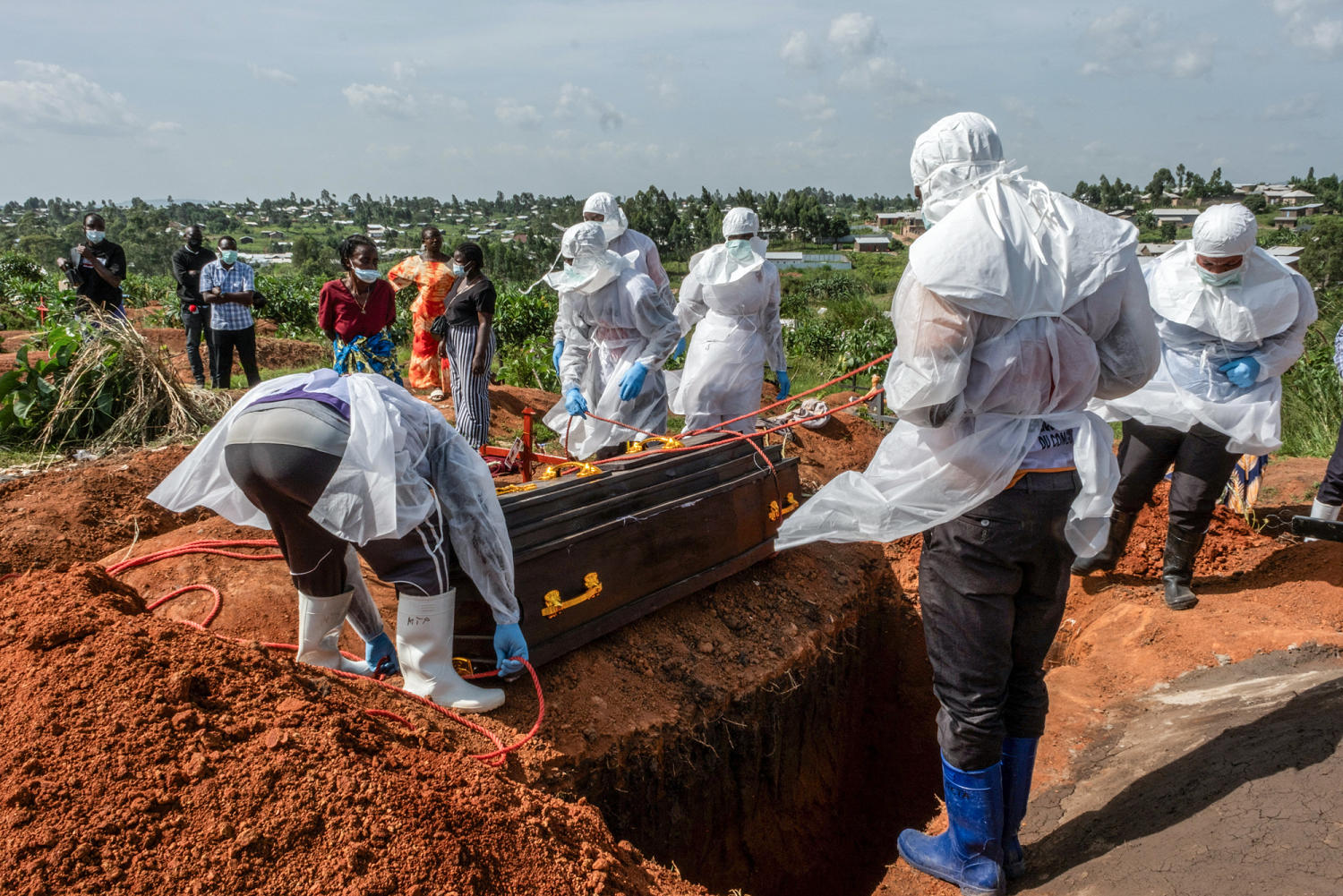
- An Ebola burial team was attacked by AFC/M23 rebels in Katana, South Kivu province, Democratic Republic of Congo.
- The Ebola outbreak has reached 363 cases and 62 deaths since May 15, spreading across 17 health zones in Ituri province.
- Brazil is investigating potential Ebola cases.
- Uganda has confirmed a total of 15 Ebola cases.
- India delivered Ebola treatment aid to the Africa CDC in Uganda.
- Most of the 13 U.S. treatment centers in a government-funded network are prepared to handle Ebola patients.
The Ebola outbreak in the Democratic Republic of Congo (DRC) is potentially far more widespread than official reports suggest, according to warnings from the International Rescue Committee (IRC). The IRC stated that underestimations of the outbreak's scale could lead to insufficient resource allocation and delayed containment efforts. Amidst these concerns, WHO Director-General Tedros Adhanom Ghebreyesus met with DRC President Felix Tshisekedi to discuss the ongoing crisis. Despite the IRC's warning, the WHO has also significantly reduced its own count of suspected Ebola cases in the DRC, sharing updated figures at a press briefing. The WHO chief has also cautioned that the current global response to the deadly outbreak in Africa is insufficient, noting that the virus has gained a head start despite improved testing, necessitating more robust measures. RedHill Biopharma is reportedly in discussions for potential collaborations regarding its drug opaganib.
The outbreak is further complicated by violent attacks in eastern Congo. Fighters linked to the Islamic State, specifically the Allied Democratic Forces (ADF), have killed at least 37 civilians in separate incidents. In Mbau village, North Kivu's Beni territory, the ADF killed 16 civilians, with the death toll later rising to 21 after additional bodies were discovered; the militants also set fire to homes and abducted civilians. Separately, an Ebola burial team was attacked in Katana, South Kivu province, by AFC/M23 rebels, causing responders to abandon a coffin and increasing the risk of transmission. These attacks occurred in areas with confirmed Ebola cases and amidst a wider outbreak.
The virus's potential global spread is also a concern, with Brazil investigating possible Ebola cases. In Uganda, the total number of confirmed Ebola cases has reached 15, with six new cases reported recently. India has delivered urgent medical aid, including Ebola treatment supplies, to the Africa Centres for Disease Control and Prevention (Africa CDC) in Uganda in response to a request. Meanwhile, the U.S. faces internal debate regarding overseas treatment for exposed Americans; most of the 13 U.S. treatment centers in a government-funded network are prepared for domestic Ebola patients. However, plans for a U.S.-built quarantine facility in Kenya for asymptomatic Americans exposed to the virus have been disrupted by protests and a court order. U.S. health officials, including former CDC officials, have expressed opposition to treating exposed Americans overseas, citing clinical, ethical, and operational concerns and the potential to deter responders from deploying to outbreak zones.
Past decisions by political figures and business leaders have been criticized for allegedly hindering the tools available to tackle outbreaks. The article suggests that past actions by figures like Elon Musk and Donald Trump have contributed to a lack of preparedness for such health crises, contrasting this with the courage of healthcare workers.