Key facts
- The U.S. military struck Iranian missile and drone locations and coastal radar sites on Friday.
- The strikes were in response to a drone attack on a cargo ship in the Strait of Hormuz.
- President Donald Trump stated the drone attack violated a ceasefire agreement.
- Iran's Revolutionary Guards vowed a swift and decisive response to the U.S. strikes.
- The International Maritime Organization halted ship evacuations from the strait following the attack.
The U.S. military struck Iran on Friday in response to a drone attack a day earlier on a cargo ship in the Strait of Hormuz, marking a significant test of an interim understanding between the two nations to end their conflict and reopen the waterway. President Donald Trump asserted that the drone attack violated the ceasefire. U.S. Central Command announced that the military targeted missile and drone storage locations and coastal radar sites in Iran. Trump stated, "I don't like the fact that they took a shot yesterday, actually four of them," and when asked about ongoing talks, described Iran as "a little bit different."
Ebrahim Azizi, head of the Iranian parliament's national security commission, responded on social media, asserting Iran's governance of the Strait of Hormuz and advising against mistaking control for escalation, calling it "ceasefire management."
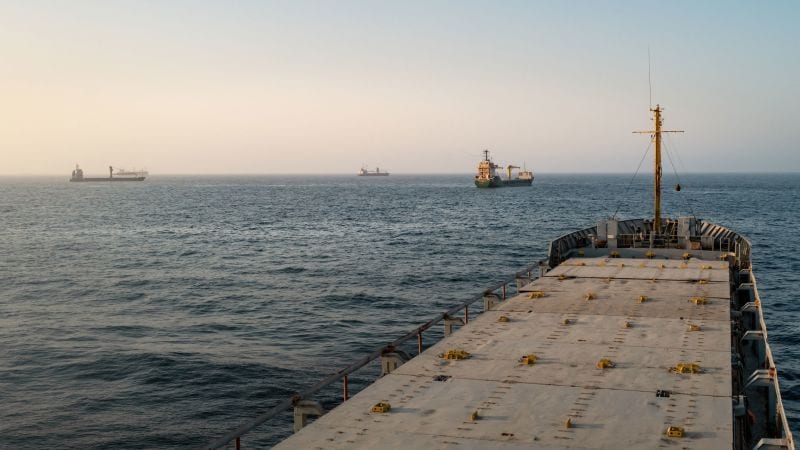
The British military reported that a container ship was hit by a projectile off the coast of Oman, hours after Iran had threatened vessels using the route. No injuries were reported. The incident occurred during fragile negotiations between the U.S. and Iran aimed at a permanent end to their war and reopening the Strait of Hormuz, which Iran views as leverage.
The International Maritime Organization had begun an operation to move stranded ships using an alternative route, but halted evacuations after the attack, stating they would not resume without guarantees against further attacks. While 115 ships had moved out of the strait, approximately 500 remained. Shipping analysts noted the drone strike cast a shadow over increasing commercial confidence in the strait, with the pace of normalization slowing despite continued transits.