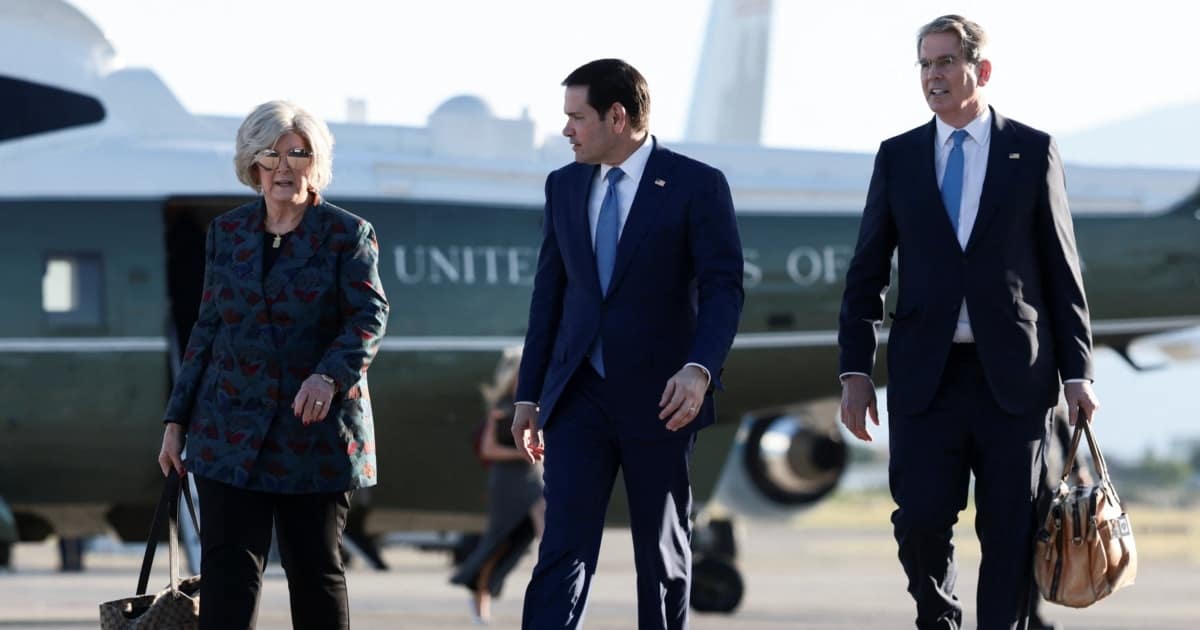
US Secretary of State Marco Rubio is visiting Bahrain, Kuwait, and the UAE to discuss a preliminary Iran accord with Gulf allies. The trip aims to reassure regional partners and address concerns over the memorandum of understanding, particularly regarding Iran's military capacity and ballistic missile program.

The visit is critical for the US to solidify regional support for its diplomatic approach to Iran, address lingering security concerns among key allies, and ensure the stability of vital maritime trade routes in the Persian Gulf.
US Secretary of State Marco Rubio is undertaking a diplomatic visit to Bahrain, Kuwait, and the United Arab Emirates to discuss a preliminary agreement reached between the US and Iran. The trip, which began Tuesday and concludes Thursday, aims to reassure Gulf Arab allies and garner support for the framework deal, while also addressing regional security concerns.
Rubio's itinerary includes a meeting with the Gulf Cooperation Council (GCC) in Bahrain. Key discussion points will revolve around the memorandum of understanding (MoU) between the US and Iran, as well as ensuring safe passage through the Strait of Hormuz. This visit follows intensive negotiations in Switzerland, which Vice President JD Vance described as having laid a "good foundation for a successful final deal" to conclude the conflict.
Despite broad support for ending the US-Israeli war with Iran, many Gulf leaders are reportedly concerned about the specific terms of the MoU. Particular worries include the potential for a $300 billion reconstruction fund for Iran to be used for rebuilding its military capacity and funding regional proxies. The absence of provisions addressing Iran's ballistic missile program in the MoU is also a significant concern for Washington's Gulf allies.
The trip underscores the Trump administration's efforts to translate diplomatic progress into security guarantees for its Gulf partners, many of whom remain skeptical of Tehran's long-term compliance. The administration seeks to balance diplomacy with deterrence, consolidating diplomatic momentum while preserving the regional security architecture. Confidence-building measures, such as potentially unfreezing select Iranian assets for agricultural purchases, are being explored, alongside Iran's agreement to readmit UN nuclear inspectors.
Experts emphasize that demonstrating the durability of the US-Iran agreement is crucial for convincing Gulf partners of its ability to provide long-term stability for investment, economic growth, and regional security. The enduring vulnerability of the Strait of Hormuz, a critical chokepoint for global oil supply, remains a strategic anchor in these discussions.