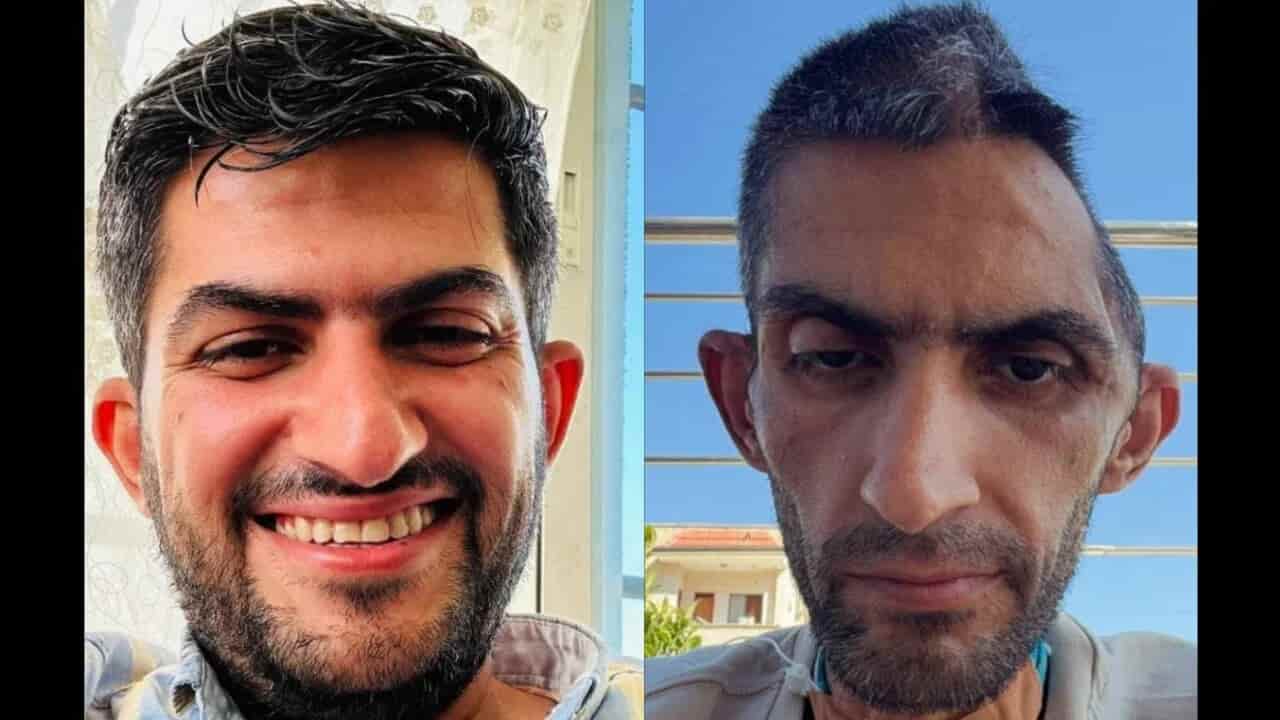
Key facts
- Palestinian journalist Mujahed Bani Mufleh's photos showing severe physical deterioration after Israeli detention were released.
- Bani Mufleh was held in administrative detention without charge or trial for eight months.
- He was diagnosed with a severe brain hemorrhage due to alleged prison conditions and medical neglect.
- Journalists and rights organizations have condemned the treatment and called for accountability.
- The Palestinian Prisoners' Society described the Israeli prison system as a tool for 'slow and direct killing'.
Photos depicting the severe physical decline of Palestinian journalist Mujahed Bani Mufleh after his release from Israeli detention have triggered widespread outrage and demands for accountability.
Bani Mufleh, 36, shared images on Instagram showing his emaciated state after eight months of administrative detention, a system of imprisonment without charge or trial. He was released in January and subsequently discovered he had suffered a severe brain hemorrhage, attributed to the conditions and alleged medical neglect within the Israeli prison system. The Palestinian Prisoners’ Society stated that he required emergency surgeries and faces a lengthy recovery.
In a statement accompanying the photos, Bani Mufleh described the psychological toll of his detention, recounting the constant suffering, loss of privacy, and the struggle for basic necessities like food and water. He expressed how the experience taught him to appreciate small details previously taken for granted.
The images have circulated widely on social media, with journalists, activists, and medical professionals condemning the alleged mistreatment. One doctor described Bani Mufleh as the 'face of a tortured man' who has barely survived, while journalist Ahmed Eldin characterized the system as designed 'to break Palestinian bodies as much as silence Palestinian voices.'
The Palestinian Prisoners' Society asserted that Bani Mufleh's case is not an isolated incident but representative of thousands of Palestinian detainees who endure systematic torture, starvation, denial of medical treatment, and psychological abuse. The organization noted that many such cases remain unreported due to fear of re-arrest.
Reports of torture and deaths in Israeli prisons have reportedly increased since the start of the conflict in Gaza in October 2023. According to the Prisoners' Society, at least 245 Palestinian journalists have been arrested by Israel since then, and over 9,500 Palestinians are reportedly held in Israeli prisons, with the actual number believed to be higher.