Key facts
- China's Vice-Premier Ding Xuexiang asserted the country's role as a defender of global supply chains.
- Ding highlighted China's contribution to stabilizing energy and fertilizer markets during the Strait of Hormuz crisis.
- He refuted Western claims of Chinese overcapacity and protectionism.
- Ding stated China's industrial growth is a result of reform and opening up, not government protection.
- Ding claimed China does not pursue trade surpluses and blamed export controls by other nations for import limitations.
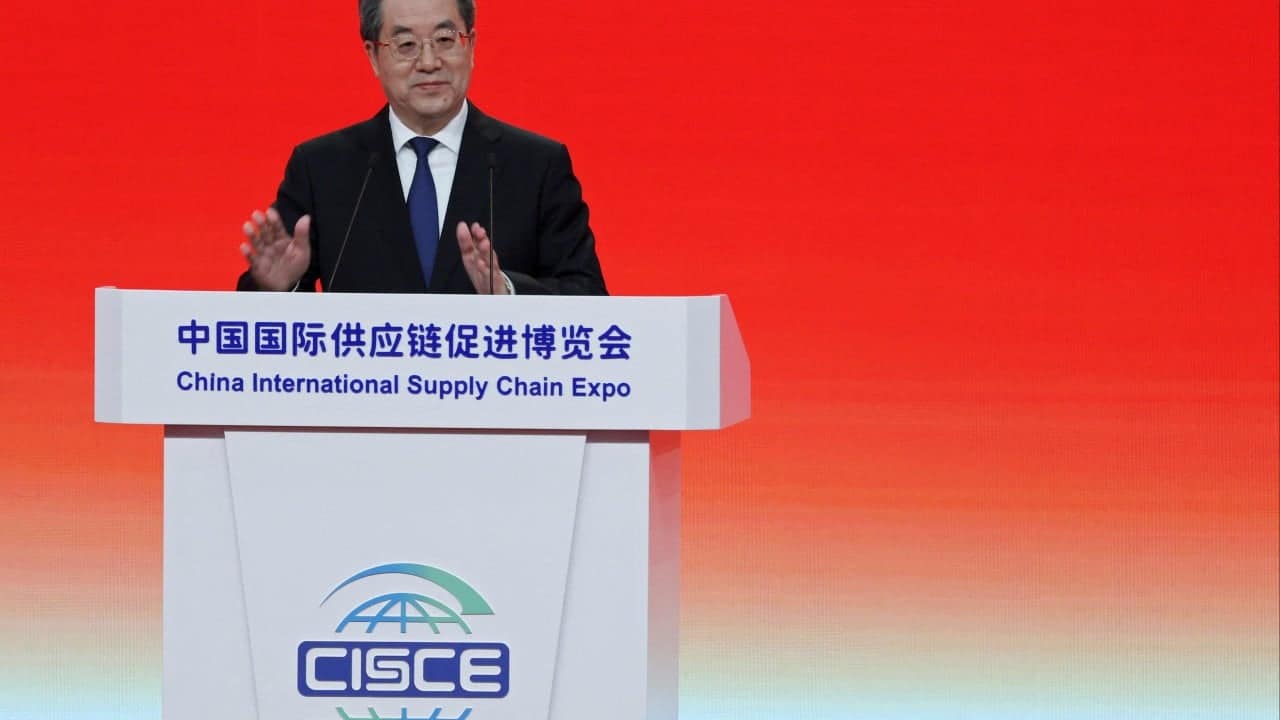
China's Vice-Premier Ding Xuexiang on Monday defended the country's role in global supply chains, asserting that its proactive engagement in stabilizing energy and fertilizer markets during the Strait of Hormuz crisis demonstrates it is a builder and defender, not a disruptive force as alleged by the West. Speaking at the opening of the fourth China International Supply Chain Expo (CISCE) in Beijing, Ding rejected Western narratives of Chinese overcapacity, attributing the nation's industrial development to its reform and opening-up policies, a comprehensive industrial base, and a vast market, rather than government protection and subsidies.
Ding further stated that China does not actively pursue trade surpluses, suggesting that the primary obstacle to increasing its imports lies with certain countries that "abuse export controls." This comes as Beijing posted a record trade surplus of nearly US$1.2 trillion in 2025, raising concerns in Europe and elsewhere about the impact on local industries. In the first five months of the current year, China's trade surplus reached US$451.7 billion, according to customs data.