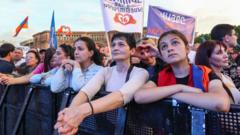
Kosovo holds snap election amid ongoing political crisis
window 24h
IN SHORT
Kosovo is holding its third parliamentary election in 18 months amidst a continuing political crisis, with Prime Minister Albin Kurti's party expected to win but needing a two-thirds majority to elect a new president. In Armenia, Prime Minister Nikol Pashinyan's party leads polls in a parliamentary election, testing his peace efforts with Azerbaijan and Western ties amid Russian pressure and domestic criticism following a military defeat. Meanwhile, Cyprus re-elected Annita Demetriou as parliamentary speaker, an election seen as an indicator for future presidential alliances.
✉Newsletter
PiQ Daily
Pick your topics. Get only what matters, on your cadence.
Who's Involved
Albin Kurti
Prime Minister of Kosovo leading his party in snap elections
Nikol Pashinyan
Prime Minister of Armenia facing parliamentary elections and peace talks
Annita Demetriou
Cypriot parliamentary speaker re-elected to her post
European Union
Providing funding and supporting Armenia's pro-Western stance
Russia
Applying pressure on Armenia's government amid elections
Azerbaijan
Engaged in peace efforts and talks with Armenia
United States
Supporting Armenia's pro-Western stance
Key facts
Kosovo is holding its third parliamentary election in 18 months.
Kosovo's Prime Minister Albin Kurti's party is predicted to win the election.
A two-thirds majority is needed in Kosovo's parliament to elect a new president.
Armenia is holding a parliamentary election on June 7.
Prime Minister Nikol Pashinyan's party leads polls in Armenia.
Armenia faces Russian pressure and domestic criticism following a military defeat in Nagorno-Karabakh.
Armenia is engaged in ongoing peace efforts with Azerbaijan.
Annita Demetriou was re-elected as speaker of the Cypriot parliament.
The Cypriot parliamentary vote is seen as an indicator for the 2028 presidential election.
Kosovo is currently holding its third parliamentary election within the last 18 months, a development stemming from a persistent political crisis. Prime Minister Albin Kurti's party is widely predicted to secure victory once again. However, to successfully elect a new president, Kurti's party will require a two-thirds majority in parliament, a challenge that has previously led to snap elections. The recurring electoral cycle has led to significant delays in implementing crucial reforms and securing European Union funding.
In Armenia, citizens are participating in a parliamentary election on June 7, which serves as a critical test for Prime Minister Nikol Pashinyan's peace initiatives with Azerbaijan and his government's strengthening ties with the West. Pashinyan's party is currently leading in opinion polls. Nevertheless, the Prime Minister faces considerable pressure from Russia and criticism from within his own country, particularly in the aftermath of a military defeat in the Nagorno-Karabakh region. The election is taking place amidst ongoing peace talks with Azerbaijan and significant Russian pressure on the Armenian government.
Separately, in Cyprus, Annita Demetriou has been re-elected as the speaker of the Cypriot parliament. This parliamentary vote is being closely observed as a potential indicator of the alliances that may form for the upcoming presidential election scheduled for 2028.
↳ Why This Matters
Kosovo is currently holding its third parliamentary election within the last 18 months, a development stemming from a persistent political crisis. Prime Minister Albin Kurti's party is widely predicted to secure victory once again. However, to successfully elect a new president, Kurti's party will require a two-thirds majority in parliament, a challenge that has previously led to snap elections. The recurring electoral cycle has led to significant delays in implementing crucial reforms and securing European Union funding.
FREQUENTLY ASKED
Kosovo is holding its third parliamentary election in 18 months because no single party has been able to gain a strong enough majority to elect a new president, leading to parliamentary dissolution.
Kosovo aspires to join the European Union and has had a pro-Western orientation across its political parties.
The country faces challenges due to political deadlock, which has delayed reforms and the flow of much-needed EU funding.
Analysts predict victory again for Prime Minister Albin Kurti's Vetevendosje party, though securing a two-thirds majority for presidential election remains a challenge.
What Happens Next
01First official election results expected soon after polls close.
02Analysis of whether Prime Minister Kurti can secure a two-thirds majority.
03Potential for further political negotiations or another snap election depending on the results.
Get the newsletter.
Pick the topics you actually care about. We'll email when there's news worth your time, on the cadence you choose. Cancel any time from your account.