Key facts
- Kosovo is holding its third parliamentary election in 18 months.
- Prime Minister Albin Kurti's party is predicted to win the Kosovo election.
- A two-thirds majority is needed in Kosovo to elect a new president.
- Armenia is holding a parliamentary election on June 7.
- Prime Minister Nikol Pashinyan's party leads polls in Armenia.
- Armenia faces Russian pressure and domestic criticism after a military defeat in Nagorno-Karabakh.
- Annita Demetriou was re-elected as speaker of the Cypriot parliament.
- The Cypriot speaker vote is seen as an indicator for the 2028 presidential election.
Kosovo is currently holding its third parliamentary election within an 18-month period, a development stemming from an ongoing political crisis. Prime Minister Albin Kurti's party is widely predicted to secure victory once again. However, to successfully elect a new president, Kurti's party requires a two-thirds majority in parliament, a threshold that has previously led to snap elections. The repeated electoral cycles have reportedly hindered crucial reforms and delayed the disbursement of European Union funding.
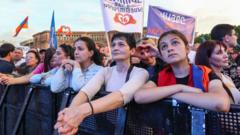
In Armenia, citizens are participating in a parliamentary election on June 7. This election serves as a significant test for Prime Minister Nikol Pashinyan's peace initiatives with Azerbaijan and his government's strengthening ties with Western nations. Pashinyan's party is leading in opinion polls, but the administration is contending with considerable pressure from Russia. Furthermore, domestic criticism has intensified following a recent military defeat in the Nagorno-Karabakh region. The election is taking place under the shadow of this Russian pressure, with Pashinyan seeking a third term in office.
Separately, in Cyprus, Annita Demetriou has been re-elected as the speaker of the Cypriot parliament. This particular vote is being interpreted by observers as a potential indicator of the alliances that may form in anticipation of the 2028 presidential election.