Key facts
- Brazil is set to harvest a record 6.5 billion bushels of soybeans in the 2025-26 season.
- Farm margins are projected to reach their lowest point in nearly two decades.
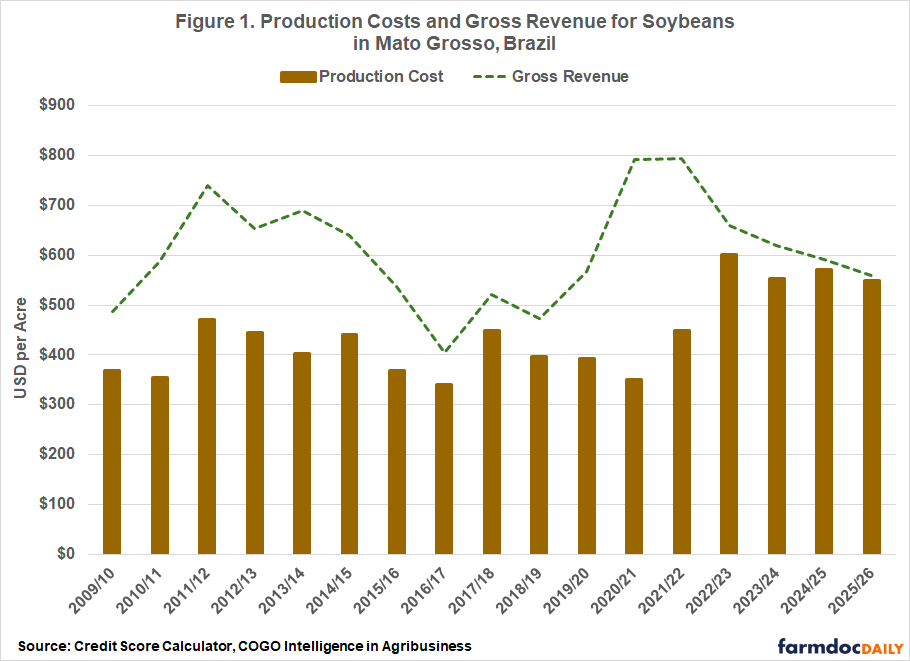
- Production costs have increased significantly since the 2021-22 season, influenced by fertilizer prices and currency exchange rates.
- Revenue has been volatile due to fluctuations in global soybean prices.
- The narrowing profitability may curb future soybean acreage expansion in Brazil.
Brazil is on track to achieve a record soybean harvest in the 2025-26 season, with projections indicating a yield of 6.5 billion bushels. However, this bumper crop is expected to coincide with the lowest farm margins in nearly two decades, driven by a combination of rising production costs and volatile revenues.
Production costs for Brazilian farmers have been on an upward trend, particularly since the 2021-22 crop season. This increase is largely attributed to higher fertilizer prices, exacerbated by the Russia-Ukraine conflict and Brazil's heavy reliance on imported fertilizers. The appreciation of the U.S. dollar against the Brazilian real has further amplified these costs.
Gross revenue per acre, while showing a recent peak in 2021-22 and 2022-23 due to strong global demand and supply disruptions, has historically been more volatile. Profitability for high-yield soybean production in Mato Grosso has fluctuated significantly over the past decade, with a notable peak in 2020-21.
The current economic environment, characterized by compressed profitability, could lead to a slowdown in the expansion of soybean acreage in Brazil, which has seen consistent year-over-year increases since the early 2000s. This situation has implications for the global soybean market, potentially impacting prices and supply dynamics.