Key facts
- United Airlines is introducing a new premium seating option that removes the middle seat.
- The empty middle seat will be replaced by a large, custom table with cup indentations.
United Airlines is introducing a new premium seating option that removes the middle seat in certain rows, replacing it with a shared table to offer passengers more personal space. This feature will debut on the airline's upcoming Airbus A321XLR aircraft.
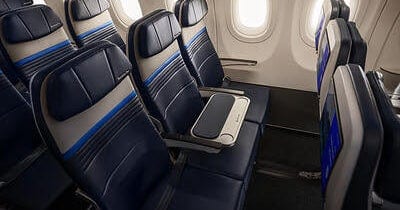
This move by United Airlines aims to cater to passengers willing to pay more for comfort and personal space, reflecting a broader industry trend of offering tiered services and add-ons to flights.
United Airlines is set to introduce a novel premium seating option that repurposes the middle seat into a shared table, offering passengers additional personal space. This new feature will debut on the airline's upcoming fleet of 50 Airbus A321XLR aircraft, with sales expected to begin later this year for flights departing soon after.
The airline stated it will be the only U.S. carrier to offer this configuration, which replaces the traditional middle seat with a permanently installed table that spans from armrest to armrest. Passengers in the window and aisle seats will share this table, which is designed with a soft leather-like covering and two cup indentations, providing extra room for stretching out, particularly on longer international flights.
This initiative is part of United's broader investment in enhancing its fleet and passenger experience across all cabins. The Airbus A321XLR aircraft are designed for short- and medium-haul international routes and will feature 32 premium seats, an increase from the Boeing 757s they are replacing. The aircraft will also include advanced amenities such as 4K OLED entertainment screens, larger overhead bins, and a snack bar.
United recently announced another innovation, the United Relax Row, which allows economy seats to recline into a lie-flat surface, scheduled for availability in early 2027. The airline reported record operating revenue of $59.1 billion and a net income of $3.4 billion in 2025, while also reducing its total debt to approximately $25 billion.