HomeEverythingEducation
Equities & FundsCrypto & Digital AssetsAI & TechnologyBusiness & CorporateUS Politics & PolicyGeopolitics & Global RiskMacro, Rates & FXCommodities & EnergyEuropean Politics & MarketsAsia-PacificReal Estate & Property
Story archiveAll categories
← All Stories

India's cities become heat traps due to urban growth

Created at 11 Jun · 12:30 AM1 source↑ Market-relevant
IN SHORT

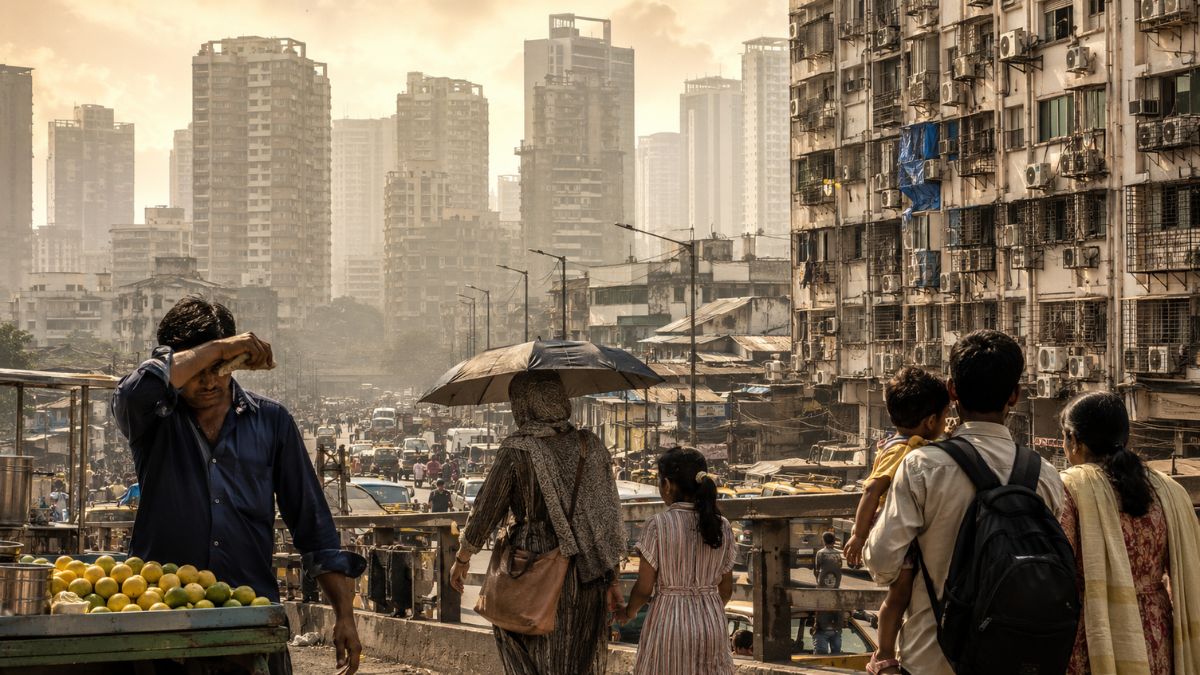
Indian cities are increasingly becoming "heat traps" due to rapid urbanization, loss of green cover, and increased greenhouse gas emissions, leading to higher "feels-like" temperatures and surging electricity demand for cooling. This phenomenon is exacerbating heatwave conditions and straining the national power grid.

✉Newsletter

PiQ Daily

Pick your topics. Get only what matters, on your cadence.

Key Numbers

20%Surge in compound hot-humid days
14,086Compound hot-humid days (2015-2019)
16,970Compound hot-humid days (2020-2024)
2°C to 10°CUrban Heat Island intensity range
270.8 GWRecord peak electricity demand
40%Projected household air-conditioner penetration by 2030
0.21°CAverage nighttime temperature increase per decade (2010-2024)
35States and Union Territories recording warming trends
31.2°C to 32°CNight-time indoor temperatures in low/middle-income homes
44°CHighest daily temperature in Delhi
49.2°CFeels-like temperature in Delhi

Who's Involved

Narendra Modi
Prime Minister of India, urging action on heatwaves
Ashwini Vaishnaw
Union minister, reporting on Prime Minister's directive
Krishna S. Vatsa
Member of the National Disaster Management Authority
Climate Trends
Organization that published a report on India's urban heat crisis
India Meteorological Department (IMD)
Forecasting above-normal temperatures and issuing warm night advisories
IIT Bhubaneswar
Conducted research on night-time warming in Indian cities
Prof Anjal Prakash
Faculty of public policy at FLAME University
India's cities become heat traps due to urban growth

↳ Why This Matters

The transformation of Indian cities into heat traps poses a significant threat to public health, exacerbates energy infrastructure strain, and highlights the urgent need for sustainable urban planning and climate adaptation strategies to address the growing cooling crisis.

Key facts

  • India's cities are experiencing a more than 20% surge in compound hot-humid days over the past decade, intensifying heat stress.
  • Urban Heat Island intensity in Indian cities ranges from 2°C to 10°C, exacerbating heat.
  • Peak electricity demand in India reached a record 270.8 GW due to increased reliance on air conditioning.
  • Nighttime temperatures in Indian cities are rising significantly, preventing natural cooling and extending demand for air conditioning.
  • Prime Minister Narendra Modi has called for a "whole-of-nation" approach to mitigate heatwave impacts.

India's cities are increasingly transforming into "heat traps" as rapid urbanization, the loss of green cover, and increased greenhouse gas emissions intensify heatwave conditions. This phenomenon is leading to a significant surge in compound hot-humid days, with an increase of over 20% in less than a decade. The "feels-like" temperatures are rising, driving a sharp increase in electricity demand for cooling and placing immense stress on the national power grid.

Peak power demand has reached record levels, touching 270.8 GW, as air-conditioner usage escalates. Projections indicate that air-conditioner penetration could reach nearly 40% of Indian households by 2030, further amplifying summer electricity consumption. The problem is compounded by rising humidity and hotter nights, which prevent buildings from cooling naturally after sunset, extending the demand for cooling appliances well into the night. Night-time indoor temperatures in low- and middle-income homes can remain uncomfortably high, often between 31.2°C and 32°C.

Urban Heat Island intensity in Indian cities now ranges between 2°C and 10°C, worsening urban heat stress. This unbalanced urban growth has also led to the devouring of water bodies and a considerable reduction in permeable spaces. In response to the escalating crisis, Prime Minister Narendra Modi has urged Union Cabinet Ministers to ensure their departments take necessary steps to mitigate the impact of the prevailing heatwaves, emphasizing a "whole-of-nation" approach.

The India Meteorological Department has forecast above-normal temperatures for June in several key regions, including Delhi, where temperatures have consistently stayed above 40 degrees Celsius. The situation highlights a critical urban design challenge, where neighborhood density, land-use choices, and building materials significantly determine the level of heat relief experienced by residents, particularly after sunset.

Frequently asked questions

Rapid urbanization, loss of green cover, increased greenhouse gas emissions, and unbalanced urban growth that devours water bodies are turning Indian cities into heat traps.

The increasing "feels-like" temperatures and hotter nights are driving a surge in demand for air conditioning, pushing peak electricity demand to record levels.

Rising night temperatures prevent buildings from cooling naturally, extending the need for air conditioning well past midnight and contributing to discomfort and increased energy consumption.

Prime Minister Narendra Modi has called for a "whole-of-nation" approach, urging all Union Cabinet Ministers to ensure their departments take necessary steps to mitigate the impact of the heatwaves.

What Happens Next

01Prime Minister Modi has directed ministries to take steps to mitigate heatwave impacts.
02Further analysis is expected on the long-term implications of rising night temperatures and humidity on India's energy demand.
03Urban planning strategies may need to be revised to incorporate more green spaces and water bodies.

Get the newsletter.

Pick the topics you actually care about. We'll email when there's news worth your time, on the cadence you choose. Cancel any time from your account.

Cadence

How It Developed

Compound hot-humid days across India surged more than 20% between 2015-2019 and 2020-2024.
Urban Heat Island intensity in Indian cities now ranges between 2°C and 10°C.
Residential cooling demand is overtaking industrial power demand growth in several Indian states.
Air-conditioner penetration could reach nearly 40% of Indian households by 2030.
Prime Minister Narendra Modi urged ministers to mitigate the impact of prevailing heatwave conditions.
India's peak electricity demand touched an all-time high of 270.8 GW on May 21.
Nighttime temperatures across 141 Indian cities averaged 0.53 degrees Celsius per decade between 2003–2020.
Night-time indoor temperatures in low- and middle-income homes can remain between 31.2°C and 32°C.

Sources

T1
India's urban boom turns its cities into heat trapsNikkei Asia
T2
India's urban growth has turned its cities into 'heat traps', making ...scmp.com
T2
Urban heat islands: Why Indian cities are becoming unliveable after ...business-standard.com
T2
India's cities become 'heat traps' as hot-humid days surge 20%financialexpress.com

Related Stories

India Tax Filings Lag Crypto Trading Activity: Report
8 Jul · 1:45 PM
Skyroot Aerospace Aims for Monthly Rocket Production Ahead of India's First Private Orbital Launch
9 Jul · 7:35 AM
ADB cuts Asia growth forecast to 4.9% on energy shock, trade woes
8 Jul · 3:35 PM
China's EV Boom Strains Auto Tax System, Threatens Road Funding
9 Jul · 1:05 AM
Australia to sell uranium to India after leaders sign deal
8 Jul · 11:51 PM