HomeEverything
Equities & FundsCrypto & Digital AssetsAI & TechnologyBusiness & CorporateUS Politics & PolicyGeopolitics & Global RiskMacro, Rates & FXCommodities & EnergyEuropean Politics & MarketsAsia-PacificReal Estate & Property
← All Stories

Chinese automakers surpass Japanese rivals in Europe

Created at 2 Jul · 8:00 AM1 source↑ Market-relevant
IN SHORT

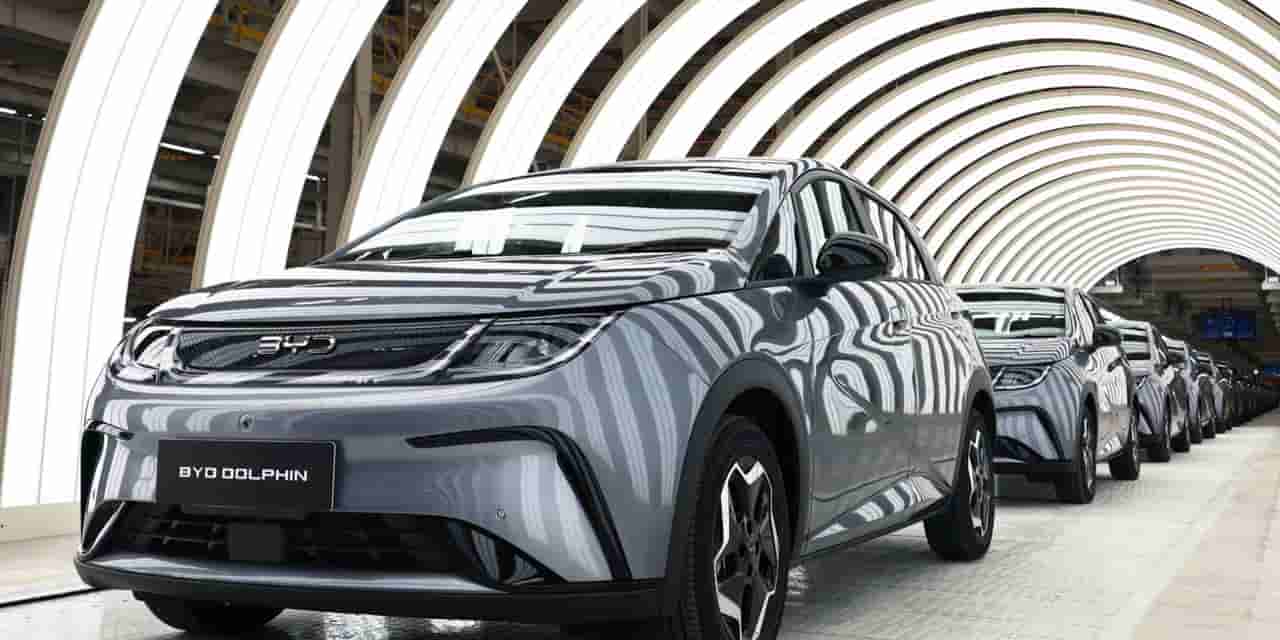
Chinese automakers, led by BYD, have surpassed Japanese brands in European passenger car sales for the first time in May 2026. This surge is attributed to strong overseas performance and the UK's open market policy, despite EU tariffs on electric vehicles.

✉Newsletter

PiQ Daily

Pick your topics. Get only what matters, on your cadence.

Key Numbers

70%BYD's first-half overseas passenger vehicle sales jump
May 2026Month Chinese automakers surpassed Japanese brands in Europe
30%Proportion of Chinese cars sold in Western Europe bought by Britons (Jan-Sep)
1,000+Cars sold in the UK this year by Great Wall Motor, Xpeng, and Leapmotor
17% to 38%EU electric car tariff range
August 2025Month BYD sold three times as many cars in EU as August 2024
34.7%EU market share for hybrid-electric cars (July 2025)
15.6%BEV registration increase in EU (by July 2025)
8.8%EU car registration share for plug-in hybrid electric cars
37.7%Market share of petrol and diesel cars in EU (July 2025)

Who's Involved

BYD
Chinese automaker with strong overseas performance
Nissan
Japanese automaker looking to other markets
Chery
State-controlled Chinese manufacturer with brands Omoda and Jaecoo
Matthias Schmidt
Berlin-based automotive analyst
Steve Young
Managing director of Hogarth dealership
SAIC
State-owned company that produces MG vehicles
Geely
Chinese company controlling Volvo and Polestar
ACEA
European Automobile Manufacturers' Association
Chinese automakers surpass Japanese rivals in Europe

↳ Why This Matters

Chinese automakers are rapidly gaining market share in Europe, challenging established Japanese and European brands. This shift is driven by the global transition to electric vehicles and varying trade policies, impacting the competitive landscape and potentially influencing future automotive manufacturing and sales strategies across the continent.

Key facts

  • Chinese automakers surpassed Japanese brands in European passenger car sales in May 2026.
  • BYD's first-half 2026 overseas passenger vehicle sales increased by 70%.
  • The UK has become a significant market for Chinese brands due to its open trade policy.
  • Hybrid-electric vehicles are the most popular powertrain in the EU, while BEV sales are growing.
  • EU tariffs on electric cars range from 17% to 38%, with hybrids exempt.

Chinese automakers have surpassed Japanese brands in European passenger car sales for the first time in May 2026, driven by strong performance from companies like BYD. BYD's overseas sales in the first half of 2026 jumped 70% year-on-year, with the UK emerging as a key market due to its open trade policy and lack of new tariffs on electric vehicles.

Brands such as Chery's Omoda and Jaecoo, and SAIC's MG, are also making significant inroads in the UK. While the EU has imposed tariffs ranging from 17% to 38% on electric cars, hybrids are exempt, creating an incentive for Chinese manufacturers to sell these models. Despite these tariffs, BYD's sales in the EU in August 2025 were triple that of the previous year, surpassing Tesla.

Hypbrid-electric vehicles continue to dominate the European market, accounting for 34.7% of sales by July 2025, while battery-electric vehicle registrations saw a 15.6% increase. Plug-in hybrid sales also experienced strong growth. This shift in powertrain preference, coupled with competitive pricing and advanced technology from Chinese manufacturers, is disrupting the established European automotive landscape.

Frequently asked questions

BYD is a leading performer, with Chery's brands Omoda and Jaecoo, and SAIC's MG also making significant gains. Other Chinese brands like Great Wall Motor, Xpeng, and Leapmotor are also selling cars in the UK.

The EU has imposed tariffs ranging from 17% to 38% on electric cars, but hybrids are exempt. This has not significantly hindered BYD's sales in the EU, and the UK's open market policy has been a key factor for Chinese brands.

Hybrid-electric vehicles are the most popular, holding 34.7% of the market by July 2025. Battery-electric vehicle registrations increased by 15.6%, and plug-in hybrid sales also saw strong growth, while petrol and diesel car market share declined.

What Happens Next

01EU tariffs may temper further import growth.
02Further product launches from Chinese brands are expected in the UK.

Get the newsletter.

Pick the topics you actually care about. We'll email when there's news worth your time, on the cadence you choose. Cancel any time from your account.

Cadence

How It Developed

Chinese automakers surpassed Japanese brands in European passenger car sales in May 2026.
BYD's first-half 2026 overseas passenger vehicle sales jumped 70% year-on-year.
Chinese brands Omoda and Jaecoo, owned by Chery, are gaining visibility in the UK.
Chinese carmakers are leveraging the transition to electric cars to expand globally.
The UK has become a key market for Chinese automakers due to its open trade policy.
BYD's sales in the UK surged tenfold in September 2025 compared to the previous year.
SAIC-owned MG has overtaken Vauxhall in monthly sales in the UK.
Volvo and Polestar, controlled by Geely, are also seeing sales in the UK.

Sources

T1
Chinese automakers overtake Japanese rivals in Europe despite EV tariffsNikkei Asia
T2
Driving competition: China's carmakers in race to dominate Europe's ...theguardian.com
T2
Chinese automakers make huge waves in Europe - Gulf Newsgulfnews.com

Related Stories

BYD Sales Increase for Second Month, Driven by Exports
1 Jul · 10:23 AM
BYD's first-half sales fall 16% amid China EV market slowdown
1 Jul · 2:35 PM
China's EV makers set sales records with new tech
2 Jul · 6:05 AM
China exports hurt Europe growth more than trade gap, Goldman says
2 Jul · 9:36 AM
China Auto, Appliance Sales Slump as Subsidies Fade
2 Jul · 6:21 AM