Key facts
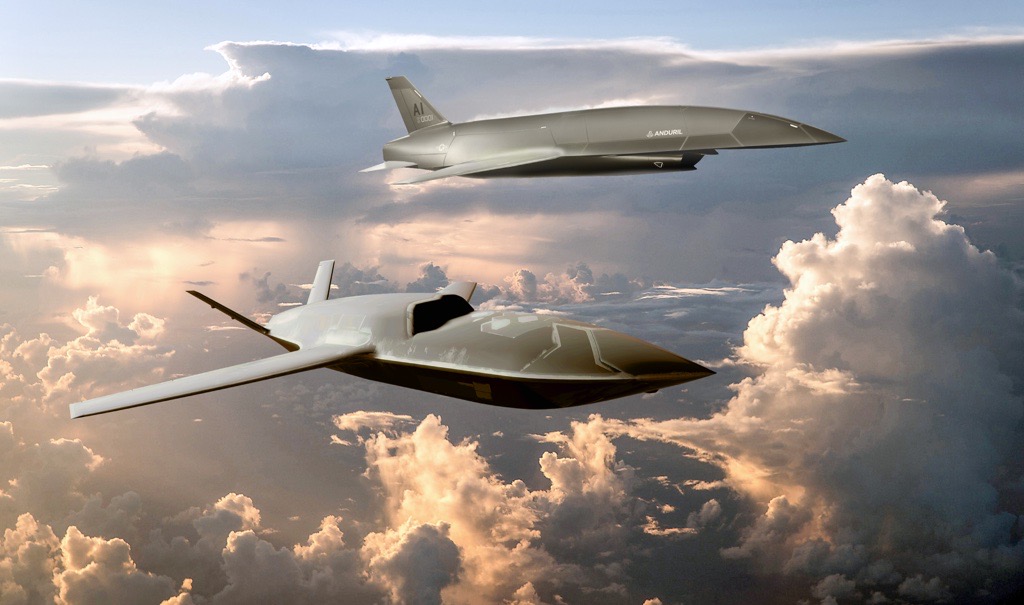
- The U.S. Air Force awarded production contracts to General Atomics and Anduril Industries for its Collaborative Combat Aircraft (CCA) program.
- General Atomics will produce the FQ-42 CCA, and Anduril Industries will produce the FQ-44 CCA.
- The contracts include engineering and manufacturing development and production for at least 150 CCAs combined.
- Anduril, Shield AI, and Collins Aerospace were selected to provide mission autonomy software for the CCAs.
- The Air Force plans to field approximately 1,000 CCAs to complement crewed fighter aircraft.
The U.S. Air Force has awarded production contracts to General Atomics Aeronautical Systems and Anduril Industries for its Collaborative Combat Aircraft (CCA) program, signaling a significant step towards fielding semi-autonomous drones. These contracts move the program, initiated just over two years ago, from the prototype phase into full-scale manufacturing.
General Atomics will produce the FQ-42 CCA, while Anduril Industries will build the FQ-44 CCA. The department announced that these contracts cover engineering and manufacturing development and production for at least 150 CCAs combined by the end of the decade. The Air Force also competitively awarded production options for the critical mission autonomy software to Anduril, Shield AI, and Collins Aerospace, selected from a pool that included major defense contractors.
Col. Timothy Helfrich described CCA as the next evolution of airpower, emphasizing human-machine teaming and its potential to extend reach, increase survivability, and generate combat mass in contested environments. The Air Force's long-term vision includes a fleet of approximately 1,000 CCAs of various types to augment crewed fighters like the F-35A, F-47, and F-22A. These drones are designed to operate autonomously, conducting strikes, reconnaissance, and electronic warfare missions with minimal pilot direction.
Both General Atomics and Anduril have been involved in the CCA program since April 2024, with their respective prototypes, the YFQ-42A and YFQ-44A, undergoing ground and flight testing. The newly awarded contracts are not extensions of previous agreements, as the Air Force re-competed the program. Prototypes will now drop the 'Y' prefix, signifying their transition to production models, FQ-42A and FQ-44A.
David Alexander, President of General Atomics Aeronautical Systems, stated that manufacturing is already underway, reflecting years of investment and partnership. Anduril's Mark Shushnar noted that their production system has been refined in parallel with aircraft development, with full-rate production processes already implemented. While the exact cost is classified, Helfrich indicated that the Air Force is meeting its goal of the CCAs costing roughly one-third of an F-35, or less than $30 million per unit. Future production contracts will be awarded based on the companies' ability to deliver capability at speed and scale.