HomeAll NewsEducationTV
Equities & FundsCrypto & Digital AssetsAI & TechnologyBusiness & CorporateUS Politics & PolicyGeopolitics & Global RiskMacro, Rates & FXCommodities & EnergyEuropean Politics & MarketsAsia-PacificReal Estate & Property
Story archiveAll categories
← All Stories

Museums use data to enhance visitor experience

Created at 25 Jul · 11:12 AM1 source↑ Market-relevant
IN SHORT

Art museums are increasingly leveraging data analytics to understand visitor behavior and optimize the presentation of their collections. This data-driven approach aims to enhance engagement and provide more tailored experiences, impacting everything from physical layouts to digital guide recommendations.

✉Newsletter

PiQ Daily

Pick your topics. Get only what matters, on your cadence.

Key Numbers

25,000visits analyzed from Van Gogh Museum
1.5 milliontotal visits to Van Gogh Museum
2019-2021timeframe of data collection
4,600works in Van Gogh Museum collection
200works on display at any given time
63 percentaccuracy in predicting transitions between pieces
81 percentaccuracy in predicting likelihood of reaching specific pieces
96 percentaccuracy in predicting visitor departure rates

Who's Involved

Giovanni Kanter
Art museum visitor and student
Hilary Knight
Director of Change&, former director of digital at Tate
Ali Aouad
Professor at MIT Sloan School of Management
Abhishek Deshmane
Professor at Georgia Institute of Technology's Scheller College of Business
Victor Martínez de Albéniz
Professor at University of Navarra's IESE Business School
Lisa van den Bos
Former product manager for digital education at Van Gogh Museum
Gundy van Dijk
Head of education and interpretation at Van Gogh Museum
Museums use data to enhance visitor experience

↳ Why This Matters

Museums are adapting to evolving visitor habits and technological advancements by using data to create more engaging and personalized experiences, ensuring their continued relevance and cultural impact in a rapidly changing world.

Key facts

  • Museums are using data to understand visitor behavior and optimize art display.
  • A study analyzed visitor interactions with digital guides at the Van Gogh Museum.
  • Data suggests visitors respond to both physical placement and digital recommendations.
  • Congestion around artworks can surprisingly increase engagement.
  • A new model, 'pathway MNL,' predicts visitor transitions with high accuracy.

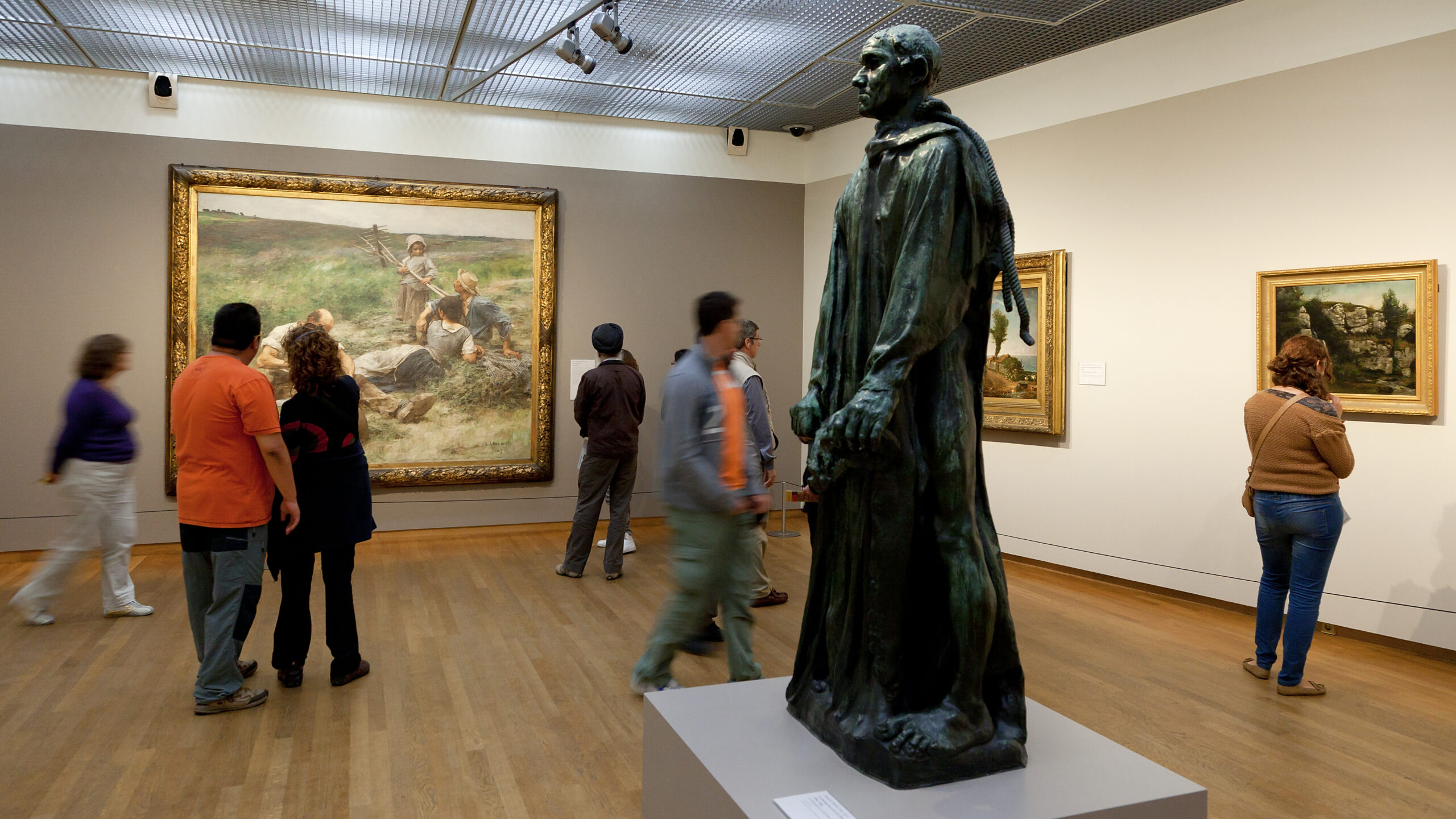
Art museums are increasingly adopting data-driven strategies to enhance the visitor experience, moving away from traditional roles as 'ivory towers' to become more participatory centers for discussion and encounter. Institutions are amassing and analyzing data on visitor behavior, such as which artworks are viewed and for how long, to inform decisions about collection layout and digital guide content.

A study by researchers from MIT, Georgia Tech, and the University of Navarra, published in Management Science, analyzed 25,000 visits to Amsterdam's Van Gogh Museum. They found that visitors respond to both the physical placement of art and its presentation on digital guides. The 'pathway multinomial logit' or 'pathway MNL' model developed by the researchers can predict visitor transitions between artworks with 63% accuracy and departure rates with 96% accuracy.

Key findings indicate that subtle ordering changes on digital guides can significantly impact traffic patterns. Visitors seek variety in time period and size but consistency in theme. Surprisingly, data revealed that congestion around artworks can increase engagement, potentially signaling quality. The researchers suggest that museums can experiment with exhibition spaces to test new layouts, and even digital guide adjustments can offer new perspectives on art.

While rearranging permanent collections can be challenging, the study's simulations indicate that strategic placement of highly attractive art and swapping pieces could lead to visitors seeing more art and staying longer, without compromising curatorial aims. The approach has potential applications beyond museums in sectors like entertainment, education, and retail that involve sequential physical and digital experiences.

Frequently asked questions

Museums are collecting data on visitor behavior, such as viewing times and paths taken, to inform decisions about art placement, digital guide content, and overall exhibition design.

The study found that visitors' choices and engagement are influenced by both the physical location of artworks and their presentation on digital guides, and that congestion can sometimes increase engagement.

It is a model developed by researchers that analyzes visitor movement data to predict transitions between artworks and departure rates, aiming to optimize museum layouts for maximum engagement.

What Happens Next

01Museums may implement data-informed planning for digital layouts.
02Further research may explore applications of the 'pathway MNL' model in other sectors.

Get the newsletter.

Pick the topics you actually care about. We'll email when there's news worth your time, on the cadence you choose. Cancel any time from your account.

Cadence
CME Headlines
  • Is AI Making Inflation Better or Worse?
    22 Jul · 3:26 PM

How It Developed

Museums are shifting from ivory towers to centers for discussion and encounter.
Institutions are using data to inform decisions about presenting artworks.
The Van Gogh Museum collaborated with academics to explore data's impact on visitor experience.
Researchers studied visitor interactions with digital guides and collection placement.
A study showed visitors respond to physical location and digital guide placement.
Data revealed that congestion can increase engagement with artworks.
Simulations suggested strategic art placement could lead to increased viewer engagement.
The 'pathway MNL' model achieved high accuracy in predicting visitor transitions and departures.
Sponsored

London Quick Take - 22 July - UK inflation softens, oil rises and chips rally ahead of Alphabet, Tesla earnings

SAXO

Sources

T1
With help from data, art museums are reframing the visitor experiencevar abtest_2154128 = new ABTest(2154128, 'impression');Ars Technica

Related Stories

AI Accelerates CRE Marketing Workflows, But Data Tracking Suffers
24 Jul · 10:06 PM
US launches advanced robotic satellite for geosynchronous orbit servicing
24 Jul · 3:26 PM
AI redesigns gene-editing proteins to improve safety
24 Jul · 5:36 PM
Big Tech Urges Against Open-Weight AI Bans Amid China IP Concerns
24 Jul · 2:31 PM
Chili's prioritizes WiFi and tablets over AI for restaurant upgrades
25 Jul · 9:41 AM