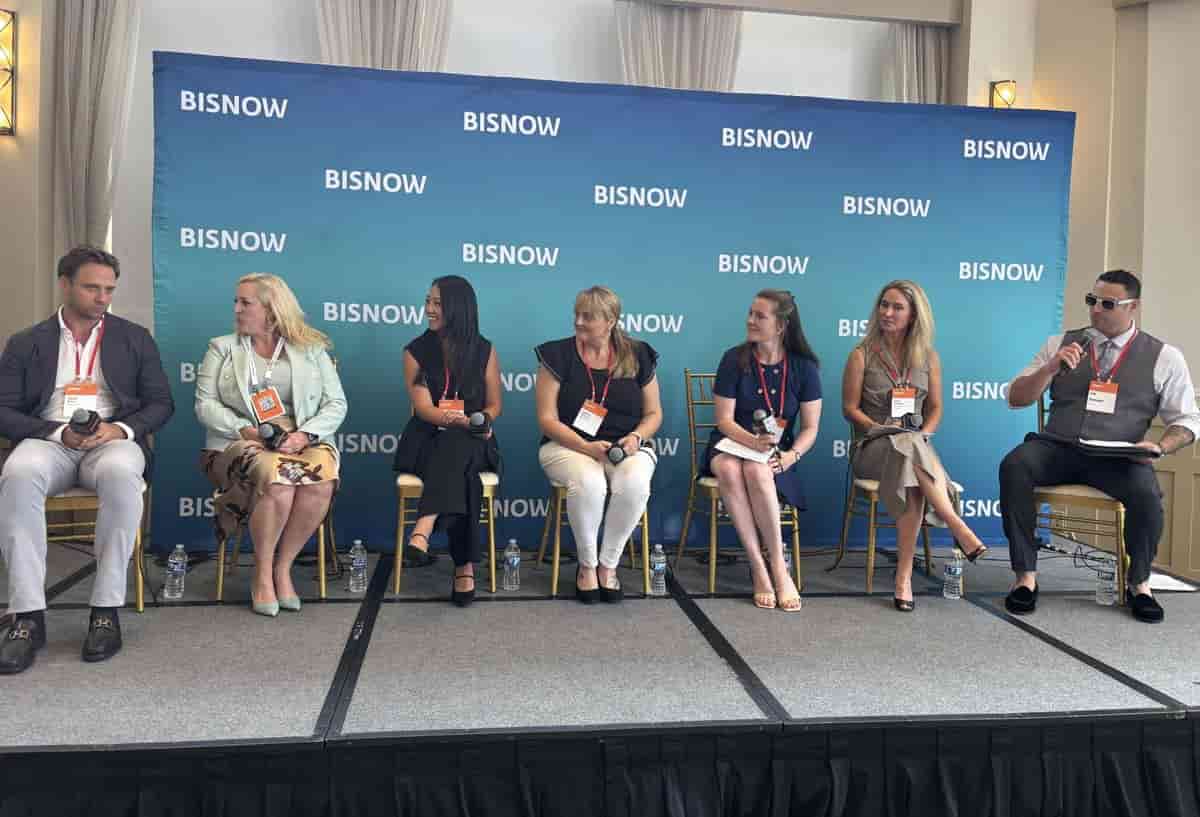
Artificial intelligence has significantly streamlined marketing processes within the commercial real estate (CRE) sector, compressing workflows from weeks to mere days, according to industry executives. Panelists at Bisnow’s CRE Property Marketing & Brand Strategy Cocktail highlighted how AI tools have boosted productivity, enabling faster turnaround times for marketing materials like building renderings and allowing for more strategic focus by automating data analysis.
Adam Pines, Senior Vice President at Madison Rose, noted that AI integration has made his marketing team operate as if they are "on steroids," elevating expectations and reducing costs for essential marketing outputs. Similarly, Kaysha Hanock, director of digital media at 1905 New Media, stated that AI has fundamentally changed their marketing processes, enabling the regular production of higher quality content and freeing up time previously spent on manual data compilation.
However, the widespread adoption of AI, particularly large language models (LLMs), has introduced complexities in tracking marketing effectiveness. Hanock pointed out that LLMs often do not link directly to company websites, which can lead to inaccurate website traffic data. When potential investors or buyers discover a brand through an LLM and then search for it on Google, search engines may incorrectly attribute this traffic as organic, potentially obscuring the true impact of AI-generated leads.
Emily Johnson, President of Taylor Johnson Public Relations, advised caution, emphasizing the importance of maintaining a closed-loop environment for sensitive materials like breaking news announcements to prevent premature leaks. She also warned against using AI to generate responses for media inquiries. Paige Steers, Chief Marketing Officer at Becknell Industrial, stressed the need for marketing strategies to address the distinct perspectives of different target audiences, such as tenants focused on operations and investors viewing assets at a portfolio level. Sheila Acar, Marketing Director at Cushman & Wakefield, echoed this client-specific approach on the brokerage side, highlighting how close collaboration with brokers provides crucial insights into future market opportunities.
Looking ahead, Hanock suggested that the best approach to future-proofing marketing strategies is to remain adaptable and open to change, acknowledging that methods that worked in the past may not be effective in the future.