Key facts
- President Donald Trump held a rally at Mount Rushmore for America's 250th anniversary.
- Trump attacked progressive Democrats and immigrants at the rally.
- The rally occurred during a severe heat wave.
- Trump launched his own initiative called Freedom 250 for the anniversary.
- Critics argue Freedom 250 is a partisan endeavor.
- A federal appeals court allowed the Trump administration to reinstall historical interpretation panels at the President's House site in Philadelphia.
- The City of Philadelphia had objected to the historical interpretations.
- Trump's platform emphasizes border expansion and immigration limits.
- President Trump pardoned 11 individuals.
- Nine of the pardoned individuals were convicted of Clean Air Act violations.
- Trump stated the Clean Air Act violators were prosecuted under the Biden administration for "fixing their car."
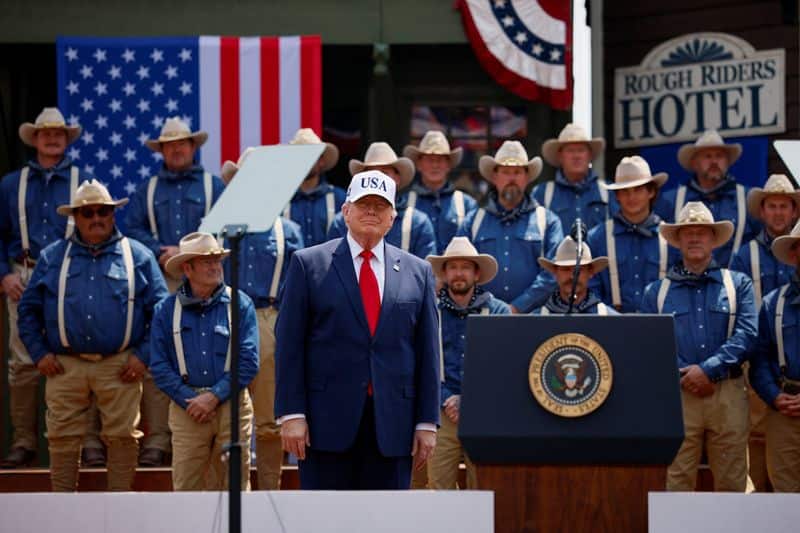
President Donald Trump initiated observances for America's 250th anniversary with a partisan rally at Mount Rushmore, delivering a speech that targeted progressive Democrats and immigrants, labeling them a "communist menace." This event took place amidst a significant heat wave that disrupted other Fourth of July festivities across the nation.
Trump has also significantly reshaped the official plans for America's 250th anniversary through his "Freedom 250" initiative. Critics argue this endeavor is primarily a partisan project centered on the president rather than a national commemoration, leading to a fragmented approach to the anniversary. In a separate development concerning historical interpretation, a federal appeals court has granted the Trump administration the ability to reinstall interpretive panels at the President's House site in Philadelphia. These panels had been previously removed, and the court's ruling allows the administration to proceed with its historical narrative, despite opposition from the City of Philadelphia.
Furthermore, President Trump's political platform, which advocates for border expansion and stricter immigration limits, is seen by some as mirroring the nation's early territorial expansion. However, this contrasts with the country's subsequent historical trajectory, which often focused on embracing immigration. This divergence reflects a potential shift in American identity and the dynamics of political power centers.
In other actions, President Trump issued pardons to 11 individuals. Notably, nine of these individuals were convicted of violating the Clean Air Act by disabling vehicle emissions controls. Trump justified these pardons by stating that these individuals were prosecuted under the Biden administration for "fixing their car."