Key facts
- Donald Trump has reshaped plans for America's 250th anniversary with his initiative, Freedom 250.
- Freedom 250 is a public-private partnership overseen by Trump aides and can maintain donor anonymity.
- Critics argue Trump's initiative is a partisan celebration focused on the president rather than the country.
- Some groups are holding counterprogramming events, emphasizing inclusivity and voter registration.
- Watchdog groups and Democrats are investigating Freedom 250's funding and its relationship with the White House.
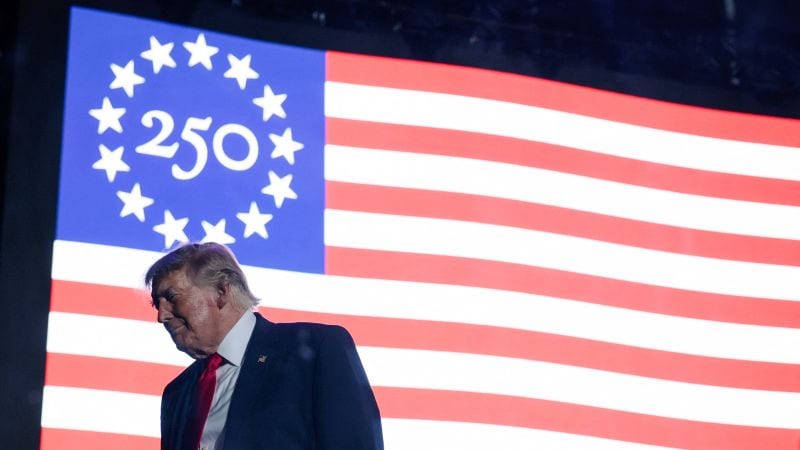
Donald Trump has significantly altered the planned celebrations for America's 250th anniversary, launching his own initiative, Freedom 250, which critics contend is a partisan endeavor more focused on the president than the nation's history. This has led to a fractured approach to the commemoration, with some groups opting for counterprogramming that emphasizes inclusivity and voter registration.
Initially, organizers envisioned the 250th birthday as a unifying event to celebrate democracy. However, following Trump's return to office as the 47th president, his administration has thrown agencies and federal funding behind his vision for a lavish, patriotic celebration. Freedom 250, a non-partisan subsidiary of the National Park Foundation, is largely overseen by top Trump aides and, like its predecessor America250, can maintain donor anonymity. However, it is not subject to the same bipartisan oversight, raising concerns from watchdog groups and congressional Democrats who are now investigating its funding.
Interior Secretary Doug Burgum stated that Freedom 250 is "run out of the White House," a move that former White House ethics lawyer Richard Painter described as "problematic" due to the White House forging relationships with nonprofits without congressional authorization.
In response to Trump's influence, groups like Next250 have reframed their commemorations. For instance, a festival in Washington, D.C., featured an indigenous opening ceremony and voter registration booths. Linda Sarsour, an organizer for Next250, stated that "the administration doesn’t own the 250th anniversary, nor do they own the story of this country," emphasizing that the country belongs to all its citizens.
Some state and local planners have distanced their celebrations from the national capital's plans. John Dichtl, president and chief executive of the American Association for State and Local History, expressed pessimism about unifying events coming out of Washington, stating, "It’s a lost cause to expect anything unifying and exciting coming out of Washington."