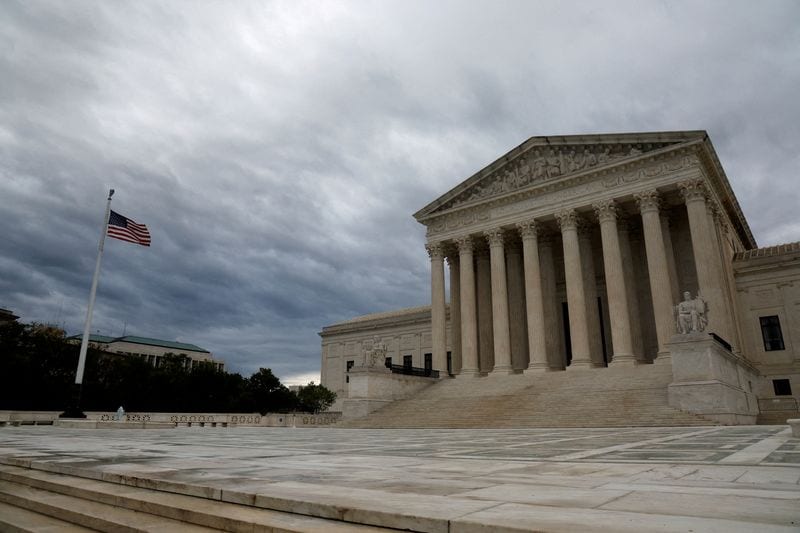
The Supreme Court has issued several rulings impacting President Donald Trump's policy agenda. In a significant decision, the court rejected Trump's executive order on birthright citizenship, upholding the principle that children born in the U.S. are citizens. The Department of Justice will now investigate 'birth tourism.' The court also upheld state bans on transgender athletes in women's sports and declined to allow Trump to remove the top copyright official, Shira Perlmutter, while her legal challenge continues. These decisions present a mixed outcome for Trump's initiatives, with some expanding executive power and others rejecting key policies.
✉Newsletter
PiQ Daily
Pick your topics. Get only what matters, on your cadence.
Who's Involved
Donald Trump
U.S. President whose policy agenda is impacted by Supreme Court rulings
Supreme Court
U.S. judicial body issuing rulings on key policy matters
Department of Justice
U.S. agency to probe 'birth tourism'
Norman Wong
Great-grandson of Wong Kim Ark, hailed birthright citizenship ruling
Wong Kim Ark
Individual whose legal case affirmed birthright citizenship
Shira Perlmutter
Government's top copyright official involved in a legal challenge
1 / 2
Key facts
The Supreme Court rejected President Donald Trump's executive order on birthright citizenship.
The Department of Justice will probe 'birth tourism' following the birthright citizenship ruling.
Norman Wong, great-grandson of Wong Kim Ark, celebrated the birthright citizenship decision.
The Supreme Court upheld state bans on transgender athletes in women's sports in Idaho and West Virginia.
The Supreme Court declined to allow Donald Trump to remove top copyright official Shira Perlmutter.
The ruling on Shira Perlmutter is a temporary block while her legal challenge proceeds.
Some Supreme Court rulings expand presidential authority, while others reject Trump initiatives.
The Supreme Court has delivered a series of rulings that impact President Donald Trump's policy agenda, with some decisions expanding presidential authority and others rejecting key initiatives. In a notable decision, the court rejected Trump's executive order aimed at revoking birthright citizenship. This ruling affirms that children born in the United States are citizens, a principle celebrated by descendants of individuals who previously fought for this right, such as Norman Wong, the great-grandson of Wong Kim Ark. Following this decision, the Department of Justice announced it will probe 'birth tourism.'
The court also issued rulings on other significant policy areas. It upheld state laws in Idaho and West Virginia that ban transgender athletes from participating in women's sports, affirming the authority of states to enact such legislation. In a separate matter, the Supreme Court declined to allow President Trump to remove Shira Perlmutter, the government's top copyright official, from her position while her legal challenge against such removal proceeds. This decision serves as a temporary block and is not a final ruling on the merits of the case.
These rulings represent a mixed outcome for Trump's policy objectives. While some decisions may expand executive power, others, like the rejection of the birthright citizenship order and the temporary block on removing the copyright official, represent setbacks for his administration's agenda. The court's actions underscore its role in adjudicating key policy debates and the balance of power between the executive branch and established legal principles.
↳ Why This Matters
The Supreme Court has delivered a series of rulings that impact President Donald Trump's policy agenda, with some decisions expanding presidential authority and others rejecting key initiatives. In a notable decision, the court rejected Trump's executive order aimed at revoking birthright citizenship. This ruling affirms that children born in the United States are citizens, a principle celebrated by descendants of individuals who previously fought for this right, such as Norman Wong, the great-grandson of Wong Kim Ark. Following this decision, the Department of Justice announced it will probe 'birth tourism.'
Frequently asked questions
President Donald Trump's executive order aimed to deny birthright citizenship to children born in the U.S. to parents who were in the country unlawfully or temporarily.
The Supreme Court rejected Trump's executive order in a 5-4 decision, upholding birthright citizenship for all individuals born on U.S. soil under the Fourteenth Amendment.
Chief Justice John Roberts wrote the majority opinion, grounding his decision in English common law and the historical understanding of the Fourteenth Amendment, emphasizing birthplace as the key factor for citizenship.
Dissenting justices, including Clarence Thomas and Samuel Alito, argued that birth alone is not sufficient for citizenship and that parents must possess a deeper political allegiance or relationship to the U.S.
The Department of Justice will prioritize investigations into 'birth tourism' following the Supreme Court's rejection of the birthright citizenship order.
What Happens Next
01The DOJ will continue to probe 'birth tourism' initiatives.
Get the newsletter.
Pick the topics you actually care about. We'll email when there's news worth your time, on the cadence you choose. Cancel any time from your account.