Key facts
- The Supreme Court rejected President Donald Trump's executive order on birthright citizenship.
- The ruling affirmed constitutional guarantees of citizenship for those born in the U.S.
- The court cited the 1898 precedent United States v. Wong Kim Ark.
- The administration argued that "subject to the jurisdiction thereof" excluded children of undocumented immigrants.
- The court found little evidence to support the administration's interpretation of the 14th Amendment's Citizenship Clause.
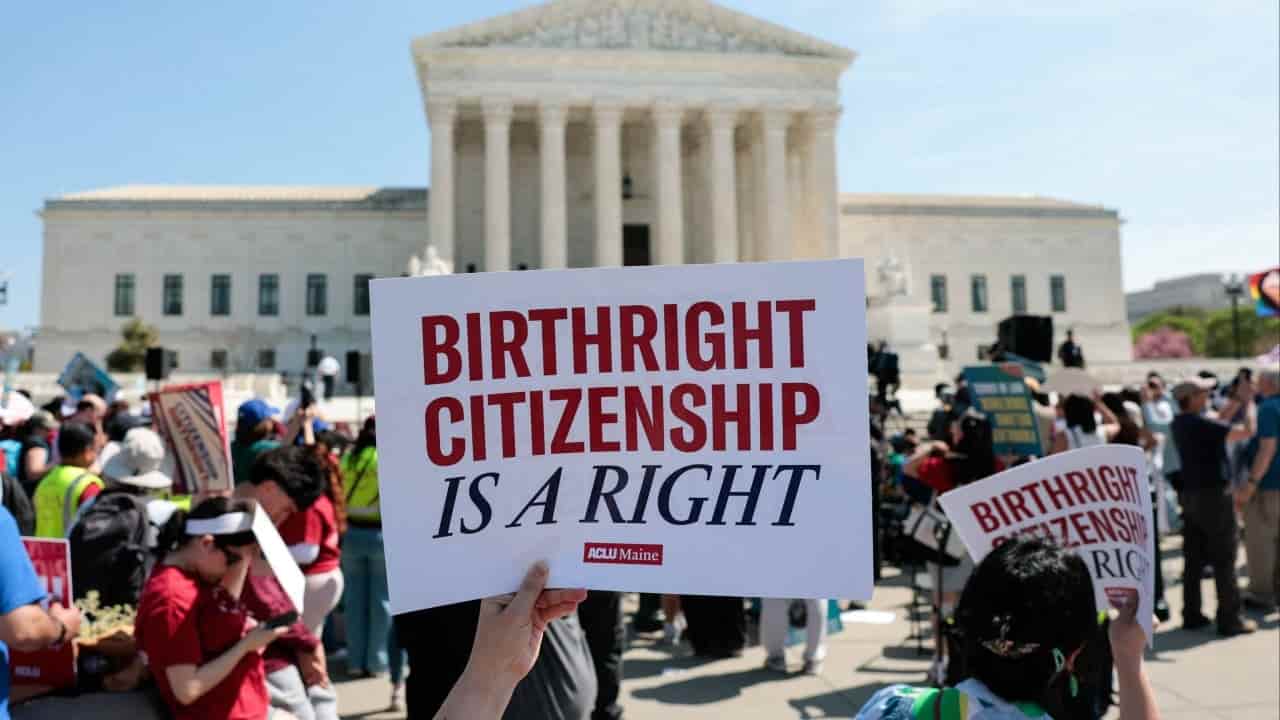
The U.S. Supreme Court on Tuesday rejected President Donald Trump's executive order that aimed to restrict birthright citizenship, a right generally granted to individuals born in the United States. The 6-3 ruling affirmed constitutional guarantees, with Chief Justice John Roberts writing that the court saw "no reason to depart" from its 1898 precedent in United States v. Wong Kim Ark, which established that the 14th Amendment grants citizenship to all children born in the U.S. and subject to its jurisdiction.
Roberts stated there was "scant evidence" to support the Trump administration's "dramatically revisionist view" of the Citizenship Clause. The administration had argued that the phrase "subject to the jurisdiction thereof" excluded children of immigrants who were in the country illegally or on temporary visas, asserting that citizenship should only be granted to children of those whose "primary allegiance" is to the United States, established through "lawful domicile."
Critics had accused Trump of racial and religious discrimination with his immigration policies. The challengers pointed to the Wong Kim Ark case, which recognized the 14th Amendment's guarantee of citizenship by birth on U.S. soil. The administration contended that the 1898 precedent supported Trump's order because Wong Kim Ark's parents had permanent domicile in the U.S. at the time of his birth.
President Trump, who had previously threatened to limit birthright citizenship, attended Supreme Court arguments for the case. U.S. Solicitor General D. John Sauer argued for the administration, citing "birth tourism" as a significant issue, though he conceded that "no one knows for sure" how widespread it is. The 14th Amendment was ratified in 1868 after the Civil War to grant citizenship to newly freed slaves.
In July 2025, U.S. District Judge Joseph Laplante in New Hampshire allowed a class-action lawsuit challenging Trump's order to proceed, blocking the policy nationwide. This ruling marks the second major Trump initiative invalidated by the court this year, following its decision to strike down his global tariffs.