Key facts
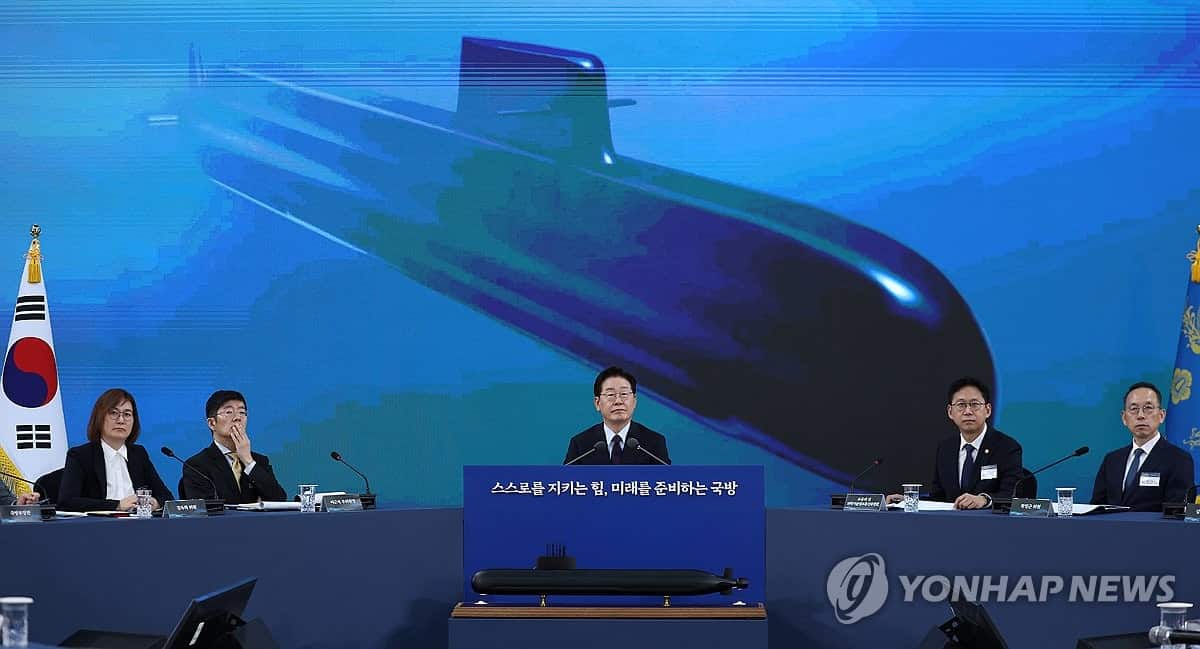
- South Korea's defense ministry issued a draft bill for nuclear-powered submarines.
- The Jang Bogo N project plans to build at least three conventionally-armed, nuclear-propelled attack submarines.
- The target for building these submarines is the mid-2030s.
- A bill to strip the prosecution of supplementary investigative authority was referred to a parliamentary coordination panel.
- President Lee Jae Myung ruled out seeking a second term.
- An Army unit on the western border revised guard duty to use unloaded K6 heavy machine guns.
- Live ammunition is placed nearby unloaded K6 heavy machine guns on the western border.
- A U.S. House resolution was introduced to honor Korean War veterans.
- The resolution acknowledges service on the Korean Peninsula since the 1953 armistice.
South Korea's defense ministry has released a draft bill intended to establish a legal foundation for the Jang Bogo N project, which envisions the construction of a minimum of three conventionally-armed, nuclear-propelled attack submarines. The target completion for these submarines is the mid-2030s. This initiative aims to bolster the nation's naval capabilities.
In parallel legislative developments, a bill designed to remove the prosecution's supplementary investigative authority has been sent to a parliamentary agenda coordination committee. This referral occurs against a backdrop of significant disagreements between the country's major political parties. President Lee Jae Myung has publicly stated, through his chief of staff, that he will not pursue a second term, even if the Constitution were to be amended to allow for it. This declaration follows comments from the National Assembly Speaker suggesting that any potential constitutional amendment is a matter for the public to decide.
On the military readiness front, an Army unit responsible for guarding the western border has reportedly modified its guard duty protocols. Sources indicate that K6 heavy machine guns will now be used with unloaded barrels, while live ammunition will be kept in close proximity. This adjustment is reportedly aimed at mitigating the risk of accidental discharges. However, this change has reportedly generated concerns regarding the unit's overall military readiness.
In international relations, a bipartisan coalition of U.S. lawmakers has put forth a House resolution. This resolution serves to honor the sacrifices made by Korean War veterans and all those who have served on the Korean Peninsula since the armistice agreement in 1953. The resolution specifically acknowledges their bravery and dedication in upholding democracy and freedom.