Key facts
- South Korea's defense ministry has issued a public notice for a draft bill on nuclear-powered submarines.
- The bill is designed to provide a legal basis for the Jang Bogo N project.
- The project aims to build at least three 8,000-ton conventionally-armed nuclear-propelled attack submarines by the mid-2030s.
- The legislation reaffirms commitment to the Nuclear Non-Proliferation Treaty and IAEA cooperation.
- The bill proposes exemptions from standard defense procurement procedures to expedite the program.
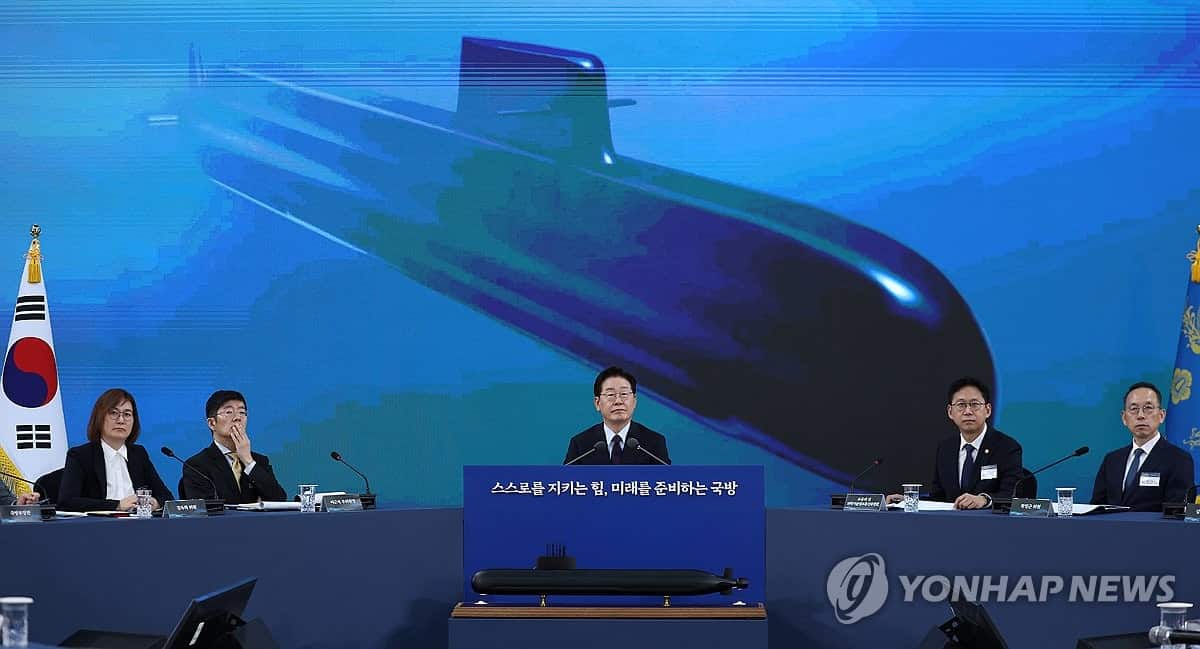
South Korea's defense ministry has initiated the process for building nuclear-powered submarines by issuing a public notice for a draft bill. This special legislation, known as the Jang Bogo N project, aims to legally underpin the development of at least three 8,000-ton conventionally-armed nuclear-propelled attack submarines, fueled by high-assay low-enriched uranium, with a target completion by the mid-2030s. The initiative received a green light from the U.S. following summit talks between President Lee Jae Myung and U.S. President Donald Trump in October. A key provision in the proposed bill explicitly states that the program is not intended for nuclear weapons development and commits to upholding international nonproliferation regimes. This codification into law is seen as an effort to address domestic calls for nuclear armament while reaffirming Seoul's adherence to its nonproliferation obligations. The draft bill also mandates compliance with the Nuclear Non-Proliferation Treaty and full cooperation with the IAEA. To expedite the project, the legislation seeks exemptions from typical defense procurement procedures, including mandatory feasibility studies, and aims to shorten research, development, and testing periods with more flexible cost calculations. A defense ministry official highlighted that this marks the first integration of nuclear energy into a weapon system and that the current legal framework has limitations for such a complex project. The bill further proposes the establishment of a strategy committee under the prime minister to oversee follow-up measures, including site selection, and requires the defense minister to review the implementation plan every ten years. Public feedback on the draft bill will be collected until September 7 before it is submitted to the National Assembly.