Key facts
- Over 1,500 Palestine Action cases were listed for hearings in London.
- Defendants faced terrorism charges related to Palestine Action protests.
- Conflicting court notices caused confusion for defendants.
- The UK's Supreme Court will hear an appeal against the ban on Palestine Action.
- Huda Ammori is leading the challenge to the Palestine Action ban.
- The Palestine Action ban challenge could impact over 3,500 arrests.
- The Trump administration charged over 850 people with assaulting federal officers.
- 31% of completed Trump-era assault cases were dropped.
- Cases from immigration protests had a 45% dismissal rate.
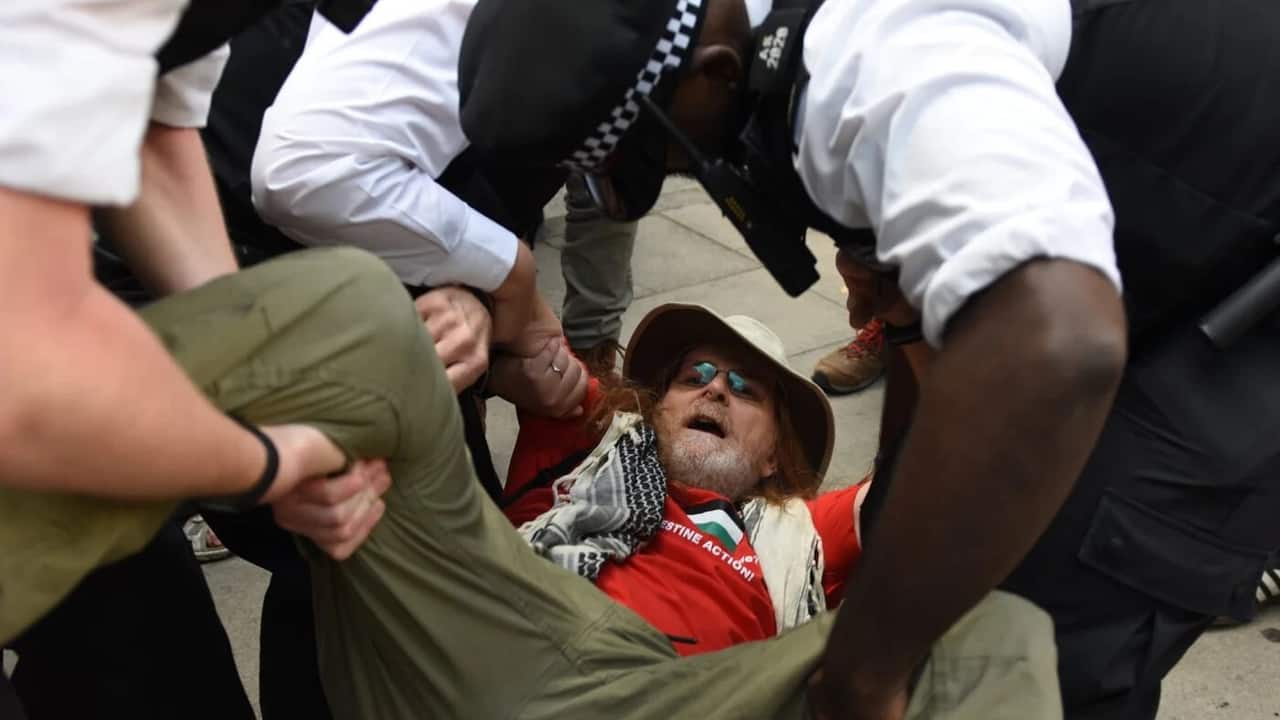
In London, a significant logistical issue arose with over 1,500 cases related to Palestine Action protests being listed for hearings, leading to widespread confusion and "chaos" among defendants. These individuals face terrorism charges, with some accused of displaying support for the now-banned group. Conflicting court notices and procedural ambiguities left many defendants unsure whether they were required to attend their hearings. This situation highlights the complex legal landscape surrounding activism and protest in the UK.
Concurrently, the United Kingdom's Supreme Court will consider an appeal against the ban imposed on Palestine Action. Huda Ammori, a co-founder of the group, is at the forefront of this legal challenge. The outcome of this case is anticipated to have implications for more than 3,500 individuals who have been arrested in connection with their support for Palestine Action. The legal battle underscores the ongoing debate regarding the definition and scope of proscribed organizations and the rights of individuals to express solidarity.
In parallel, a review of cases from the Trump administration reveals that over 850 people were charged with assaulting federal officers. However, a substantial portion of these cases, specifically 31% of those that reached completion, were subsequently dropped. This dismissal rate is notably higher than the typical federal dismissal rate. Furthermore, cases stemming from immigration protests exhibited an even higher dismissal rate, with 45% of them being dropped, indicating potential issues with the initial charges or evidence presented in those instances.