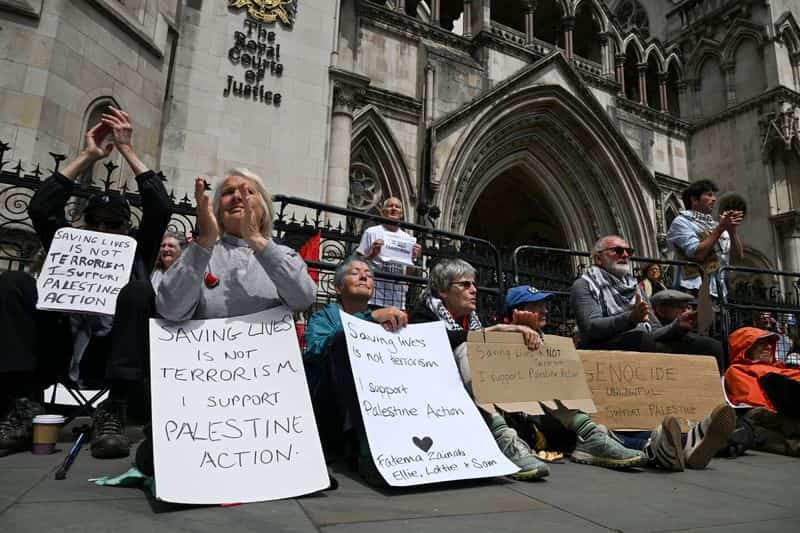
Key facts
- The UK's Supreme Court will hear an appeal against the ban on Palestine Action.
- Huda Ammori, co-founder of Palestine Action, is leading the challenge.
- The High Court had previously found the ban unlawful, but the Court of Appeal overturned this.
- The Supreme Court's decision impacts over 3,500 arrests made in support of the group.
- The case is scheduled for a hearing in the final quarter of this year.
The United Kingdom's Supreme Court has granted Huda Ammori, co-founder of the proscribed group Palestine Action, permission to appeal the ban against the organization. Palestine Action was designated a terrorist entity in July of the previous year, a decision Ammori has been contesting.
Initially, the High Court ruled in February that the ban was disproportionate and unlawful. However, this judgment was reversed by the Court of Appeal last month. On Wednesday, the Supreme Court announced that Ammori can appeal the Court of Appeal's decision, with the case slated for a hearing in the final quarter of this year.
This development leaves the legal status of over 3,500 individuals arrested for alleged support of Palestine Action in limbo, as their cases are suspended until the legality of the proscription is definitively settled. The Court of Appeal had previously stated that the High Court had wrongly limited the Home Secretary's discretion concerning national security.
Ammori expressed confidence in her legal position, asserting that the ban is disproportionate to free speech and the right to protest, and indicated a willingness to pursue the case to the European Court of Human Rights if necessary. Concurrently, a civil disobedience campaign has seen over 3,000 arrests, primarily for holding placards supporting Palestine Action. The Home Secretary, Shabana Mahmood, stated that the court found Palestine Action engaged in terrorism and promoted violence, deeming its actions inconsistent with democratic values.
Mr Justice Chamberlain had previously noted that the ban might conflict with free speech rights and refused an appeal to temporarily lift it, with a full review scheduled for November. He warned of potential "chaos" if the ban's legality was not swiftly determined through judicial review, citing the risk of conflicting decisions in lower courts.