Key facts
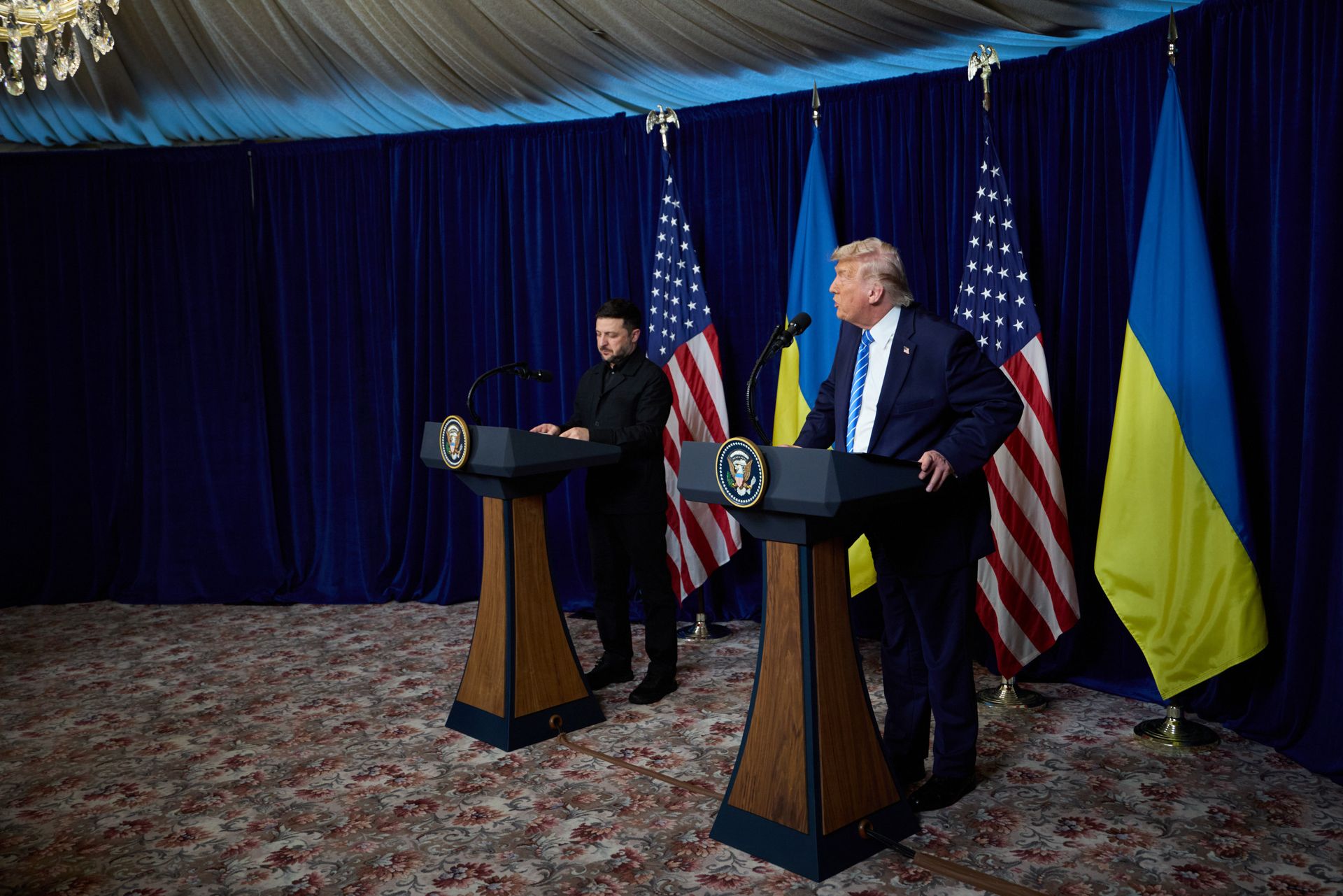
- President Zelensky spoke with U.S. President Donald Trump and French President Emmanuel Macron following the G7 summit.
- Zelensky indicated that the conversation with Trump could 'make a big difference' and help bring peace closer.
- Discussions included obtaining U.S. licenses for anti-ballistic systems and missiles.
- Trump expressed satisfaction with the G7's unity on Iran and Ukraine.
- G7 leaders welcomed a tentative deal with Iran and acknowledged Trump's leadership in its facilitation.
- Zelensky showed Trump images of a burning Kyiv cathedral during the summit.
Ukrainian President Volodymyr Zelenskyy stated that a conversation with Donald Trump could significantly alter the situation, following discussions about acquiring U.S. licenses for anti-ballistic systems and missiles. This comes as Trump expressed satisfaction with the unity demonstrated by G7 leaders regarding Iran and Ukraine during the summit in France. Trump, who has previously been critical of international gatherings, appeared buoyed by the support from his counterparts for a tentative agreement with Iran aimed at ending hostilities. He noted that the G7 meeting was timely and that leaders had offered positive comments, driven by a desire to see global oil prices stabilize. Despite past disagreements, G7 leaders issued a joint statement welcoming the Iran deal and acknowledging Trump's leadership in its facilitation. On the issue of Ukraine, Trump joined other leaders in pledging "unwavering support" and calling for increased delivery of air defense capacities and long-range capabilities. This marks a shift from his previous stance that Ukraine needed to make concessions to Russia. European leaders reportedly made headway in convincing Trump that Ukraine possessed leverage against Russia. Mixed messages emerged regarding China, with G7 leaders issuing a statement against economic coercion, while Trump thanked China and Russia for remaining neutral in the conflict with Iran, specifically crediting Chinese President Xi Jinping for not supplying weapons to Iran. Vice President JD Vance was highlighted by Trump as potentially being held responsible if the Iran deal falters, after Vance had promoted the agreement he helped negotiate.