Key facts
- A federal judge in Texas ruled that the Biden administration's regulation on 'ghost guns' is unconstitutional.
- The ruling cited violations of the Second Amendment's right to keep and bear arms and the Fifth Amendment's due process clause.
- The regulation required manufacturers of firearm kits and parts to serialize, license, and conduct background checks.
- The judge blocked the rule's enforcement against the Second Amendment Foundation and Defense Distributed.
- Gun control advocates condemned the decision and anticipate an appeal.
A federal judge in Texas has ruled that a regulation enacted by the Biden administration targeting 'ghost guns' is unconstitutional, asserting it violates the Second Amendment's right to bear arms and the Fifth Amendment's due process guarantees.
U.S. District Judge Reed O'Connor in Fort Worth stated on Monday that the 2022 rule infringes upon the historical tradition of personal gunsmithing by restricting access to components for self-manufacturing firearms. He noted that self-manufacture was common and foundational in American history.
This ruling follows a previous decision by the U.S. Supreme Court in March 2025, which had overturned an earlier ruling by O'Connor that found the regulation unlawful. However, the Supreme Court's decision focused on whether the Bureau of Alcohol, Tobacco, Firearms and Explosives (ATF) exceeded its authority, not on the constitutional merits.
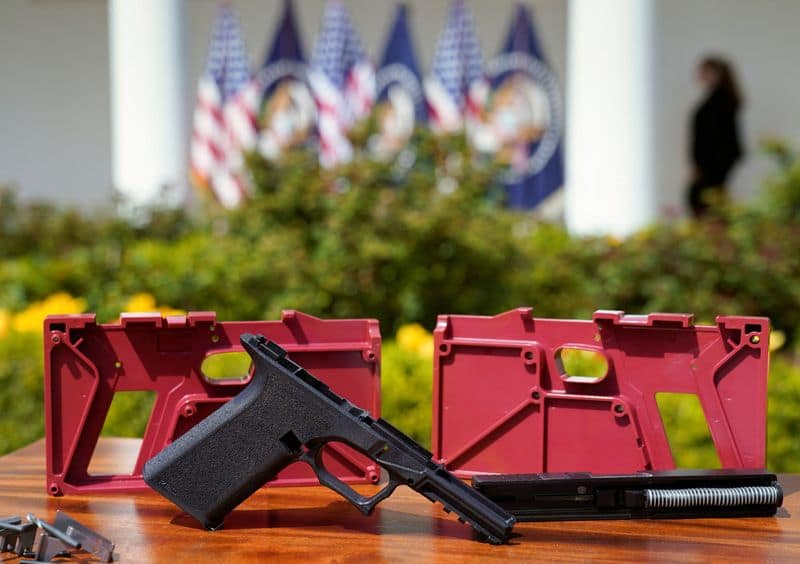
The regulation in question requires manufacturers of firearm kits and parts, such as incomplete frames or receivers, to serialize their products, obtain licenses, and conduct background checks on purchasers, similar to requirements for commercially made firearms. It also classified these kits and components as 'firearms' under the 1968 Gun Control Act.
Following the Supreme Court's decision, the gun rights group Second Amendment Foundation and a manufacturer, Defense Distributed, asked O'Connor to block the rule's enforcement based on constitutional grounds not addressed by the higher court. O'Connor's decision specifically blocked the rule's enforcement against Defense Distributed and members of the Second Amendment Foundation concerning certain products.
Gun control advocates strongly opposed the ruling. Eric Tirschwell, executive director of Everytown Law, called the decision 'egregiously wrong' and expressed expectation that the Justice Department would appeal. The Justice Department, which oversees the ATF, had previously defended the rule, even under the Trump administration.