Key facts
- A federal judge has allowed the U.S. Department of Homeland Security to terminate Temporary Protected Status for nearly 1,100 Somalis.
- The ruling permits the termination of legal protections against deportation for eligible Somali migrants.
- The decision follows a June Supreme Court ruling that limited judicial review of the Trump administration's efforts to end TPS designations.
- Similar TPS terminations have been allowed for individuals from South Sudan and Myanmar by other judges.
- The end of TPS for Ethiopians remains blocked by a judge.
A federal judge in Boston has permitted the Trump administration to revoke the Temporary Protected Status (TPS) for nearly 1,100 Somali nationals, effectively clearing the path for their deportation from the United States. U.S. District Judge Allison Burroughs ruled on Friday that the Department of Homeland Security can terminate the designation, which has provided legal protections against deportation and allowed these individuals to live and work in the U.S.
The decision comes after the Supreme Court in June allowed the administration to end similar protections for thousands from Haiti and Syria. That ruling, supported by the court's 6-3 conservative majority, significantly restricted the ability of judges to review the Department of Homeland Security's (DHS) efforts under the Trump administration to terminate TPS for individuals from 13 countries.
Lawyers for both the plaintiffs and DHS have not yet responded to requests for comment. Last week, two other judges permitted the administration to end TPS for individuals from South Sudan and Myanmar, while the termination for Ethiopia remains blocked by a judge.
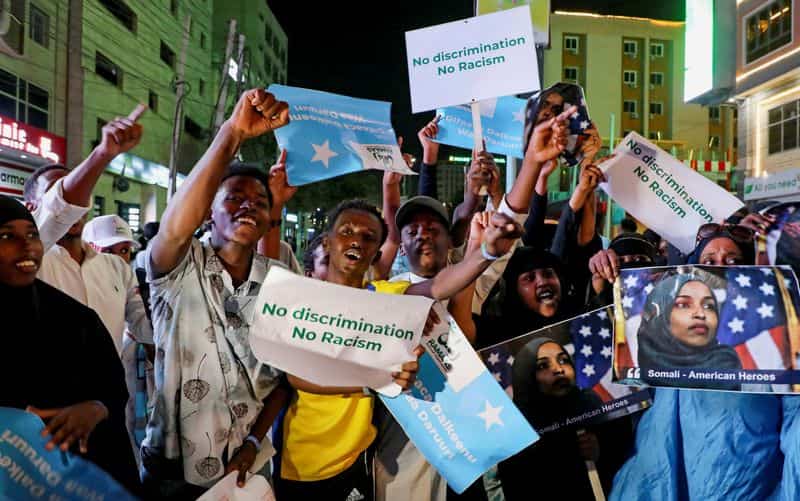
Former Homeland Security Secretary Kristi Noem had announced plans in January to end TPS for Somalis, citing improved conditions in the country, despite ongoing conflict with al-Shabaab militants. Judge Burroughs, appointed by former President Barack Obama, had previously blocked Noem's decision in March following a lawsuit filed by four Somali individuals and two advocacy groups, including African Communities Together. The plaintiffs contended that the administration's move was motivated by bias against non-white immigrants, referencing past remarks by President Trump about Somalis. However, following the Supreme Court's ruling, Burroughs issued a new order allowing the challenge to proceed while she considered whether the plaintiffs could contest the DHS action on grounds not addressed by the Supreme Court's decision.