Key facts
- South Korea aims to train its entire 450,000-strong military to operate drones.
- Drones are to become a "universal combat tool" for all troops.
- The initiative is inspired by drone usage in conflicts like Ukraine and the Middle East.
South Korea plans to train all 450,000 military personnel to operate drones, aiming to create "universal combat tools" and maintain a technological edge over North Korea. This initiative is inspired by drone usage in conflicts like Ukraine.
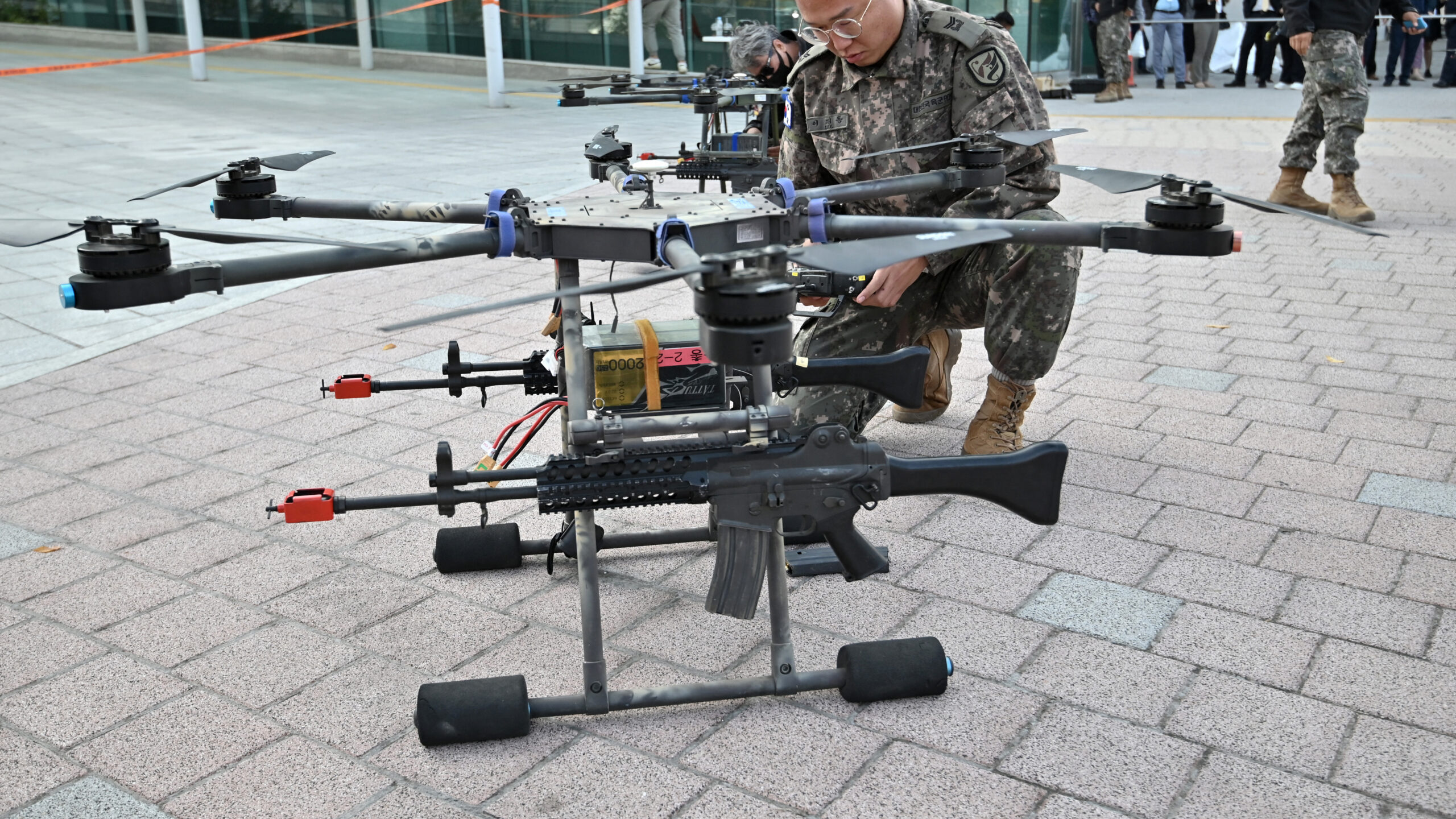
The initiative reflects a significant shift in military strategy, adapting to modern warfare trends seen in conflicts like Ukraine and aiming to counter North Korea's numerical superiority through technological advancement.
South Korea plans to train every member of its nearly half-million-strong military to operate drones, aiming to make them a "universal combat tool" and maintain a technological advantage over North Korea. Defense Minister Ahn Gyu-back announced the goal of training troops to use drones like a "second personal weapon," inspired by drone use in conflicts in Ukraine and the Middle East.
The military intends to equip units with more affordable and expendable drones for surveillance and strike missions, alongside deploying counter-drone lasers and microwave weapons. The former drone operations command will be reorganized to foster collaboration with South Korean industry on drone technology development and procurement.
This initiative comes as South Korea's active-duty force of 450,000 personnel faces a numerical disadvantage against North Korea's military, which numbers over 1.2 million soldiers. Ukraine's effective use of drones as a force multiplier against Russia's larger military serves as a particular inspiration.
However, South Korea faces challenges, including a shrinking military due to its declining birthrate, which may make it difficult to maintain its active-duty strength. Officials clarified that not all personnel will be equipped with drones, even for training, with plans to provide 11,000 training drones this year and a goal of 60,000 by 2029.
Security concerns also drive a requirement for drones with 100% domestically produced components, avoiding Chinese parts due to China's dominance in the commercial drone market and its partnership with North Korea. This may pose difficulties in sourcing sufficient commercial drones without Chinese components for training.
Experts like Min-Cheol Jung of Team Retriever also highlighted potential personnel shortages, particularly among noncommissioned officers and officers needed for training. While Ukraine has scaled up drone operator training, it focuses on specialized teams and a digital battle management system, rather than training every soldier as a drone pilot. The US military is also integrating drone familiarization into its basic training.