Key facts
- High costs of private insurance and limited public coverage leave millions uninsured.
- Medicaid unwinding led to millions losing coverage, many without affordable alternatives.
- Only 49% of U.S. adults are 'Cost Secure,' able to afford quality care and prescriptions.
- Healthcare affordability has declined significantly for Black and Hispanic adults.
- Younger adults (18-29) have seen the sharpest drop in healthcare affordability since 2021.
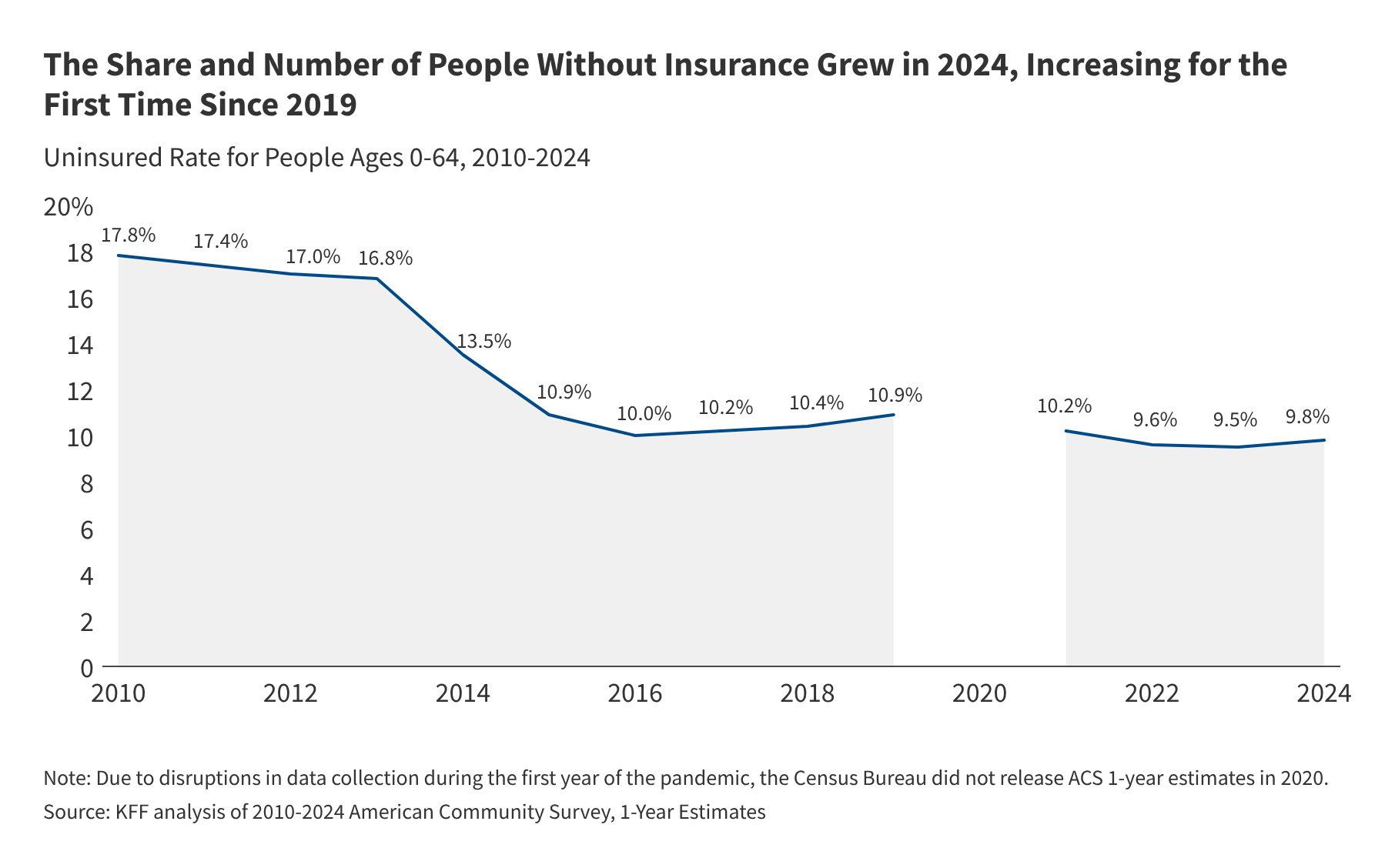
Millions of Americans continue to face challenges accessing health insurance, primarily due to the high cost of private plans and insufficient public coverage options, especially in states that have not expanded Medicaid. The conclusion of continuous enrollment in Medicaid has further impacted coverage trends, leading to the disenrollment of millions who often lack access to affordable employer-sponsored insurance. While many have transitioned to subsidized plans through the ACA Marketplace, these options remain unaffordable for some.
Recent data indicates a significant decline in overall healthcare affordability. For the first time in five years, less than half of U.S. adults (49%) are considered 'Cost Secure,' meaning they can afford quality care and have paid for recent medical visits and prescriptions. This metric has fallen seven percentage points since 2021, with an estimated 2.8 million Americans becoming 'Cost Insecure' or 'Cost Desperate' between 2024 and 2025.
The affordability crisis disproportionately affects Black and Hispanic adults, with only 38% and 32% respectively classified as 'Cost Secure,' compared to 55% of White adults. These disparities have widened over time. Affordability issues also extend to higher-income households, with substantial portions of middle and upper-middle-income families struggling to afford care. Younger adults, aged 18 to 29, have experienced the most dramatic decrease in healthcare affordability, falling from 46% to 32% 'Cost Secure' since 2021.