Key facts
- Wildfires are burning across France, Spain, Portugal, Greece, Croatia, and Albania amid rising temperatures.
- Thousands have been evacuated from homes in France, Spain, and Greece.
- A wildfire in the French Pyrenees has scorched 5,000 hectares and prompted over 10,000 evacuations.
- Spectators have been banned from parts of the Tour de France route due to a wildfire.
- Record-breaking heatwaves in May and June have contributed to the extreme conditions.
- Scientists link the extreme June temperatures to the climate crisis.
- Temperatures are forecast to climb again this week, potentially reaching 40C.
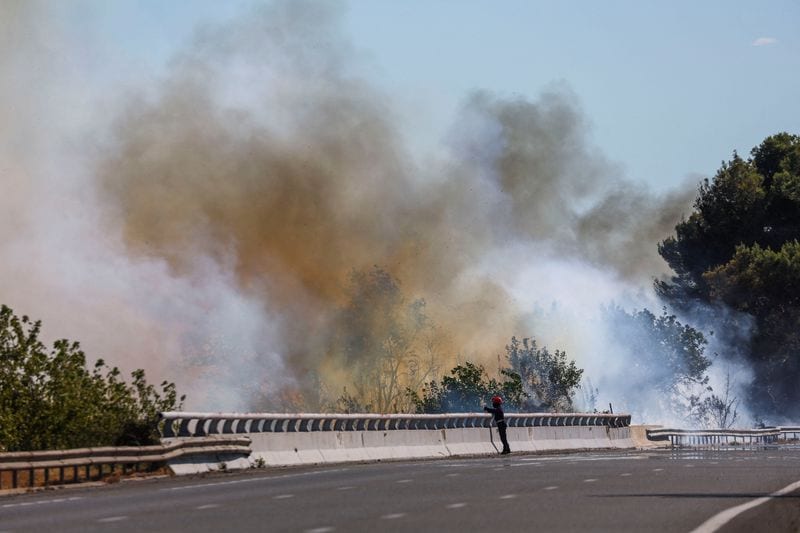
Wildfires are raging across southern Europe, including France, Spain, Portugal, Greece, Croatia, and Albania, as the region grapples with rising temperatures and the aftermath of record-breaking heatwaves. In southwestern France, a significant blaze in the Pyrenees has forced the evacuation of over 10,000 people and scorched approximately 5,000 hectares. This fire has nearly tripled in size since Sunday.
French officials have expressed alarm that the summer wildfire season has started a month early, with temperatures predicted to reach 40C in some areas. Fire chief Eric Belgioino stated, "Climate change is here, we are living the consequences and it is only the start of July." The regional prefect ordered Tour de France spectators to avoid the route and finish area of Monday's third stage due to the proximity of a wildfire.
In Spain, fires have ravaged 2,200 hectares in the protected natural area of Les Gavarres and spread into the Sierra de Espadán national park, leading to the evacuation of over 500 people. Central Portugal is battling a large blaze that has burned across 13,000 hectares, with firefighters reporting 80% control. Greece has warned of toxic smoke from fires that tore through two factories near Thessaloniki, prompting evacuations and health advisories.