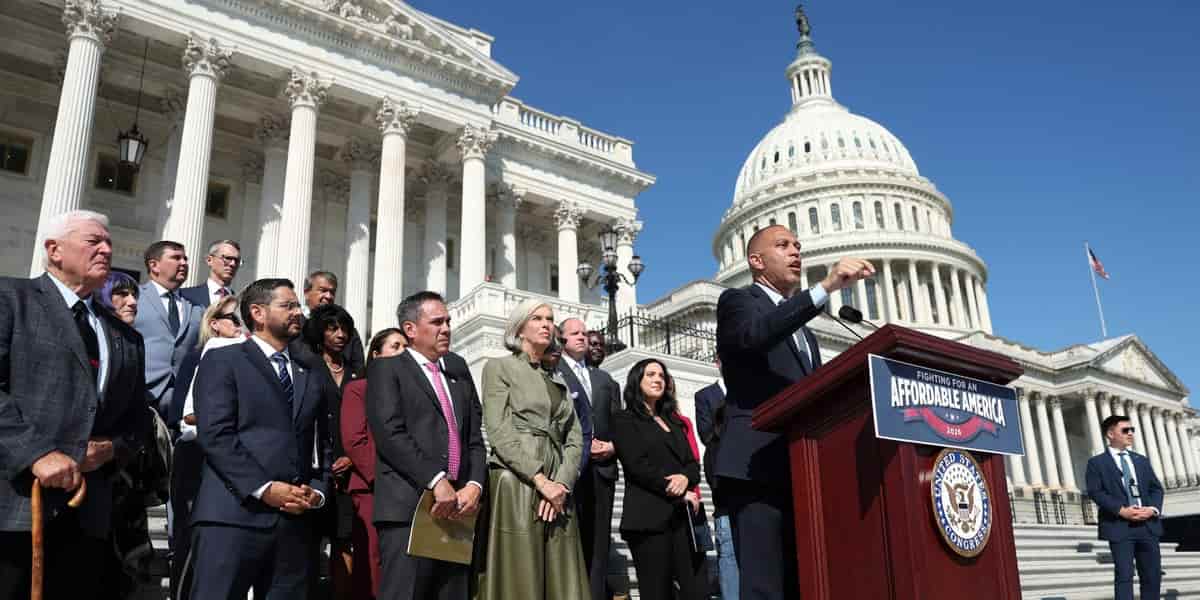
With the US midterm elections less than seven weeks away, Wall Street is analyzing potential outcomes to anticipate market movements. Strategists and traders are focusing on two primary scenarios: one where Democrats take the House and Republicans hold the Senate, and another where Democrats achieve a "blue wave" victory in both chambers.
The first scenario, a divided Congress with a Democratic House and Republican Senate, is viewed as potentially creating beneficial gridlock. This outcome could limit major legislation, which is seen as positive for investors concerned about excessive spending and regulatory shifts. Sectors like defense contractors, AI and chip-linked technology, industrials, and financial firms, which are supported by current policies, could benefit. Conversely, healthcare, energy, private equity, and cryptocurrency sectors might face pressure as a Democratic House could initiate investigations and oversight.
The second scenario, a "blue wave" where Democrats control both the House and Senate, would still allow President Trump to use his veto power to block significant reversals of his agenda. However, control of committees and spending bills would shift, potentially leading to more restrictions on Republican-aligned interests. Companies tied to clean-energy programs, public-health initiatives, hospitals, and Medicaid managed care could see increased support. Healthcare private equity and crypto are identified as particularly vulnerable in this scenario, with Democratic lawmakers already scrutinizing private equity's role in medicine and having previously stalled crypto legislation.
Separately, data centers are identified as a potential beneficiary regardless of the midterm election results. There is bipartisan consensus on ensuring data centers contribute more to the grid costs they generate. A recent House vote supported a bill to shift these costs. While Washington does not aim to halt the AI infrastructure buildout, the focus is on reallocating costs, which could benefit grid-equipment makers, power producers, and utilities, while potentially pressuring large cloud companies, data-center operators, and data-center REITs.