Key facts
- IG Metall's Thorsten Groeger said an agreement this year was out of the question, calling Volkswagen's offer an insult.
- IG Metall has threatened strikes at Volkswagen from January 1 if no agreement is reached.
- Volkswagen aims to finalize a plan for its European factories by the end of June 2027.
- Four German Volkswagen sites have no planned successor vehicle models, the company says.
- German auto workers earn €65 ($71) an hour, per the Kiel Institute for the World Economy.
- European auto suppliers' operating margins are seen at 2.9% in 2026, down from 7.1% in 2018, per Roland Berger and Lazard.
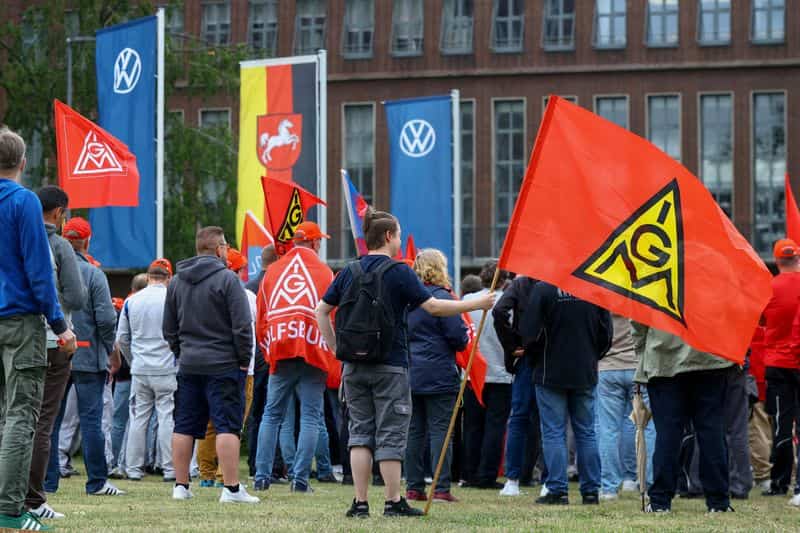
Volkswagen starts crunch talks with IG Metall on Tuesday, November 24, 2026, over fresh job and salary cuts, as Germany's automakers confront months of labor talks and strikes over job cuts and potential factory closures. Volkswagen, Mercedes-Benz, Bosch and Schaeffler have responded to weaker profits with plans to cut thousands of jobs, curb investment and potentially close plants.
Volkswagen last month posted its biggest operating loss in more than a decade. Mercedes-Benz and BMW saw their nine-month auto profit margins drop to 1.9% and 3.5%, respectively, from 14.9% and 8.7% four years ago. Andrew Bergbaum, a partner at consultancy AlixPartners, said declining investment returns and profitability point to a difficult winter in labor negotiations.
IG Metall's chief negotiator for wage talks with Volkswagen, Thorsten Groeger, said it was out of the question that an agreement could be reached this year, calling Volkswagen's offer an insult to workers. IG Metall has threatened strikes at Volkswagen from January 1 if no agreement is reached. One-day strikes have already hit BMW and Volkswagen's Audi division.
Volkswagen has said deep cost cuts are needed to remain competitive. It aims to finalize a plan for its European factories by the end of June 2027, including a roadmap for four German sites the automaker says have no planned successor vehicle models. The sites could be repurposed for military use, assigned vehicles for the Chinese market, or closed in the next decade, the company has said.
At €65 ($71) an hour, German auto workers are the world's highest paid, earning over one-and-a-half times more than their US counterparts and more than three times as much as workers in Poland, according to the Kiel Institute for the World Economy. Daniel Bauer, head of Germany's SdK investor protection association, said the sector must overcome its current difficulties and that companies must not go insolvent in the medium term.
Europe's automotive suppliers will on average see their operating margins dwindle to 2.9% this year from 7.1% in 2018, a steeper fall than the decline to 5.8% from 9.0% at Chinese rivals, according to research from Roland Berger and Lazard. Roland Berger partner Felix Mogge said another round of cost cutting is simply not enough.
Germany's auto sector workforce has fallen to the lowest level in at least 21 years, according to the federal statistics office. Foreign sales fell nearly 8% between 2023 and 2025, according to data from industry lobby group VDA and the German statistics office. Tesla's announcement last week of a €3 billion expansion of its plant near Berlin came four days after Mercedes-Benz said it would suspend German investments.