All NewsEducationTVBrokers
Equities & FundsCrypto & Digital AssetsAI & TechnologyBusiness & CorporateUS Politics & PolicyGeopolitics & Global RiskMacro, Rates & FXCommodities & EnergyEuropean Politics & MarketsAsia-PacificReal Estate & Property
All NewsHome
← Back to Geopolitics & Global Risk

US strikes Iranian tankers after missile attacks on warship

Created at 8 Sep · 9:06 PM1 source↑ Market-relevant
IN SHORT

The U.S. struck multiple Iranian tankers on Tuesday in response to attempted missile attacks on a Navy warship, marking the latest escalation in tensions. Iran's Revolutionary Guard Navy warned tanker crews to abandon their vessels, stating they could be targeted.

Key Numbers

24+Iranian airlines and cargo providers sanctioned
$99.46Brent crude price briefly reached

Who's Involved

U.S. official
spoke on condition of anonymity to discuss sensitive military operations
Iran’s Revolutionary Guard Navy
warned tanker crews of potential targeting
President Donald Trump
pursuing dual economic and military approach to end war with Tehran

↳ Why This Matters

The escalating strikes and sanctions between the U.S. and Iran heighten geopolitical tensions in a critical oil transit region, potentially impacting global energy prices and political stability ahead of U.S. midterm elections.

Key facts

  • The U.S. struck multiple Iranian tankers on Tuesday following attempted missile attacks on a Navy warship.
  • Iran's Revolutionary Guard Navy warned tanker crews to abandon their vessels, stating they could be targeted.
  • The U.S. military previously struck three Iranian oil tankers after Navy warships were targeted with ballistic missiles.
  • The Trump administration also imposed sanctions on over two dozen Iranian commercial and private airlines and foreign cargo service providers.
  • Both the U.S. and Iran are seeking control over the Strait of Hormuz, a key oil transit route.

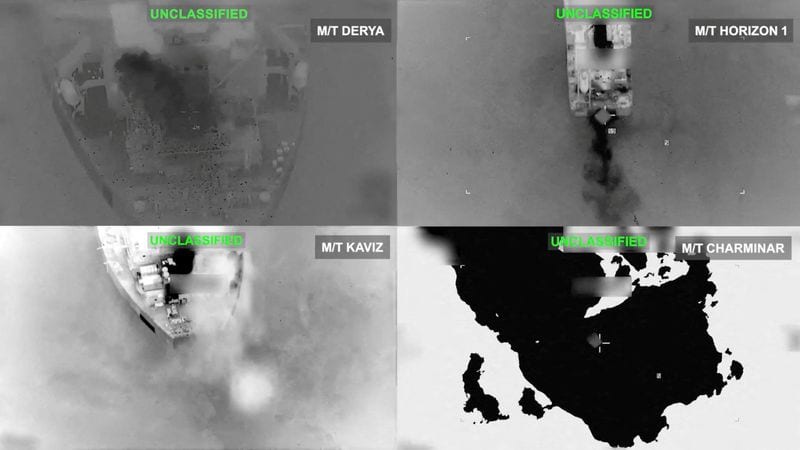
The U.S. struck multiple Iranian tankers on Tuesday in response to attempted missile attacks on a Navy warship, according to a U.S. official. This marks the latest exchange of fire amid ongoing conflict.

Iran's Revolutionary Guard Navy issued a warning through state television, advising crews of oil tankers near ports in Kuwait and Bahrain to immediately abandon their vessels, stating they could be targeted in retaliation for U.S. actions. The Guard accused Kuwait and Bahrain of hosting U.S. forces and assisting in the attacks.

This incident follows a similar event on Saturday when the U.S. military reported striking three Iranian oil tankers after Navy warships were targeted with ballistic missiles. At that time, the U.S. warned it would "if necessary, destroy Iran’s limited and exposed oil fleet." Iran subsequently announced plans to establish a new "exclusion zone" near the Strait of Hormuz for transiting vessels.

The latest strikes are part of President Donald Trump's strategy, employing both economic and military measures to conclude a prolonged conflict with Tehran. The Trump administration also announced sanctions on more than two dozen Iranian commercial and private airlines, along with foreign cargo service providers, as part of an effort to isolate Tehran.

Both the U.S. and Iran are vying for control over the Strait of Hormuz, a critical waterway through which approximately one-fifth of the world's oil passed before the current conflict. Rising energy prices present political challenges for President Trump and the Republican Party ahead of the November midterm elections. Brent crude briefly reached $99.46 per barrel on Tuesday.

A U.S. blockade of Iranian ports has significantly impacted the country's economy by restricting its oil exports. Meanwhile, the American military has been facilitating the transit of a limited number of ships through the Strait of Hormuz off the coast of Oman. Iran, however, desires ships to adhere to a route of its choosing through the strait, which was historically considered an international waterway.

Frequently asked questions

The U.S. struck multiple Iranian tankers in response to attempted missile attacks on a Navy warship.

Iran's Revolutionary Guard Navy warned tanker crews near Kuwait and Bahrain to abandon their vessels, stating they could be targeted.

The Strait of Hormuz is a vital waterway through which about one-fifth of the world's oil passed before the war, and both the U.S. and Iran are seeking to control it.

What Happens Next

01Iran may announce a new "exclusion zone" near the Strait of Hormuz.
02Further retaliatory actions or sanctions between the U.S. and Iran are possible.

How It Developed

U.S. military struck three Iranian oil tankers after Navy warships were targeted with ballistic missiles.
Iran's Revolutionary Guard Navy warned oil tanker crews near ports in Kuwait and Bahrain to immediately leave their vessels.
The U.S. struck multiple Iranian tankers in response to attempted missile attacks on a Navy warship.
The Trump administration imposed sanctions on additional elements of Iran’s aviation industry.

Sources

T1
US strikes Iranian tankers after more attempted missile attacks on Navy warshipAP News

Related Stories

US strikes Iranian tankers after missile attacks on warships
8 Sep · 8:41 PM
Iran Warns of Tanker Attacks Near Kuwait, Bahrain After US Strike
7 Sep · 10:31 PM
Iran claims capability to strike US warships amid escalating tensions
8 Sep · 3:11 AM
US Targets Turkish Bank in Bid to Cut Iran's Oil Revenue
8 Sep · 7:36 PM
US sanctions 36 Iran-related entities, including 27 airlines
8 Sep · 2:56 PM