Key facts
- The U.S. Senate advanced the Lindsey O. Graham Sanctioning Russia and Iran Act of 2026 with an 86-12 vote.
- The bill grants President Trump authority to impose tariffs of up to 200 percent on major purchasers of Russian oil and natural gas.
- It expands sanctions against Russia's financial institutions, elites, oligarchs, and its "shadow fleet".
- Sanctions on Iran are extended through 2031.
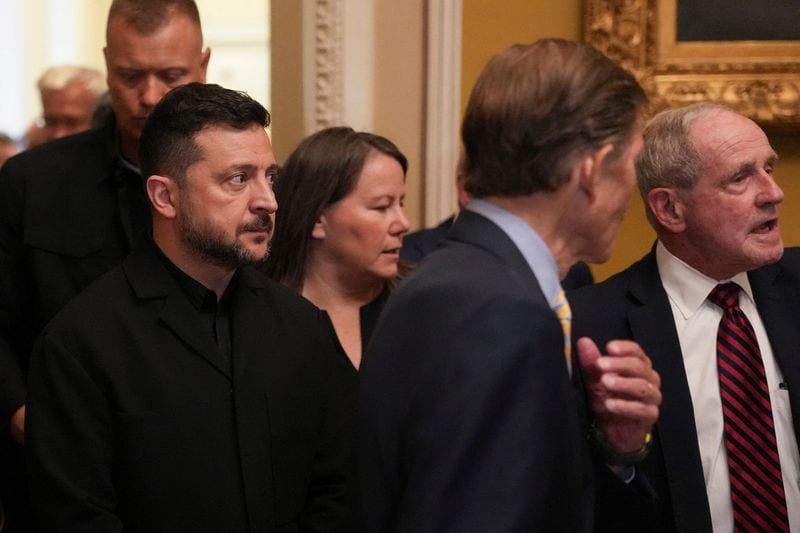
- Ukrainian President Volodymyr Zelenskyy attended the vote and advocated for the legislation.
- The bill aims to deprive Russia of revenue financing its war in Ukraine.
The U.S. Senate has advanced a significant piece of legislation aimed at increasing economic pressure on Russia and Iran, with a strong bipartisan vote of 86-12. The bill, formally known as the Lindsey O. Graham Sanctioning Russia and Iran Act of 2026, was advanced shortly after Ukrainian President Volodymyr Zelenskyy made a personal appeal to senators and observed the vote.
The legislation grants President Trump broad authority to impose tariffs of up to 200 percent on major global purchasers of Russian oil and natural gas. It also seeks to expand existing sanctions against Russia's financial institutions, political figures, oligarchs, and the "shadow fleet" used to circumvent restrictions. Furthermore, the bill extends sanctions on Iran through 2031.
Senators emphasized that the bill's primary goal is to cut off the revenue streams financing Russia's war in Ukraine. They highlighted that the legislation has been carefully negotiated to avoid penalizing U.S. allies while concentrating pressure on key buyers of Russian energy, with China and India identified as significant purchasers. The bill's proponents, including Senators Richard Blumenthal and Jim Risch, framed it as a strategic effort with potentially greater impact than battlefield developments.
President Zelenskyy described the bill as a crucial signal and significant support for Ukraine, emphasizing its importance beyond direct economic impact. He also discussed Ukraine's battlefield needs, particularly strengthening its domestic defense industry and acquiring advanced air defense systems. Zelenskyy expressed optimism that the legislation would become law.
While the bill still requires final passage in the Senate and consideration in the House of Representatives, the overwhelming vote underscored a rare bipartisan consensus on utilizing economic pressure as a tool against Moscow. Lawmakers viewed the vote as a strong endorsement of Ukraine and a clear message to Russian President Vladimir Putin.