Key facts
- Congress passed legislation targeting Russia and Iran, sending it to President Donald Trump.
- The bill grants Trump authority to impose tariffs of up to 100% on major purchasers of Russian oil and gas.
- The House passed the bill 262-159, with 58 Democrats voting in favor.
- The Senate previously passed the bill 86-11.
- The legislation extends US sanctions on Iran by five years.
- The bill is named for the late Senator Lindsey Graham.
The US Congress has passed a comprehensive sanctions bill targeting Russia and Iran, sending it to President Donald Trump for his signature. The legislation, named the Lindsey O. Graham Sanctioning Russia and Iran Act of 2026, aims to increase pressure on Moscow and countries that facilitate its war in Ukraine.
The House of Representatives approved the bill with a vote of 262-159, following its passage in the Senate by an 86-11 margin. The bill's passage marks a significant bipartisan effort supporting Ukraine since an emergency aid package in April 2024.
The legislation targets Russian officials, financial institutions, its energy sector, and its tanker fleet. It also empowers Trump to impose tariffs of up to 100% on major buyers of Russian oil and gas and on nations aiding Russia in evading sanctions. Furthermore, it extends existing US sanctions on Iran for five years, focusing on its energy and weapons sectors.
The bill's progress through the House encountered opposition from some Democrats, primarily concerning the broad tariff authority granted to the president. House Minority Leader Hakeem Jeffries and Representative Gregory Meeks expressed concerns about these new presidential tariff powers, although they supported the overall goal of pressuring Russia. Despite this, 58 Democrats voted in favor, reflecting continued bipartisan commitment to imposing economic costs on Russia.
European officials, including Hannes Hanso, Estonia's ambassador to the United States, voiced support for strong and swift sanctions against Russia, acknowledging the legislation's imperfections but prioritizing its implementation. The European Union has maintained its own extensive sanctions against Russia.
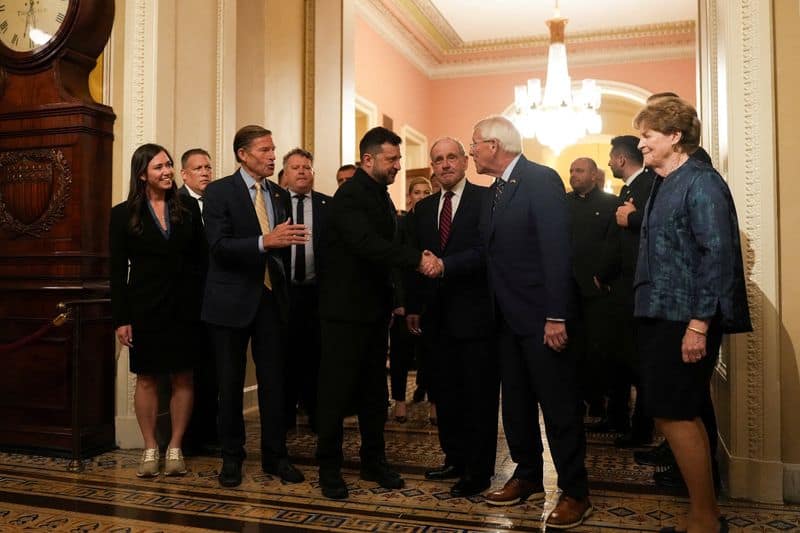
Supporters of the bill, such as Senator Richard Blumenthal, emphasized that the tariff provisions are designed to penalize countries financing Russia's war through energy purchases. Blumenthal specifically warned China and India against continued engagement with Russian oil and gas. Senator Jeanne Shaheen highlighted the bill's bipartisan message to President Putin, stating that revenue from illicit energy sales funds Russia's war efforts. Senator Katie Britt noted the bill's role in holding Iran accountable for its actions.
The legislation is also seen as a tribute to the late Senator Lindsey Graham, who had worked to build bipartisan consensus for the bill before his death. Representative Michael McCaul believes the bill will significantly damage Russia's war financing capabilities, while House Speaker Mike Johnson stated it would apply "maximum pressure" on Russia and its enablers.