Key facts
- Soybean processors in the western US Midwest are offering hefty premiums for immediate deliveries.
- Persistent rains are delaying the early soybean harvest.
- Some plants have scaled back production due to tight soybean supplies.
- Cash prices for soybeans have surged, with premiums reaching 85 cents per bushel.
- Cargill offered $1 a bushel premium for soybeans delivered on Thursday or Friday to its Sioux City, Iowa, plant.
- CBOT October soymeal futures reached a life-of-contract high.
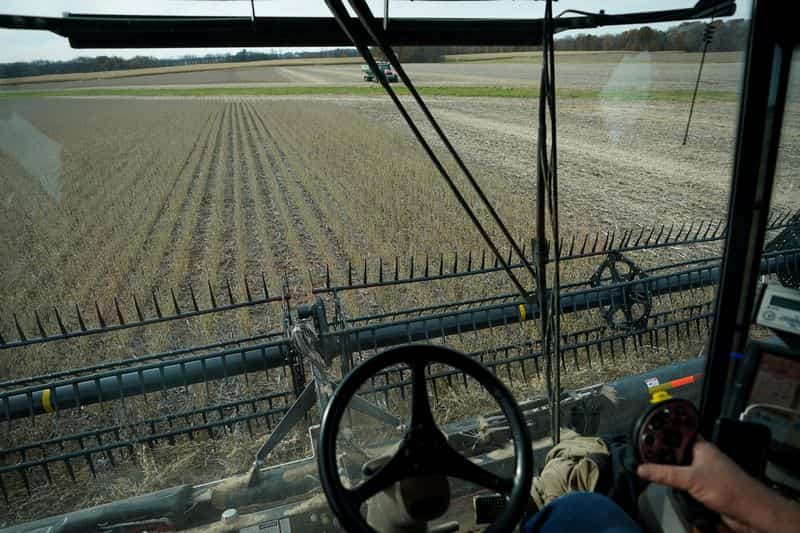
Soybean processors in the western US Midwest are offering significant premiums for immediate deliveries of the oilseed as persistent rains delay the early harvest, tightening supplies and forcing some plants to scale back production. The scramble for soybeans has sent cash prices soaring, creating an unexpected windfall for farmers able to harvest their crops and get them to market, or sell off the last of their old crops.
US soybean processing capacity has expanded in recent years, largely due to rising demand for biofuel. The USDA has projected that processors will crush a record-high 2.78 billion bushels of soybeans in the current crop year, a brisk pace prompted by robust profit margins. Yet some crushers have struggled to keep operating this month, analysts said, as supplies from last year's harvest dwindle while the 2026 harvest is off to a slow start.
Many growers are unable to take advantage of the sudden price spike. Late-summer rains have left fields too muddy to support harvesting equipment and slowed crops' natural dry-down process, and forecasts called for more showers through next week. Iowa farmer Roger Cerven sold off the last of his old-crop soybeans recently, hauling them more than 50 miles despite soaring fuel costs, to Bunge's soybean processing plant in Council Bluffs, Iowa. The processor at the time was offering a 65-cent premium on every bushel delivered. On Thursday, the premium reached 85 cents per bushel for soybeans delivered through Saturday.
The sudden surge in cash prices contrasts with conditions a year ago, when local soybean prices were under pressure amid renewed US-China trade tensions and a halt in purchases by the world's largest soybean importer. On Thursday, global agribusiness giant Cargill was bidding $1 a bushel over the price of Chicago Board of Trade November soybean futures for beans delivered to its Sioux City, Iowa, crushing plant on Thursday or Friday, according to the company's website. That bid translated to a flat price of $14.17-1/2 a bushel. For deliveries on Saturday, however, Cargill's bid drops to 15 cents below November futures — a swing that underscores the demand for immediate soybean supplies. Similar short-term premiums were also offered at soy processing sites in Iowa and Minnesota operated by agribusiness Archer-Daniels-Midland, cooperative CHS Inc and Iowa-based Shell Rock Soy Processing.
Some plants have already scaled back their operations crushing whole soybeans into soymeal, used in livestock feed, and soyoil, used for foods and biofuels, because they have been unable to secure sufficient soybean supplies, according to two grain merchandisers interviewed by Reuters. As a result, Cargill plants in Cedar Rapids, Iowa Falls and Sioux City, Iowa, did not post offers for soymeal due to a lack of supplies, merchandisers said. The shortfall in the cash soy market has rippled into the futures market as well. CBOT October soymeal futures surged on Thursday to a life-of-contract high and traded at an unusual inverse, or premium, to December soymeal futures for the first time in more than two years. Officials from Shell Rock Soy Processing declined to comment on Thursday. Cargill, CHS and ADM could not immediately be reached for comment.
Soy processors in the central and eastern Midwest have struggled with harvest delays as well, prompting some to woo farmers with higher prices. Bunge Global SA's soy plant in Decatur, Indiana, raised its soybean bid by 20 cents on Thursday, to 25 cents over November futures, for loads delivered by Friday. Bunge could not be reached for comment. Excessive rains across central Indiana have muddied fields and prevented farmers from harvesting. Local corn and soybean farmers are reporting that heavy rains in August left their crops heavily saturated, and have slowed down the natural dry-down process — which in turn is pushing back their crops' maturity dates by several weeks.