Key facts
- Manufacturing output rose 0.3% in October after the same 0.3% gain in September, the Federal Reserve said.
- Economists polled by Reuters had forecast a 0.2% rise in factory output for October.
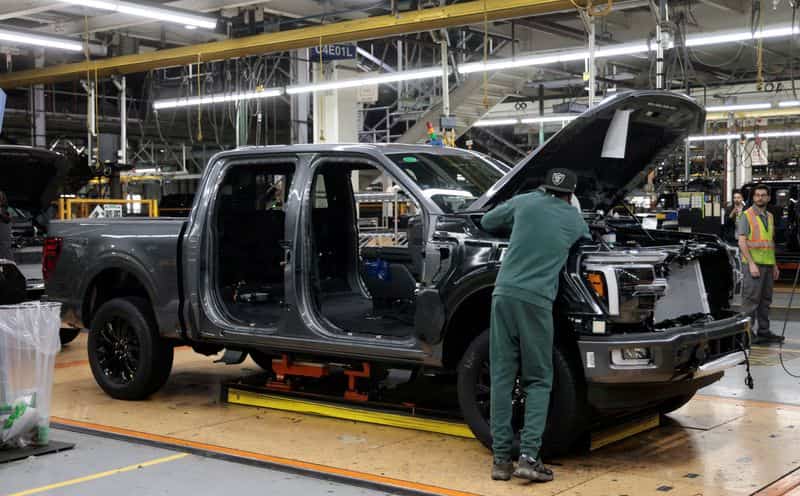
- Motor vehicle and parts output rose 4.4% in October after falling 2.7% in September.
- Semiconductor and related components output rose 2.2% in October and 15.3% year-over-year.
- Overall industrial output fell 0.4% in October after rising 0.7% in September.
- Capacity utilization fell to 76.4% in October from 76.8% in September, the Fed said.
US factory production rose 0.3% in October from September, the Federal Reserve said on November 17, a touch above the 0.2% increase economists polled by Reuters had forecast. Output was 2.2% higher than a year earlier. Manufacturing accounts for about 9.4% of the economy.
Motor vehicle and parts production rose 4.4% in October after falling 2.7% in September, leading a 0.5% rise in durable goods output. Semiconductor and related electronic components output rose 2.2% in October and 15.3% from a year earlier. Computers and peripheral equipment production rose 3.2% and communications equipment 0.9%. Nondurable manufacturing output was unchanged after a 0.6% gain in September.
The Fed said manufacturing has been underpinned by AI-related investment. It noted that AI spending is under focus following the resignation last week of Nvidia CEO Jensen Huang and the Democratic Party's victory over President Donald Trump's Republican Party in this month's midterm elections.
Mining output fell 0.8% in October after a 0.2% decline in September. Utilities output dropped 4.3% as mild temperatures reduced demand for heating, after a 4.4% rise in September. Overall industrial output fell 0.4% after rising 0.7% in September, and was 2.1% higher year-on-year.
Capacity utilization for the industrial sector fell to 76.4% from 76.8% in September, 3.0 percentage points below its 1972 to 2025 average. The manufacturing operating rate edged up to 76.0% from 75.9%, 2.2 percentage points below its long-run average.