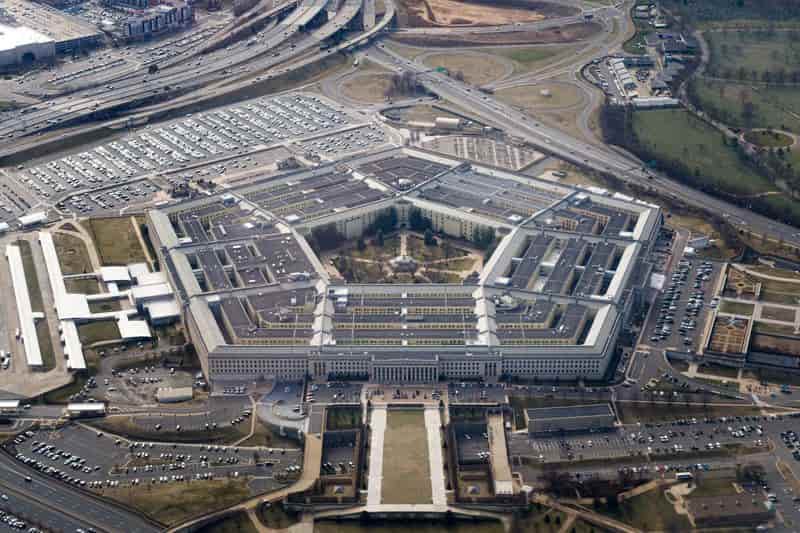
A federal appeals court has reinstated the Pentagon's policy requiring journalists to have government escorts, reversing a lower court's decision. The New York Times, which challenged the rule, plans to continue its litigation.

The ruling impacts press freedom and access to information at the Department of Defense, potentially affecting journalists' ability to report on military matters.
A federal appeals court has upheld the Pentagon's policy requiring journalists to be escorted while at the Defense Department, reversing a lower court's decision. The ruling by a three-judge panel of the U.S. Court of Appeals for the D.C. Circuit means the policy, which press freedom advocates have criticized as suppressing speech, can remain in place.
The court stated that the Pentagon was "likely to succeed on their argument that this generally applicable escort requirement does not constitute a 'sufficiently adverse action to give rise to an actionable First Amendment (free speech) claim' of retaliation." The New York Times, which brought the case, expressed disappointment but indicated it would continue to litigate the matter on its merits.
The Pentagon, under Defense Secretary Pete Hegseth, introduced the policy in October, stating that journalists could be deemed security risks and have their press passes revoked if they solicited unauthorized military personnel to disclose classified or unclassified information. Of the 56 news outlets in the Pentagon Press Association, only one reportedly signed an acknowledgment of the policy, with other reporters surrendering their passes.
Previously, U.S. District Judge Paul Friedman had ruled in April that the Pentagon was hindering journalists in defiance of a court order to restore access for credentialed reporters. Friedman had expressed concerns in March that revised restrictions went even further than those previously blocked and had halted the escort requirement in June.
Pick the topics you care about. Get only what matters, on your cadence.