Key facts
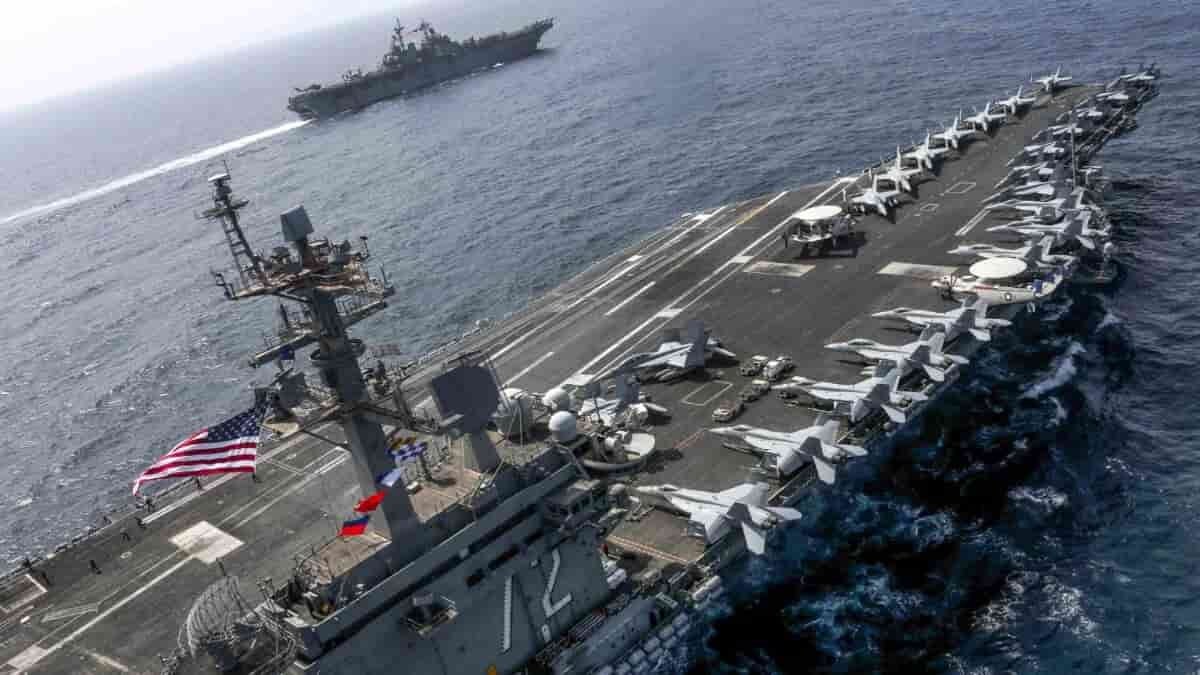
- The USS George Washington carrier is being rerouted to the Middle East to replace the USS Abraham Lincoln.
- Reports indicate supply shortages, plumbing issues, low morale, and mental health concerns aboard the USS Abraham Lincoln.
- Multiple sailor attempts to jump overboard have been reported.
- A navy official stated that the well-being of Lincoln sailors is a priority, while acknowledging the strain of extended deployments.
- US Defense Secretary Pete Hegseth stated that conditions aboard the Lincoln have been misrepresented.
The USS George Washington aircraft carrier is being rerouted to the Middle East to replace the USS Abraham Lincoln, amid reports of deteriorating conditions and mental health concerns among its crew. The Lincoln has been at sea for nearly nine months, with its deployment repeatedly extended and lacking significant port visits.
Reports from Navy Times and Stars and Stripes detailed supply and water shortages, plumbing problems, low morale, and deteriorating mental health among the Lincoln's approximately 5,000 sailors. The reports also indicated multiple attempts by sailors to jump overboard, prompting Democratic lawmakers to seek answers from the Pentagon.
A navy official acknowledged that extended deployments strain service members and their families, stating that the well-being of Lincoln sailors is a priority. The official noted that while supply hubs were disrupted, the ship maintained access to clean water, functional air conditioning, and healthy meal options.
US Defense Secretary Pete Hegseth, however, claimed the conditions aboard the Lincoln were misrepresented and that the crew received all necessary support. Military experts commented that prolonged deployments without port visits can significantly strain crews and ships, impacting morale and mental health.
Retired Navy Captain Armen Kurdian described the carrier as a 'giant floating city' and noted that mechanical issues can negatively affect sailors. Retired Vice Admiral Robert Murrett highlighted that the Lincoln's nearly nine-month deployment under combat conditions is exceptionally tough. Former Rear Admiral Nancy Lacore shared her experience of the mental toll of unexpected deployment extensions, emphasizing the importance of clear end dates for sailors.
Behavioral scientist Terri Tanielian stated that uncertainty about deployment end dates exacerbates strain, and expressed concern for sailors feeling desperate and unsupported. She stressed that support extends beyond psychological aid to include adequate sleep and nutrition.