Key facts
- MI5 is dedicating more resources to state threats than during the Cold War due to a quadrupling of foreign adversary activity.
- Russia is identified as "aggressor number one" and is waging "hybrid warfare" below the threshold of conventional conflict.
- Iran is expanding its hybrid campaign in the UK, targeting harder sites like military bases and Jewish communities.
- MI5 made over 50 arrests in the past year related to Iran-linked activities.
- Terrorists are seeking to exploit AI for reconnaissance, attack methodologies, and potentially to develop bioweapons.
- Extreme right-wing terrorism, often driven by the internet and anti-immigration sentiment, is a growing concern.
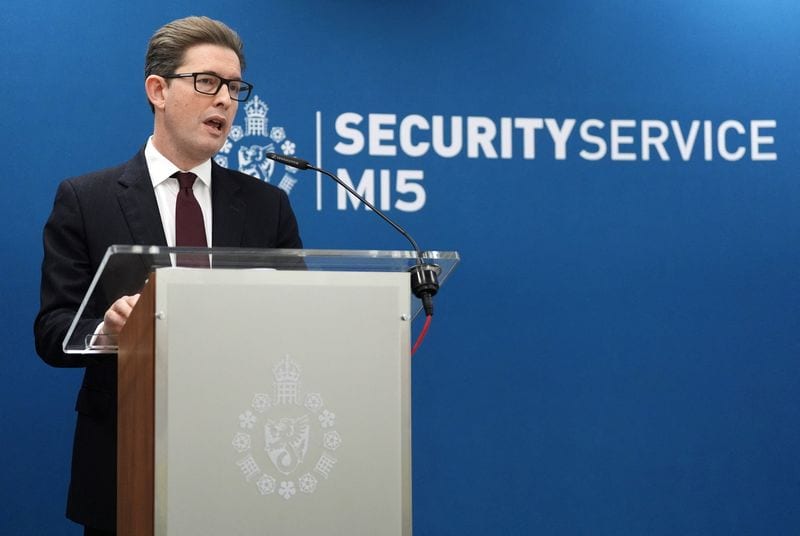
MI5 is dedicating more resources to countering state threats than during the Cold War, as foreign adversaries have "quadrupled" their efforts, according to UK intelligence chief Sir Ken McCallum. In his annual address, McCallum stated that the domestic intelligence service now faces "pretty much of equal scale" in its terrorism and state threats operational missions.
Russia remains "aggressor number one," waging "hybrid warfare" below the threshold of conventional conflict to unsettle European nations, McCallum said. He noted that Russia's progress in Ukraine has been "minimal and horrifically costly," and that expulsions of Russian spies from the UK have left Moscow reliant on paying proxies for attempted attacks.
Meanwhile, Iran is also expanding its hybrid campaign in the UK, with MI5 making over 50 arrests in the past year related to Iran-linked activities. Much of this aggression has been aimed at Jewish communities and "harder targets, like military sites." The National Security Act, a 2023 law, is being used to tackle threats from China, Iran, and Russia.
McCallum also highlighted emerging threats, including terrorists seeking to exploit AI for reconnaissance and attack methodologies, and the potential for extremist groups to harness AI to develop bioweapons. The UK's terrorism threat level was raised to "severe" in April, with increased risks driven significantly by extreme right-wing terrorism, often fueled by anti-immigration sentiment and the internet.