Key facts
- UK median equivalised household income rose to £41,900 after taxes and benefits in FYE 2024.
- Cash benefits increased by 8.2% in real terms for all households in FYE 2024.
- Income inequality reduced significantly due to taxes and benefits.
- The richest fifth of households had an income 3.3 times larger than the poorest fifth after taxes and benefits.
UK household disposable income saw an increase in the financial year ending 2024, largely attributed to a rise in benefits payouts, according to the Office for National Statistics (ONS). Median equivalised household income rose to £41,900 after taxes and benefits, up from £38,900 before these adjustments.
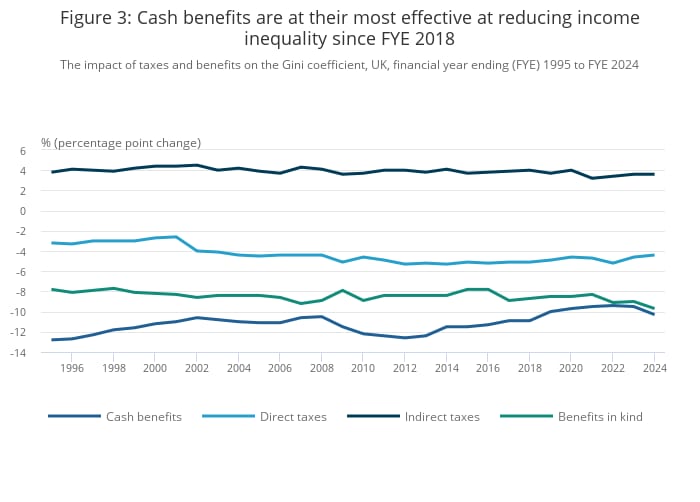
The ONS report highlighted that the redistributive effect of taxes and benefits significantly reduced income inequality. The Gini coefficient for original income inequality stood at 47.6%, which decreased to 26.8% after taxes and benefits were accounted for. This indicates a more equal distribution of income across households.
Unequivalised cash benefits increased by 8.2% in real terms for all households compared to the previous financial year, driven by a 10.1% uprating of inflation-linked benefits. The data also showed that 53.3% of individuals live in households that receive more in benefits (both cash and in kind) than they contribute in taxes, a proportion that has remained stable over the past three years. The gap between the richest and poorest fifths of the population narrowed considerably, with the richest fifth earning 3.3 times more than the poorest fifth after all taxes and benefits were considered, down from 12.2 times before these adjustments.