Key facts
- Turkey's Foreign Minister Hakan Fidan urged Russia and Ukraine to implement a moratorium on attacks against vessels in the Black Sea.
- Turkey conveyed Ukraine's proposal for a moratorium to Russia.
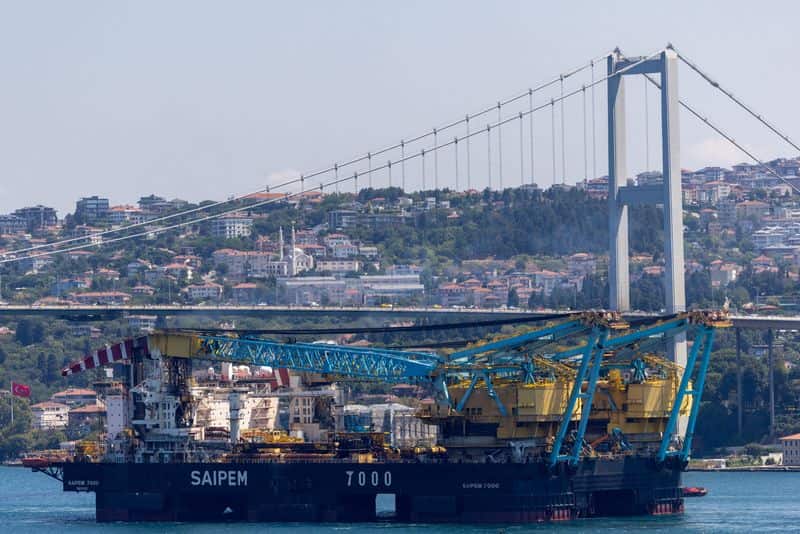
- Commercial ship traffic entering the Black Sea has been subject to temporary measures by Turkey due to security concerns.
- Turkish officials stated that passage through the Turkish straits to the Black Sea is proceeding smoothly.
- The 1936 Montreux Convention governs passage through the Turkish straits.
Turkey's Foreign Minister Hakan Fidan has called for Russia and Ukraine to implement a moratorium on attacks against vessels in the Black Sea, citing a recent increase in strikes on commercial ships. Fidan stated that Ukraine has a corresponding proposal, which Turkey has passed on to its Russian counterparts and is awaiting a response.
In recent weeks, both Ukraine and Russia have escalated attacks on vessels in the Black Sea, impacting foreign-flagged ships, including those owned and operated by Turkey. Ukraine launched Operation Molochka on July 6, targeting Russia’s shadow fleet in an effort to pressure Russian-occupied Crimea. According to the Unmanned Systems Forces, Ukrainian drones have struck 218 Russian shadow fleet vessels since the operation began. Russia has responded by targeting civilian cargo ships, particularly near Odesa, including foreign-flagged vessels carrying grain and fertilizers. One attack near occupied Crimea struck a Turkish-flagged fishing vessel, resulting in one death and four injuries.
Fidan noted that the conflict has expanded across the entire Black Sea, with Ukrainian attacks occurring as far south as approximately 50 miles off the coast of northern Turkey. Previous attempts to broker a ceasefire in the Black Sea have been unsuccessful. A proposal in March 2025, agreed to by Ukraine, was contingent on the lifting of Western sanctions on Russian food producers and exporters, a condition Moscow set.
President Volodymyr Zelensky indicated that Ukraine's forces intend to continue striking Russian logistics following a concluded 40-day operation targeting tankers supplying occupied Crimea. Turkey, a NATO member, has maintained a mediating role in the conflict, balancing its economic ties with Moscow and its provision of arms to Kyiv. Publicly available U.S. congressional records indicate Ukraine has purchased a significant package of U.S.-made defense equipment from Turkey, including 70 long-range Army Tactical Missile Systems (ATACMS), with transfers expected to begin in late August.
Despite heightened concerns about safety, ships are passing smoothly through the Turkish straits to the Black Sea, two Turkish government officials told Reuters. This follows a Bloomberg News report that Ankara had restricted commercial ship traffic entering the Black Sea due to attacks on vessels there, including Turkish-owned ships. The officials stated that Turkey had implemented some temporary measures because it had been uncomfortable about security for some time, but that passage was clear under the conditions of the Montreux Convention. The 1936 Montreux Convention of the Regime of the Straits gives Turkey control over the Bosphorus and Dardanelles, and the power to regulate transit of naval warships. It also guarantees the free passage of civilian vessels in peacetime and restricts the passage of ships not belonging to Black Sea countries.