All NewsEducationTVBrokers
Equities & FundsCrypto & Digital AssetsAI & TechnologyBusiness & CorporateUS Politics & PolicyGeopolitics & Global RiskMacro, Rates & FXCommodities & EnergyEuropean Politics & MarketsAsia-PacificReal Estate & Property
All NewsHome
← Back to Geopolitics & Global Risk

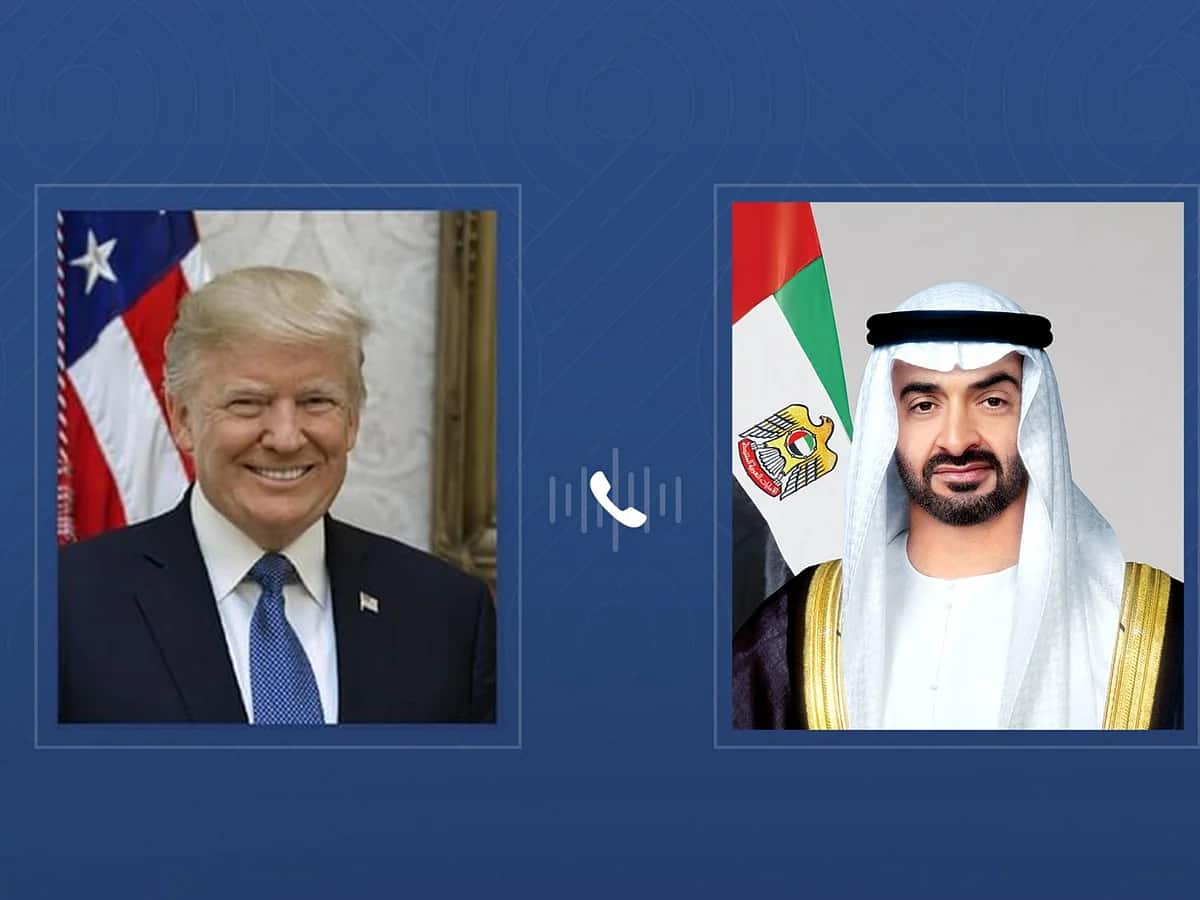
Trump, UAE President discuss Middle East tensions amid Iran diplomacy deadlock

Created at 3 Sep · 7:06 AM1 source↑ Market-relevant
IN SHORT

US President Donald Trump and UAE President Sheikh Mohamed bin Zayed Al Nahyan spoke by phone about regional developments and strengthening bilateral ties. The call occurred as US-Iran diplomacy remained stalled and tensions escalated over the Strait of Hormuz.

Key Numbers

60-daywindow for US-Iran agreement expired

Who's Involved

Donald Trump
US President
Sheikh Mohamed bin Zayed Al Nahyan
UAE President
Mohammad Bagher Ghalibaf
Iranian Parliament Speaker
Trump, UAE President discuss Middle East tensions amid Iran diplomacy deadlock

↳ Why This Matters

The call between the US and UAE presidents highlights ongoing diplomatic efforts and rising tensions in the Middle East, particularly concerning Iran and the crucial Strait of Hormuz, which could impact global energy supplies and international shipping.

Key facts

  • US President Donald Trump and UAE President Sheikh Mohamed bin Zayed Al Nahyan held a phone call.
  • The leaders discussed regional developments and strengthening UAE-US bilateral ties.
  • The call took place as US-Iran diplomacy is stalled and tensions are high over the Strait of Hormuz.
  • Iran has stated the Strait of Hormuz will remain closed until its demands are met.
  • The UAE recently accused Iran of attacking an ADNOC-operated tanker.

US President Donald Trump and UAE President Sheikh Mohamed bin Zayed Al Nahyan held a phone conversation to discuss regional developments and ways to enhance bilateral cooperation. The call occurred against a backdrop of stalled diplomacy between the US and Iran and heightened tensions concerning the Strait of Hormuz, a critical shipping route.

During the call, the two leaders exchanged views on the latest developments in the Middle East and ongoing efforts to address them. They also discussed strengthening ties between the UAE and the United States in support of their mutual interests.

The conversation followed the expiry of a 60-day window intended for a broader US-Iran agreement, with significant differences remaining between Washington and Tehran. Iran's Parliament Speaker, Mohammad Bagher Ghalibaf, stated that the strategic waterway would remain closed until Washington met Tehran's demands, including lifting restrictions on Iranian ports and oil exports, releasing frozen assets, and ending military operations and threats.

The US has indicated it will not extend the interim arrangement, while a senior Iranian official warned of a potential "fully offensive" military posture if diplomacy fails. These developments have amplified fears of escalation in the Gulf.

This comes after the UAE accused Iran of attacking an ADNOC-operated tanker transiting the Strait of Hormuz, marking the third such incident on an ADNOC vessel within a week. Iran has previously denied targeting commercial vessels. Shipping through the strait has significantly decreased amid the confrontation, impacting energy exports and raising global supply concerns.

Frequently asked questions

The phone call took place on Tuesday, August 18, 2026, according to one report, and on Thursday, September 3, 2026, according to another.

The leaders discussed regional developments, particularly tensions in the Middle East, and ways to strengthen bilateral cooperation between the UAE and the United States.

The Strait of Hormuz is a crucial shipping route for the UAE and other Gulf states, and tensions over its closure could disrupt energy exports and global supplies.

What Happens Next

01Washington and Tehran remain far apart on terms for a settlement.
02Iran could adopt a "fully offensive" military posture if diplomacy fails.

How It Developed

UAE President Sheikh Mohamed bin Zayed Al Nahyan received a phone call from US President Donald Trump.
The leaders discussed cooperation between the UAE and the United States and ways to strengthen bilateral ties.
They exchanged views on the latest developments in the Middle East.
The conversation occurred as diplomatic efforts to resolve the US-Iran conflict remained deadlocked.
Tensions mounted over the Strait of Hormuz following the expiry of a 60-day window for a US-Iran agreement.
Iran's Parliament Speaker stated the Strait of Hormuz would remain closed until Washington met Tehran's demands.
The UAE accused Iran of attacking an ADNOC-operated tanker, marking the third such attack in a week.
Iran denied targeting commercial vessels.

Sources

T1
UAE President and Trump hold phone call over Middle East developmentsMiddle East Eye
T2
UAE president discusses regional developments with Trumparabnews.com
T2
UAE President receives phone call from US Presidentgulfnews.com

Related Stories

Trump says US attacks on Iran help Israel, Middle East, Europe
3 Sep · 1:56 AM
Qatar PM Discusses Regional Tensions with Lebanese, Turkish, Egyptian Counterparts
2 Sep · 8:15 PM
Iran's chief negotiator says US is a source of regional insecurity
2 Sep · 4:06 PM
Trump aides urge quiet on Iran conflict ahead of elections
2 Sep · 10:06 AM
Xi Jinping's call for Mideast security framework signals message to US: expert
3 Sep · 6:46 AM