Key facts
- President Trump and Iranian counterpart Masoud Pezeshkian signed a memorandum of understanding to end the US-Iran war.
- The deal aims to reopen the Strait of Hormuz and address Iran's nuclear program.
- A 60-day clock has begun to finalize the agreement's details.
- The MOU is vague on key issues such as Iran's nuclear program, missile arsenal, and proxy funding.
- Iran has agreed not to procure or develop nuclear weapons and to downblend enriched uranium.
- The US committed to ending all sanctions on Iran following an agreed schedule.
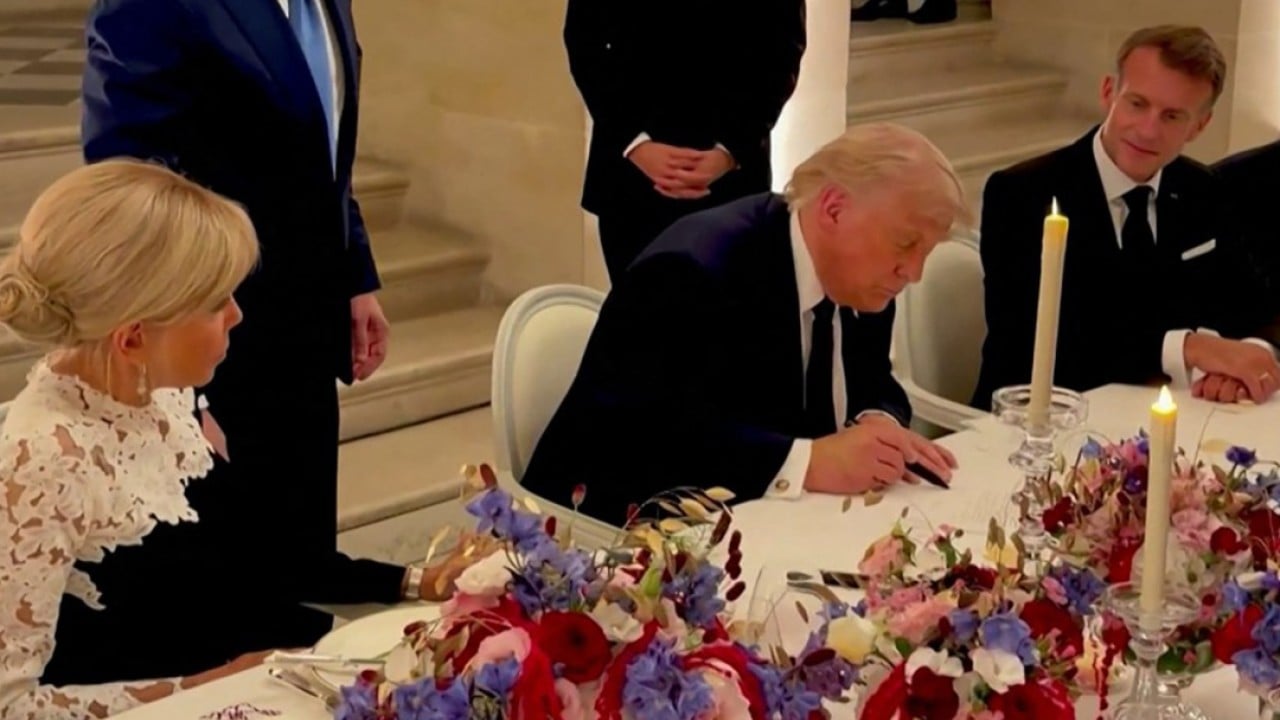
President Trump and Iranian counterpart Masoud Pezeshkian have signed a tentative memorandum of understanding (MOU) to end the US-Iran war and reopen the Strait of Hormuz, initiating a 60-day period to finalize the agreement's details.
The 14-point MOU, signed at the G7 summit, is notably vague on key concessions regarding Iran's nuclear program, weapons arsenal, and funding of militant proxies. Trump stated that these issues will be addressed in the upcoming negotiations.
Under the agreement, Iran has agreed not to procure or develop nuclear weapons and to hand over its enriched uranium, with details to be hammered out. The deal also includes provisions for a reconstruction fund for Iran, potentially worth $300 billion, financed by the US and regional partners, though US officials have stated no direct US funds will be contributed.
Key issues to be resolved in the next round of talks include enforcement mechanisms for preventing Iran from obtaining nuclear weapons, the fate of Iran's missile program, and the extent of uranium enrichment. The MOU suggests Iran will face limits on its enriched uranium stockpile, with downblending on-site under IAEA supervision.
The deal also incorporates a ceasefire in Lebanon, which has drawn criticism from Israeli officials. US Vice President Vance indicated that while minor flare-ups may occur, the US expects Hezbollah to cease fire and Israel to exercise restraint.
Critics question whether a comprehensive agreement can be reached within the two-month timeframe, especially given the complexity of the issues and the 20 months it took the Obama administration to negotiate the original Iran nuclear deal (JCPOA).
Public opinion in the US appears to be against Trump's handling of Iran, with a recent poll showing disapproval of his approach despite the tentative deal.