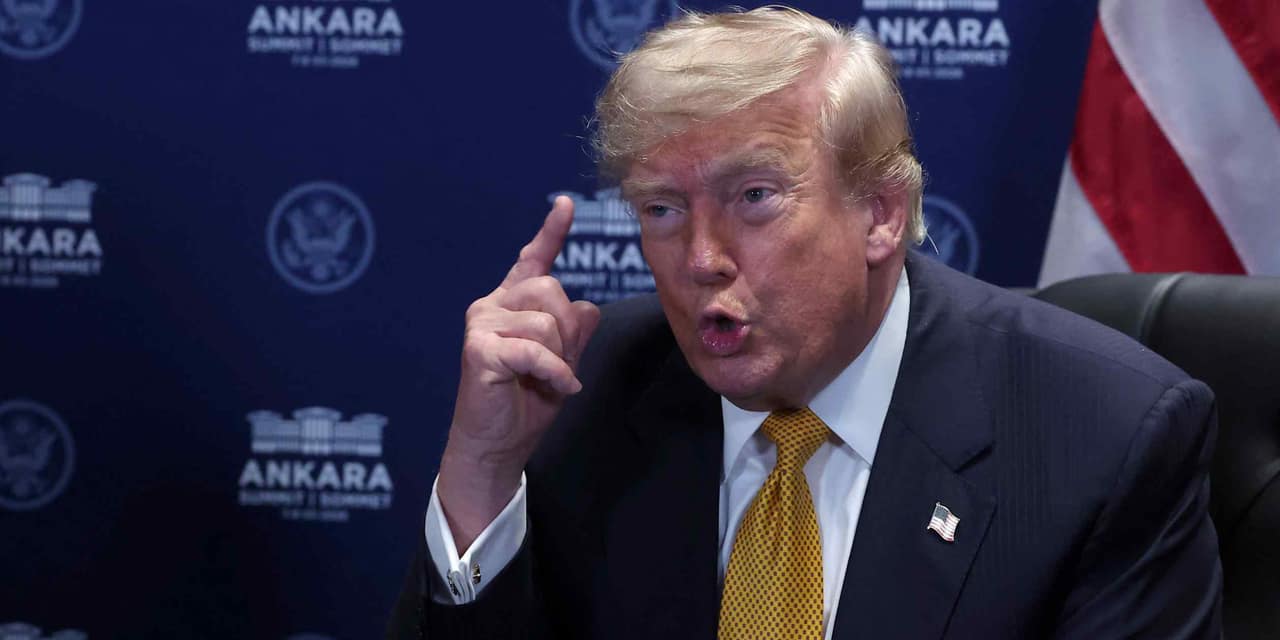
President Donald Trump has declared the interim agreement with Iran to end hostilities "over" following renewed fighting and U.S. retaliatory strikes. Speaking at the NATO summit in Ankara, Turkey, Trump stated that the Iranian leadership were "scum," "liars," and "cheats," and that the deal was dead.
The renewed conflict follows reports of sirens in Bahrain and Kuwait amid hostile strikes. The United States launched new military strikes against Iran and revoked a key sanctions waiver covering Iranian oil sales, accusing Tehran of attacking commercial shipping in the Strait of Hormuz. This action jeopardizes a fragile 60-day memorandum of understanding (MOU) signed last month aimed at ending hostilities.
Trump expressed his desire to cease dealing with Iran, calling it a "waste of time" and stating, "As far as I'm concerned, it's over." He also reiterated concerns about Iran potentially acquiring nuclear weapons.
The U.S. military stated the strikes were a direct response to Iranian attacks on three commercial vessels transiting the Strait of Hormuz, including a Qatari liquefied natural gas (LNG) tanker. U.S. Central Command (CENTCOM) described Iran's actions as "unwarranted, dangerous, and a clear violation of the cease-fire."
Iranian media reported multiple explosions in southern Iran, including on Qeshm Island and near Bandar Abbas. Iran later claimed to have targeted U.S. military sites in Bahrain and Kuwait, with both countries reporting their air defenses were triggered. Kuwait's military stated it intercepted "two hostile ballistic missiles and 13 hostile drones."
Alongside the military actions, the U.S. Treasury revoked its authorization for Iranian oil sales, restoring sanctions that had been suspended under the MOU. An official stated that economic relief was contingent on Iranian compliance and that Iran's actions were "wholly unacceptable."
The waiver, originally set to last until August 21, had permitted limited Iranian crude exports and financial transactions. Washington contends Tehran violated its commitment by attacking vessels that used a U.S.-protected shipping corridor.
Qatar described the strike on its vessel as a "serious and explicit violation" of international law, while Saudi Arabia accused Tehran of threatening international navigation and global energy supplies.
Iran rejected Washington's justification, accusing the United States of repeatedly violating the cease-fire framework and breaching the "Islamabad Understanding" by revoking the sanctions suspension. Iran warned it would take necessary measures to safeguard its national interests and security, holding Washington responsible for the consequences.