Key facts
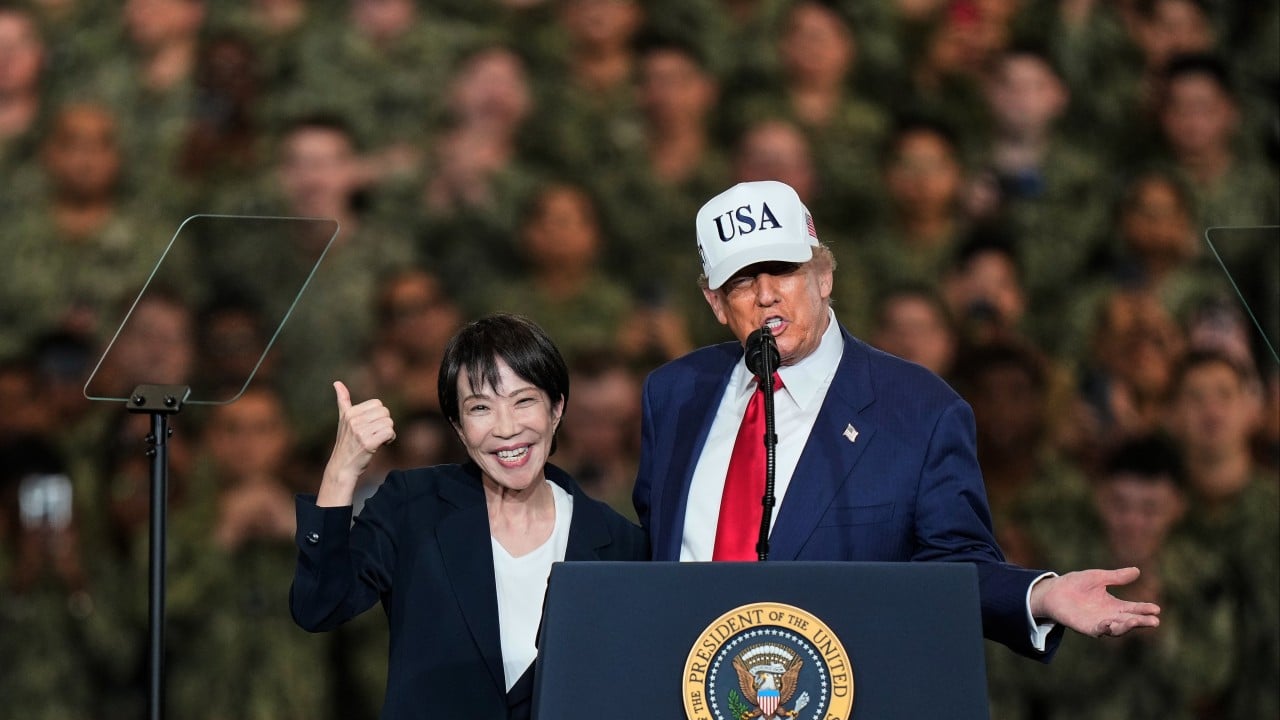
- President Donald Trump called Japanese Prime Minister Sanae Takaichi his "biggest fan" at a press conference.
- Trump stated that Japan is "doing very well" under Takaichi's leadership.
- Japan has undertaken significant defense reforms, including overhauling defense export rules and increasing its defense budget.
- Takaichi's administration is pursuing constitutional revisions to strengthen Japan's military capabilities.
- A recent summit between Trump and Takaichi focused on defense cooperation, intelligence sharing, and energy security.
- Japan has engaged in diplomatic efforts regarding the Strait of Hormuz and energy supply.
US President Donald Trump described Japanese Prime Minister Sanae Takaichi as his "biggest fan" among world leaders during a press conference following a Group of Seven summit in Evian-les-Bains, France. Trump stated that Japan is "doing very well" under Takaichi's leadership.
These remarks followed questions about Japan's potential military contribution to securing the Strait of Hormuz, a critical shipping route that had been effectively closed following US-Israeli air strikes on Iran. A preliminary peace deal between the US and Iran was reached shortly before the G7 summit, including a 60-day ceasefire extension and the reopening of the waterway.
Additional reporting indicates that Prime Minister Takaichi has been implementing significant defense reforms, including overhauling Japan's defense export rules to allow for the export of lethal weapons and increasing the defense budget to $58 billion for fiscal year 2026. Her administration is also pursuing constitutional revisions to empower Japan's Self-Defense Forces. A summit between Trump and Takaichi in Washington had previously addressed missile co-development, intelligence sharing, and critical minerals cooperation.
While Trump expressed some public frustration about allies not contributing militarily to operations in the Strait of Hormuz, Takaichi conveyed Japan's position on the legal challenges of deploying its forces. She also engaged in diplomatic calls with Iranian President Masoud Pezeshkian to urge safe passage for vessels and de-escalation. Japan agreed to import more oil from the U.S. and joined a joint statement calling for a moratorium on attacks on oil and gas installations.