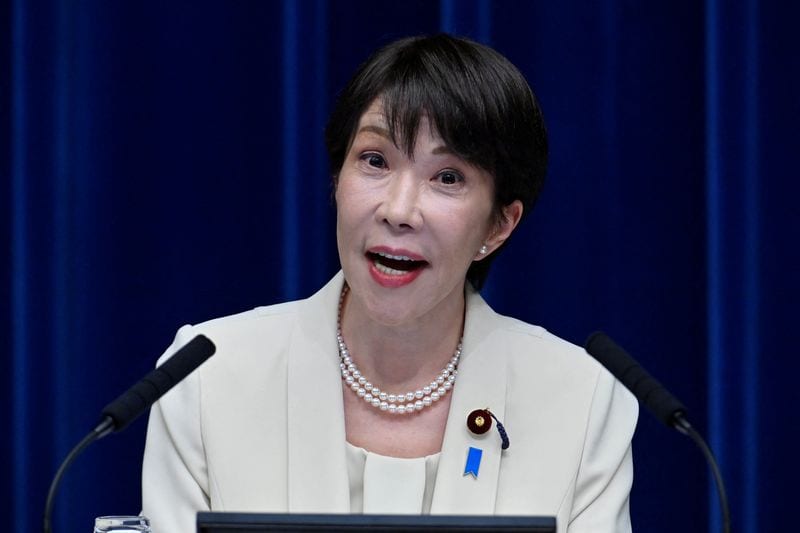
Key facts
- Japanese Prime Minister Sanae Takaichi plans to cut the food sales tax to 1% for two years, starting April next year.
- The move aims to alleviate rising living costs for households.
- Takaichi's administration faces market concerns over fiscal discipline and worsening public finances.
- Japanese government bond yields have reached multi-decade highs.
- The yen has slid significantly due to market pressures and fiscal concerns.
Japanese Prime Minister Sanae Takaichi is facing market pressure and declining approval ratings as she pushes forward with plans to cut the food sales tax to 1% for two years starting April next year. The move, intended to ease the burden of rising living costs, has heightened investor concerns about Japan's fiscal discipline and worsening public finances, contributing to multi-decade highs in Japanese government bond yields. This situation has also blunted official efforts to support the weakening yen. Takaichi's administration is navigating a difficult path between pursuing expansionary fiscal policies to boost popularity and maintaining market trust. The government plans to avoid setting spending caps for key growth areas in an overhaul of budget drafting, which could increase expenditure and debt issuance. Analysts suggest that without specific facts and figures demonstrating a focus on fiscal discipline, market trust is unlikely to be regained, potentially leading to further volatility in yields and the yen.