Key facts
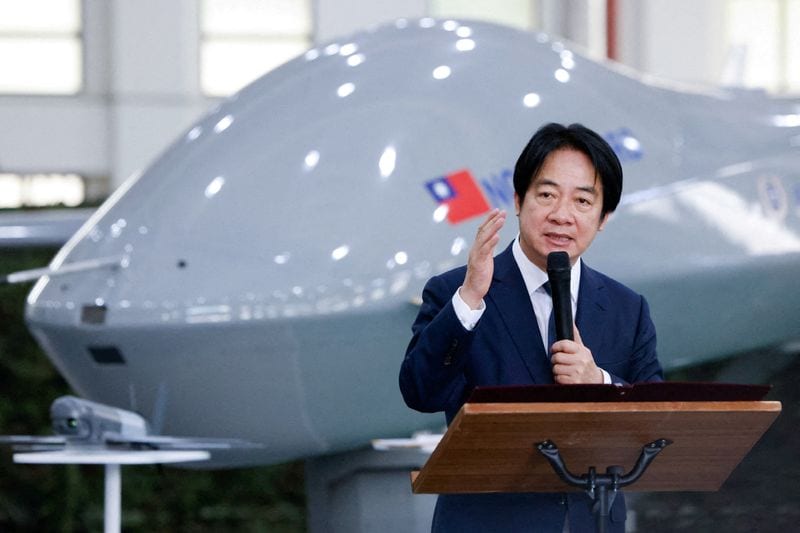
- Taiwan's President Lai Ching-te is pushing for a T$210 billion ($6.6 billion) special budget for military drones.
- The opposition-controlled parliament has proposed alternative funding through the annual budget, capped at T$40 billion per year.
- The government argues the drones are urgently needed for asymmetric combat capabilities against China.
- Opposition lawmakers expressed concerns about the rapid advancement of drone technology and potential obsolescence.
- A crucial vote on competing drone budget proposals is expected in parliament.
Taiwan's President Lai Ching-te is urging lawmakers to approve a T$210 billion ($6.6 billion) special budget for military drones, emphasizing the island's need to demonstrate self-defense resolve amid escalating threats from China. The opposition, which controls parliament, has put forward its own proposals to cap annual spending at T$40 billion and draw funds from the regular budget, overseen by the Ministry of Economic Affairs rather than the Ministry of National Defense.
Lawmakers debated the competing plans on Wednesday but failed to reach an agreement ahead of an expected vote. Opposition lawmakers, such as Lai Shyh-bao of the Kuomintang, argue that purchasing a large quantity of drones at once risks them becoming outdated due to rapid technological advancements. However, Defense Minister Wellington Koo stated the government's plan includes annual procurement and regular upgrades. The government views drones as crucial for building asymmetric combat capabilities to deter potential Chinese aggression, with the special budget mechanism intended for swift implementation.
Beijing has criticized President Lai's actions, with a spokesperson for China's Taiwan Affairs Office stating that the trend toward reunification cannot be stopped. Lai rejects Beijing's sovereignty claims, asserting that Taiwan's future should be decided by its people.